Article Summary:
- Solar installation timelines in Hilo are longer than most contractors initially communicate—understanding why helps homeowners plan realistically and avoid frustration
- The full timeline from contract signing to Permission to Operate in Hilo typically runs 3 to 6 months in 2026, with Hawaii County permitting and HECO interconnection being the longest phases
- Several factors specific to the Big Island—circuit hosting capacity constraints, permit application quality, and HECO’s Big Island queue dynamics—affect timelines in ways mainland comparisons don’t capture
- Physical installation itself takes only 1 to 3 days—the majority of your project timeline is spent waiting on regulatory and utility processes outside anyone’s direct control
- Understanding what causes delays, what’s normal, and what should concern you helps you hold your contractor accountable without unrealistic expectations
- Proactive contractors who submit complete permit applications and manage HECO interconnection actively compress timelines meaningfully compared to those who don’t
Understanding how utility export programs work—including programs like Smart Renewable Energy (SRE) Export—ensures your project aligns with the latest utility interconnection rules and avoids unexpected delays.
One of the most common sources of frustration in Hilo’s solar market isn’t the equipment, the price, or even the contractor relationship. It’s the timeline. Homeowners sign a contract expecting to be generating solar power within weeks and discover months later that they’re still waiting for permits or HECO approval—while continuing to pay full HECO electricity bills the whole time.
That frustration is understandable. It’s also largely avoidable—not by finding a contractor who promises faster timelines, but by starting with accurate expectations about what the timeline actually involves, why it runs as long as it does, and what the realistic range looks like for a well-managed project in Hilo’s current regulatory and utility environment.
This article gives you the honest 2026 timeline picture for residential solar installation in Hilo. We’ll walk through every phase of the project from contract signing to first day of generation, explain what drives timeline variation at each phase, identify the factors that cause projects to run longer than expected, and give you the framework to evaluate whether a contractor’s timeline estimate reflects genuine market knowledge or optimistic sales positioning.
Understanding the timeline before you sign a contract won’t make the process faster. But it will make the experience significantly less frustrating—and it will help you identify the contractors who are managing your project actively versus those who are letting it drift.
Why Hilo’s Solar Timeline Is Longer Than the Mainland Average
Before working through the specific phases, it’s worth addressing directly why solar installation timelines in Hilo are longer than the national averages you’ll find in general solar research.
Hawaii County Permitting Is More Complex
Hawaii County’s building permit process for solar installations involves more documentation, more specific drawing requirements, and more detailed engineering calculations than many mainland permitting jurisdictions. Applications that fail to meet the building department’s specific format and content requirements are returned for correction—adding weeks or months to the timeline before a permit is issued.
Hawaii County’s permit review workload varies over time. During periods of high application volume, review queues lengthen. During slower periods, turnaround can be faster. A contractor who submits permits to Hawaii County regularly knows current conditions and can give you a realistic estimate based on actual queue status rather than best-case projections.
HECO’s Big Island Interconnection Has Its Own Queue
Hawaiian Electric’s interconnection application process for the Big Island runs through HECO’s Hawaii Island operations—a separate organizational unit from HECO’s Oahu operations, with its own application queue, technical review staff, and processing timelines. The Big Island grid’s isolated nature creates additional technical review considerations that don’t exist in connected mainland utility systems.
HECO’s interconnection queue on the Big Island fluctuates based on application volume, grid study requirements, and the technical complexity of applications in the queue. Applications for systems connecting to circuits with hosting capacity constraints face additional technical review that extends the interconnection timeline beyond what simpler applications experience.
The Process Involves Sequential Dependencies
Unlike some construction projects where multiple phases can run simultaneously, solar installation in Hilo has sequential dependencies that prevent parallel processing of certain steps. Physical installation can’t begin until the permit is approved. HECO’s Permission to Operate can’t be granted until after the county inspection passes. The county inspection can’t happen until after installation is complete.
Some steps can run in parallel—HECO’s interconnection application can be submitted simultaneously with the county permit application—but the critical path still runs through several sequential gates, each with its own queue and processing time.
Logistics on the Big Island Add Time
Equipment procurement for Big Island installations involves inter-island freight that adds lead time compared to mainland logistics. A panel model or battery system that can be delivered in a week in California may take two to three weeks to reach Hilo from mainland distribution points through the Hawaii freight system. Contractors with established Hawaii distributor relationships manage this more efficiently than those ordering through mainland channels on a project-by-project basis—but the freight reality affects everyone working in this market.
The Complete Solar Installation Timeline for Hilo in 2026
Here is a realistic, phase-by-phase breakdown of the solar installation timeline for a standard residential project in Hilo in 2026. These timelines reflect actual current conditions—not best-case scenarios designed to make the process sound faster than it is.
Phase One: Contract Signing and Project Initiation
Typical duration: 1 to 2 weeks
After you sign a contract and pay the initial deposit, your contractor begins two parallel processes: preparing the permit application and submitting the HECO interconnection application. Simultaneously, equipment procurement is initiated—either ordering specific equipment for your project or confirming availability from distributor inventory.
What happens during this phase:
Your contractor finalizes the system design drawings, electrical single-line diagrams, and structural calculations that will form the permit application. They order the specific panels, inverters, and racking hardware specified in your contract. And they prepare the HECO interconnection application with the system specifications and electrical details HECO requires.
What affects this timeline:
Contractors who maintain complete, ready-to-submit permit documentation templates for common installation types in Hawaii County move through this phase faster. Those who start from scratch on documentation for each project take longer. Equipment availability from Hawaii-based distributors affects procurement timelines—commonly available equipment can be ordered immediately, while specific premium models or battery systems may have lead times.
What you should see during this phase:
Your contractor should confirm that your deposit has been received, that the project has been assigned to a project manager, and that the permit application is being prepared. If you don’t hear anything within a week of signing, a check-in call is appropriate.
Phase Two: Permit Application Submission and Review
Typical duration: 4 to 12 weeks
Hawaii County permit review is the most variable phase in the entire solar installation timeline, and it’s the one where contractor competency most directly affects your project duration.
What a complete Hawaii County permit application includes:
A complete solar permit application for Hawaii County includes architectural drawings showing panel layout on your roof with dimensions and setback measurements, structural drawings showing the mounting system with engineering calculations demonstrating compliance with Hawaii’s wind uplift requirements, electrical single-line diagrams showing the complete system from panels through inverter to utility interconnection point, equipment cut sheets and specifications for panels, inverters, and racking hardware, and any structural engineering stamp required for your specific roof type or system size.
First-submission approval versus kickback:
Applications that are complete, correctly formatted, and address all of Hawaii County’s specific requirements move through review without being returned. Applications with missing information, incorrect drawing formats, incomplete engineering calculations, or other deficiencies are returned to the contractor for correction—sometimes multiple times.
Each round of kickback and resubmission adds 2 to 6 weeks to the permit timeline. A contractor whose application is returned twice for corrections may spend 8 to 14 additional weeks in the permit phase relative to a contractor who submits a complete application approved on first review.
Contractors who submit permits to Hawaii County regularly know exactly what the building department expects—what information must be shown explicitly versus what can be referenced by code, how drawing scales are expected to be formatted, what engineering documentation satisfies the structural review team. That familiarity directly translates to first-submission approval rates that compress your timeline.
Current Hawaii County permit timeline expectations in October 2026:
Permit review timelines at Hawaii County fluctuate based on application volume and staffing. In 2026, homeowners should expect permit review to take a minimum of 4 to 6 weeks for complete, well-prepared applications during normal volume periods. During periods of higher application volume, review times can extend to 10 to 12 weeks or longer. Your contractor should have current knowledge of actual review queue status based on recent application submissions—ask them specifically what timeline they’re seeing on current permit applications at the time you’re signing.
What you should see during this phase:
Your contractor should be able to tell you the date they submitted your permit application and follow up if the building department requests additional information. If you’re past the 8-week mark without permit approval and your contractor isn’t actively following up with the building department, that’s worth raising directly.
Phase Three: HECO Interconnection Application Processing
Typical duration: 3 to 10 weeks (running parallel to permit phase)
HECO’s interconnection application process runs simultaneously with the Hawaii County permit process in most cases—your contractor should be submitting both applications within the first two weeks of project initiation. The interconnection process has its own timeline and its own potential complications.
What the HECO interconnection process involves:
Your contractor submits an interconnection application that includes system specifications, electrical design details, equipment certifications, and property identification information. HECO’s engineering team reviews the application for technical compliance with their interconnection standards—verifying that the proposed system meets voltage, frequency, and protection requirements for grid connection.
For systems connecting to circuits with available hosting capacity and no unusual technical considerations, this review typically results in conditional approval within 3 to 6 weeks. Conditional approval means HECO has agreed the system can be interconnected but is waiting for final permit and inspection confirmation before granting full Permission to Operate.
When HECO interconnection takes longer:
Several factors extend the HECO interconnection timeline for Big Island residential applications in 2026:
Circuit hosting capacity constraints. When a system is proposed for a circuit that’s at or near its distributed generation penetration threshold, HECO may require detailed power flow studies before approving the interconnection. These studies can take 4 to 8 additional weeks—sometimes longer—and may result in requirements for system size reduction or specific advanced inverter settings that weren’t in the original design.
Application incompleteness. HECO’s technical review may request additional information or documentation not included in the original application. Each request-and-response cycle adds time.
Advanced inverter function verification. For systems on circuits requiring advanced inverter functions, HECO may require additional documentation confirming that the specified inverter supports the required functions and that those functions will be properly configured at commissioning.
System size above simplified review thresholds. Larger residential systems—those approaching the threshold for enhanced review under HECO’s interconnection rules—face more detailed technical scrutiny than smaller systems.
What a proactive contractor does:
A contractor with genuine HECO Big Island interconnection experience checks circuit hosting capacity before submitting the application—knowing in advance whether additional technical review is likely and either adjusting the system design to avoid it or communicating proactively to you that extended HECO review should be expected. They submit complete applications that don’t require follow-up requests for missing information. And they follow up actively with HECO’s Hawaii Island operations team during the review period rather than waiting passively for approval.
The parallel processing advantage:
Because the HECO interconnection application and the Hawaii County permit application can be submitted simultaneously, the total project timeline isn’t the sum of both processes—it’s determined by whichever takes longer. In many cases, the permit process takes longer than the initial HECO interconnection review, meaning HECO conditional approval arrives before the permit—and the project waits for the permit before proceeding to installation. In other cases, particularly when HECO’s circuit review is complicated, HECO interconnection is the bottleneck. Understanding which process is on your critical path helps you interpret status updates accurately.
Phase Four: Equipment Procurement and Pre-Installation Preparation
Typical duration: 1 to 4 weeks (often running parallel to permit phase)
Equipment for your installation needs to be on the Big Island and staged before installation can begin. How contractors manage this phase varies significantly.
Two common approaches:
Some contractors order equipment at contract signing and have it warehoused while waiting for permit approval. This approach means equipment is ready to install the moment the permit comes through—minimizing the gap between permit approval and installation scheduling. The tradeoff is warehousing cost and the risk of equipment sitting in storage if the permit takes longer than expected.
Other contractors wait for permit approval before ordering equipment—avoiding warehousing cost and the risk of ordering equipment for a project that encounters permit complications. The tradeoff is adding 2 to 4 weeks between permit approval and installation scheduling while equipment is procured and shipped to the Big Island.
Neither approach is universally superior—it depends on the contractor’s storage capabilities, their confidence in the permit timeline based on their Hawaii County experience, and the specific equipment’s availability from Hawaii-based distributors. What matters for you is understanding which approach your contractor uses so your timeline expectations are accurate.
Current 2026 equipment availability:
Supply chain conditions for solar equipment have normalized significantly from the disruptions of 2021 through 2023. Standard panel models and common inverter products from established manufacturers are generally available from Hawaii-based distributors with 1 to 3 week lead times. Some premium panel models, specific battery storage systems, and less common inverter configurations may have longer lead times. Your contractor should have current availability information for the specific equipment in your proposal.
Phase Five: Physical Installation
Typical duration: 1 to 3 days
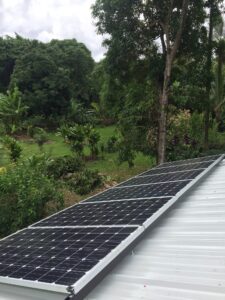
Physical installation—the crews on your roof, panels going up, electrical work being completed—is the shortest phase of the entire project, typically taking one to three days depending on system size and roof complexity.
Day one: Mounting hardware and racking
The first day of installation typically focuses on roof work—setting the mounting hardware, attaching rail systems, and verifying the layout matches the permitted design before any panels go up. For corrugated metal roofs in Hilo, this means installing rib-mounted brackets at the permitted locations, verifying waterproof sealing at each attachment point, and attaching horizontal rails. For tile roofs, it means removing tiles at mounting locations, setting flashed standoffs, and carefully reinstalling surrounding tiles. For flat roofs, it means positioning ballasted racking frames and confirming weight distribution.
Getting the mounting hardware right is the foundation of a long-lasting installation in Hilo’s climate. Professional crews take this phase seriously—verifying alignment, checking sealing integrity, and confirming structural connections before proceeding.
Day one or two: Panel installation and wiring
Once racking is in place, panels are lifted to the roof and attached to the racking structure. MC4 wiring connections between panels are made at each unit—using weatherproof connectors rated for outdoor UV exposure. String configuration and wiring routing from the array to the inverter location are completed during this phase.
Day two or three: Electrical work and commissioning
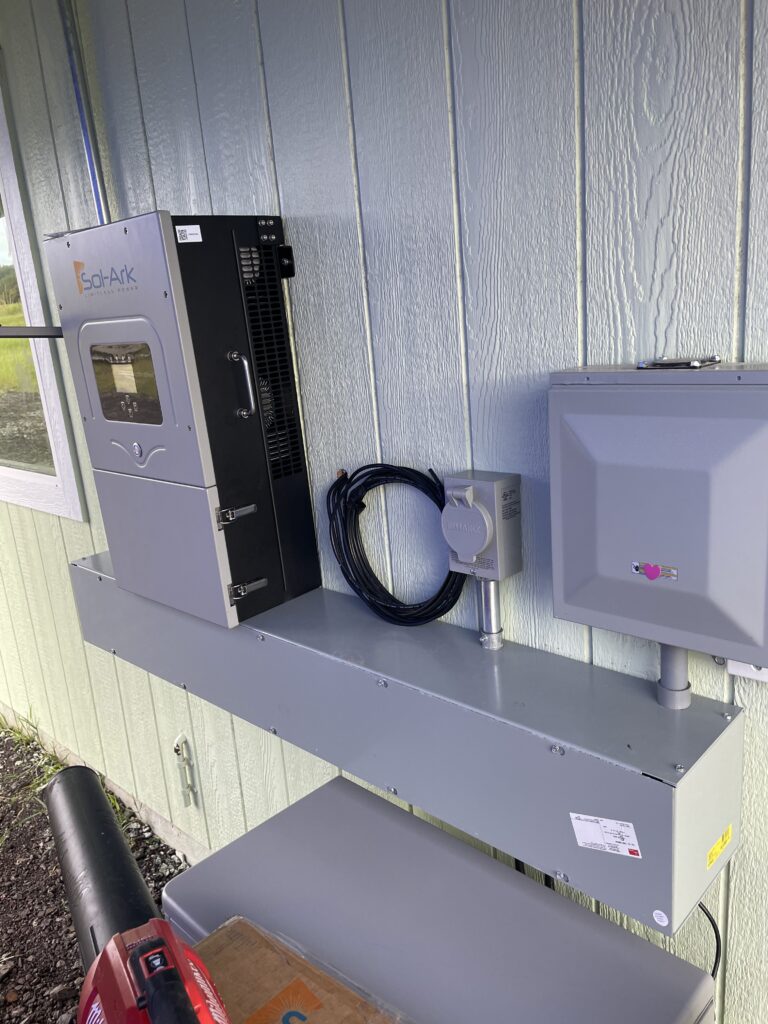
The electrical portion of installation—conduit runs from the roof to the inverter, inverter mounting and wiring, integration with the main electrical panel, overcurrent protection and rapid shutdown installation—is completed and the system is commissioned to confirm operation before the crew leaves.
At commissioning, the installer should confirm the system is producing power, verify monitoring connectivity, test rapid shutdown functionality, and conduct a walkthrough with you covering inverter location, indicator lights, monitoring platform access, and what to expect during the inspection process.
Scheduling installation after permit approval:
Most contractors schedule installation once permit approval is confirmed—not before. Installation scheduling typically happens 1 to 3 weeks after permit approval depending on crew availability. Contractors with active Big Island project schedules may have limited installation windows; those with more available capacity can typically schedule sooner after permit approval.
Phase Six: County Inspection
Typical duration: 1 to 3 weeks after installation
After installation is complete, your contractor schedules a Hawaii County building inspection. The inspector visits your property to verify that the installation matches the permitted plans and meets applicable building and electrical code requirements.
What inspectors check:
Panel placement and array layout matching permitted drawings. Electrical work compliance with NEC requirements as adopted by Hawaii—wire sizing, conduit fill, grounding, labeling, and disconnect locations. Rapid shutdown system installation and proper labeling. All required equipment certifications and markings present. Any structural work matching the permitted structural details.
Passing versus failing:
Professional contractors install to pass inspection the first time. Common reasons for inspection failure include missing or incorrect equipment labels, disconnect locations that don’t meet accessibility requirements, conduit runs without required supports, or grounding details that don’t match permitted drawings. Each failed inspection requires corrections and a reinspection—adding 1 to 3 weeks per cycle.
Current inspection scheduling in Hawaii County in 2026:
Inspection scheduling availability at Hawaii County varies with inspector workload. In active construction periods, scheduling an inspection may take 1 to 2 weeks after requesting it. Your contractor should have current knowledge of inspection scheduling timelines based on recent project experience.
Phase Seven: HECO Permission to Operate
Typical duration: 2 to 6 weeks after passing inspection
After the county inspection passes, your contractor submits final interconnection documentation to HECO requesting Permission to Operate. HECO verifies that the installed system matches what was approved in the interconnection application and that all technical requirements have been met.
What can extend PTO timeline:
Discrepancies between the installed system and the approved interconnection application—different equipment installed than what was applied for, system configuration changes made during installation, advanced inverter function settings not properly documented—require additional HECO review and potentially an amended interconnection application.
For systems that were conditionally approved pending final inspection documentation, HECO’s review of the final submission is typically faster than the initial technical review. For systems requiring additional technical verification, the PTO review can take longer.
What happens at PTO:
Once HECO grants Permission to Operate, your system is officially connected to the grid and can begin exporting power. Your contractor should notify you when PTO is received and confirm that the system is operating in grid-tied mode and that monitoring is reflecting accurate generation data.
This is the moment your solar investment begins generating value. Every week of timeline between contract signing and PTO is a week of full HECO bills—making the timeline question directly connected to the financial performance of your investment from the first day.
The Complete Realistic Timeline: What to Expect Start to Finish
Putting all phases together, here’s what a realistic complete timeline looks like for a standard residential solar installation in Hilo in October 2026:
Best-case scenario (experienced contractor, complete permit application, no circuit hosting constraints, available inspection slots):
- Contract to permit approval: 5 to 7 weeks
- Equipment procurement: Running parallel, no added time
- Installation scheduling and completion: 2 to 3 weeks after permit
- County inspection: 1 to 2 weeks after installation
- HECO PTO: 2 to 4 weeks after inspection
- Total: Approximately 10 to 16 weeks (2.5 to 4 months)
Typical scenario (competent contractor, normal Hawaii County review volume, standard circuit conditions):
- Contract to permit approval: 8 to 12 weeks
- Equipment procurement: 1 to 2 weeks after permit
- Installation scheduling and completion: 2 to 3 weeks after equipment
- County inspection: 1 to 3 weeks after installation
- HECO PTO: 2 to 4 weeks after inspection
- Total: Approximately 14 to 22 weeks (3.5 to 5.5 months)
Extended scenario (circuit hosting capacity review required, permit application kickback, or installation scheduling delays):
- Contract to permit approval: 12 to 20 weeks (including revisions)
- HECO circuit review running parallel: 8 to 16 weeks
- Equipment procurement and installation: 3 to 5 weeks
- Inspection and PTO: 3 to 6 weeks
- Total: 24 to 40 weeks (6 to 10 months)
The honest summary: plan for 3 to 6 months as your working timeline, with shorter durations possible for projects that benefit from all favorable conditions and longer durations possible when permit complications or HECO circuit reviews add time outside anyone’s direct control.
How Contractor Quality Directly Affects Your Timeline
Some timeline variation is driven by factors outside the contractor’s control—Hawaii County review queue depth, HECO’s interconnection workload, specific circuit hosting capacity conditions. But a meaningful portion of timeline variation is directly attributable to contractor quality—how completely they prepare permit applications, how proactively they manage the HECO interconnection process, and how efficiently they coordinate the sequential steps from installation scheduling through PTO.
The Permit Application Quality Factor
A first-submission permit approval from a contractor who knows exactly what Hawaii County requires versus a two-revision process from one who doesn’t can save 6 to 12 weeks from your project timeline. That’s 6 to 12 additional weeks of HECO bills you’re paying while waiting.
This is one of the clearest ways that contractor experience in the Hawaii County market has direct financial value. Paying a modest price premium for a contractor who reliably achieves first-submission permit approval is almost always worthwhile when measured against the carrying cost of extended timeline at Hilo’s electricity rates.
Ask any contractor you’re evaluating: what is your typical experience with Hawaii County permit review timelines? Have your recent applications been approved on first submission, or have you been receiving correction requests? The answer gives you a direct window into their permit application quality.
The HECO Proactivity Factor
HECO interconnection processes move faster when contractors actively follow up rather than waiting passively. A contractor who follows up with HECO’s Hawaii Island operations team proactively—checking application status, responding promptly to requests for additional information, and escalating appropriately when review appears stalled—consistently achieves faster PTO timelines than one who submits and waits.
This proactivity also matters for identifying HECO issues early. A contractor who discovers that your circuit has hosting capacity constraints during a pre-proposal check can either design around them or communicate the implications to you upfront. One who discovers the same issue after submitting an interconnection application faces delays that didn’t have to happen.
The Installation Scheduling Factor
Contractors with well-organized project scheduling can sequence installation, inspection, and PTO processing efficiently—minimizing gaps between phases. Those with poor project management allow weeks to pass between permit approval and installation scheduling, between installation and inspection scheduling, and between inspection approval and PTO documentation submission.
Over a full project, poor scheduling efficiency can add 3 to 6 weeks of unnecessary delay—time during which your system is physically installed or ready to install but waiting on administrative coordination that should have been initiated sooner.
How Hilo’s Timeline Compares to Other Markets
Understanding where Hilo’s solar installation timeline sits relative to other markets helps calibrate expectations and evaluate contractor claims.
Compared to Mainland U.S. Markets
Residential solar installations in many mainland markets—California, Texas, Arizona, Florida—often move from contract to Permission to Operate in 1 to 3 months. Permitting in many mainland jurisdictions is simpler and faster than Hawaii County. Utility interconnection processes in many mainland markets are less complex than HECO’s Big Island operations. And equipment logistics don’t involve inter-island freight.
When national solar marketing materials or general online research suggests solar installation takes 1 to 3 months, those estimates reflect mainland market conditions that don’t translate to Hilo. A Hilo contractor who quotes you a 6-week timeline is either describing an unusually favorable scenario or is setting expectations that won’t be met.
Compared to Oahu
Solar installation timelines on Oahu are somewhat faster than Big Island timelines—primarily because Oahu’s HECO operations have processed more interconnection applications and have more established processing infrastructure, and because Oahu’s supply chain doesn’t require the additional inter-island freight step that Big Island installations involve.
That said, Oahu has its own circuit hosting capacity constraints in established neighborhoods with high solar penetration, and Honolulu’s permitting process has its own complexity. Oahu timelines typically run 2 to 4 months for straightforward residential projects—faster than Hilo’s typical 3 to 5 months but not dramatically so.
Compared to Maui and Kauai
Maui and Kauai have their own utility relationships—Maui Electric and Kauai Island Utility Cooperative respectively—with their own interconnection processes, tariff programs, and grid characteristics. These utilities have different approval timelines and different technical requirements than HECO’s Big Island operations. Timeline comparisons across islands are therefore less useful than understanding the specific current conditions in the Big Island market.
What You Can Do to Help Keep Your Project on Track
While much of the timeline is outside your direct control, several things homeowners can do help minimize unnecessary delays.
Provide Complete Documentation Promptly
The most common homeowner-side delay is slow provision of 12 months of HECO bills needed for system design and permit documentation. Having these ready before your contractor requests them—or providing them immediately when asked—removes a potential delay before the permit application can be prepared.
Similarly, responding promptly to any requests from your contractor for property information, roof access scheduling, or electrical panel details keeps the permit preparation process moving.
Schedule Your Inspection Promptly
After installation is complete and your contractor notifies you that inspection can be scheduled, scheduling it promptly rather than letting it drift avoids unnecessary timeline extension. If your county inspection appointment requires you to be present or have the property accessible, coordinating that scheduling efficiently contributes to keeping the project moving.
Understand What’s Normal vs. What Should Concern You
Not all delay is a problem. A permit taking 10 weeks in a period of high Hawaii County review volume is normal and not a sign that anything has gone wrong. A contractor who isn’t responding to your status inquiries, who can’t tell you when your permit was submitted, or who discovered mid-application that your circuit has hosting capacity constraints that should have been checked before contract signing—these are concerns worth raising directly.
The distinction between normal timeline variation and contractor performance issues matters for knowing when to simply wait versus when to have a more direct conversation with your contractor about what’s happening and what’s being done to keep things moving.
Stay Engaged With Status Updates
Ask your contractor for regular status updates throughout the project—not daily check-ins, but a reasonable cadence of communication that keeps you informed about where each process stands. A contractor managing your project well should be able to tell you promptly: the date your permit application was submitted, the current status of your HECO interconnection application, whether any requests for additional information have been received, and the expected next milestone and approximate timing.
A contractor who is vague about these details or who hasn’t been following up with the relevant agencies is not managing your project actively—and that lack of active management translates into unnecessary timeline extension.
Common Timeline Myths and What’s Actually True
Several timeline myths circulate in the Hilo solar market and contribute to homeowner frustration. Setting the record straight upfront prevents those frustrations.
Myth: “We Can Have You Generating Solar Power in 6 Weeks”
Reality: In Hilo in 2026, 6 weeks from contract signing to Permission to Operate is not a realistic standard timeline—it’s an optimistic best case that requires everything to go right simultaneously. A contractor who routinely promises 6-week timelines without qualifying that this is a best case in favorable conditions is setting expectations they won’t consistently meet. Ask specifically: what’s your realistic typical timeline based on your recent projects, and what factors could extend it?
Myth: “HECO Is the Main Cause of Delays”
Reality: HECO’s interconnection process is a significant timeline factor, but Hawaii County permitting is often the longer pole in the tent for straightforward projects. And for projects where HECO does add timeline, the reason is often circuit hosting capacity constraints that a proactive contractor would have identified before application submission—making the HECO delay partly attributable to contractor diligence rather than purely to HECO’s processing.
Myth: “Once Permits Are Approved, Installation Starts Immediately”
Reality: Permit approval is a necessary precondition for installation but not a trigger for immediate scheduling. Equipment procurement timelines, crew scheduling constraints, and project management efficiency all affect how quickly installation begins after permit approval. A gap of 2 to 4 weeks between permit approval and installation start is normal. Longer gaps may indicate scheduling inefficiency worth inquiring about.
Myth: “The Physical Installation Is the Hard Part”
Reality: The physical installation—1 to 3 days of crew work on your property—is actually the most straightforward and predictable part of the entire project. The hard parts, from a timeline standpoint, are the regulatory and utility processes that bracket the installation: the permit process before and the inspection and PTO process after. Understanding this helps homeowners focus their attention and questions on the right phases.
Myth: “My Neighbor Got Theirs Done in 2 Months, So Mine Should Take the Same”
Reality: Timeline variation across projects in the same neighborhood is real and significant. Your neighbor’s circuit may have had ample hosting capacity while yours is constrained. Your neighbor’s contractor may have submitted a complete permit application that sailed through while yours required revisions. Your neighbor’s installation may have been done during a period of lighter permit review volume. Individual project timelines aren’t reliably predicted from a neighbor’s experience.
The Financial Cost of Timeline: Understanding What Delays Actually Mean
Every week between contract signing and Permission to Operate is a week you’re paying full HECO electricity rates rather than offsetting them with solar generation. Understanding this cost helps you evaluate the financial significance of timeline differences between contractors.
Quantifying the Carrying Cost
For a Hilo household paying $450 per month in electricity costs that a solar system would offset 90% of, the net monthly carrying cost of not yet having solar operating is approximately 405permonth—405 in electricity costs you’re paying that a functioning solar system would eliminate.
On that basis:
Each additional week of timeline costs approximately $100 in additional HECO bills.
Each additional month of timeline costs approximately $405.
A project that takes 5 months instead of 3 months—two months of additional delay—costs approximately $810 in additional electricity costs during the delay period.
A project where permit kickbacks add 10 weeks—a realistic consequence of a poorly prepared permit application—costs approximately $1,000 in additional carrying costs.
These are real costs that don’t appear on your solar proposal but affect the actual financial return of your investment. A contractor who compresses your timeline through permit application quality and HECO interconnection proactivity is delivering genuine financial value—not just project management efficiency.
Timeline and Incentive Timing
For homeowners financing their installation through a solar loan, the relationship between installation timeline and tax credit receipt matters for cash flow. The federal ITC and Hawaii state credit are claimed on tax returns filed for the year in which your system receives Permission to Operate. A system that achieves PTO in December 2026 generates credits claimable on 2026 taxes filed in early 2027. A system delayed to January 2027 generates credits claimable on 2027 taxes filed in early 2028—a full year later.
For homeowners with loan products structured around applying tax credit proceeds to principal in the year of installation, a timeline that pushes PTO past December 31 creates cash flow implications that deserve discussion with your contractor and your financial advisor before signing.
Questions to Ask Your Contractor About Timeline
Based on everything above, here are the specific timeline questions worth asking any solar contractor you’re evaluating for a Hilo installation.
About permit experience:
“What has been your typical Hawaii County permit review timeline for residential solar applications in the past 3 months? Have your recent applications been approved on first submission or have any required revisions?”
About HECO interconnection:
“Have you checked the hosting capacity situation on the HECO circuit serving my property? Are there any known constraints that would extend my interconnection timeline or require additional technical review?”
About equipment procurement:
“When will you order the equipment for my installation relative to permit submission? What are your current lead times for the specific equipment in this proposal?”
About installation scheduling:
“How quickly after permit approval can you typically schedule installation? What’s your current crew availability situation?”
About inspection:
“What is your experience with Hawaii County inspection scheduling recently? How quickly can you typically get an inspection scheduled after installation is complete?”
About overall timeline:
“What is your realistic, honest estimate for the total timeline from contract signing to Permission to Operate for a project like mine? What’s the best case and what factors could extend it?”
About their track record:
“Can you give me the contract-to-PTO timeline for your last three or four Big Island residential installations? I’d like to understand what your typical actual timelines look like rather than estimates.”
This last question is the most revealing. A contractor who can give you specific recent project timelines—rather than a general estimate—is demonstrating actual performance data rather than aspirational projections.
Solar Saint’s Approach to Timeline Management in Hilo
At Solar Saint, we’ve built our project management processes specifically around the timeline realities of the Big Island market—because we’ve seen what happens when contractors set unrealistic expectations and what it costs homeowners when projects run longer than they should.
We Check Hosting Capacity Before Proposals
Before we finalize any residential solar proposal in Hilo, we check HECO’s Distributed Energy Resources hosting capacity map for the circuit serving your property. If your circuit has constraints that will affect interconnection timeline or system design requirements, we know that before we propose a system—and we communicate it to you upfront rather than discovering it mid-application.
This proactive check doesn’t prevent hosting capacity issues from affecting your project when they exist. But it means you know about them before signing, your system design accounts for them, and your timeline expectations reflect the actual HECO review your circuit requires.
We Submit Complete Permit Applications
Our permit applications to Hawaii County are prepared by staff who know that building department’s specific requirements from submitting applications there routinely. Our applications include complete structural drawings with appropriate engineering calculations, correctly formatted electrical diagrams, and all required equipment documentation. We aim for first-submission approvals—and our track record with Hawaii County permit reviews reflects the preparation we put into each application.
We can tell you our recent application timelines based on actual submissions—not estimates. If you ask us what our last several Hawaii County residential solar permits looked like from submission to approval, we can give you specific numbers.
We Manage HECO Interconnection Actively
We don’t submit your HECO interconnection application and then wait for approval to arrive. We follow up with HECO’s Hawaii Island operations team regularly during the review period, respond promptly to any requests for additional information, and escalate appropriately when review appears to be stalled. Our goal is PTO as quickly as HECO’s process allows—and we apply active management to compress the timeline wherever contractor action can make a difference.
We Give You Honest Timeline Estimates
We’ll tell you the realistic timeline range for your specific project based on current Hawaii County permit conditions, the hosting capacity situation on your circuit, and our current installation scheduling. We’ll tell you what best case looks like and what factors could extend the timeline. We won’t tell you 6 weeks if 4 months is more realistic—because a homeowner who expects 6 weeks and waits 4 months has a fundamentally different experience than one whose accurate expectation is met.
And throughout the project, we communicate proactively. You’ll know when your permit application was submitted, when we receive permit approval, when your HECO interconnection application status changes, and when each subsequent milestone is approaching. The project is yours, and you deserve to know where it stands at every stage.
Ready to Start the Timeline Clock?
The solar installation timeline in Hilo in 2026 is what it is—shaped by Hawaii County’s permitting process, HECO’s Big Island interconnection requirements, and the logistics of the island market in ways that no contractor can entirely compress. But within that framework, contractor quality makes a real difference—in permit application completeness, HECO interconnection proactivity, and project management efficiency that adds up to weeks of timeline difference and real financial value at Hilo’s electricity rates.
If you’re ready to start the process with a contractor who will give you an honest timeline estimate, manage your project actively to compress it wherever possible, and keep you informed at every stage—we’d like to talk.
Bring your last 12 months of HECO bills. We’ll check your circuit’s hosting capacity, give you a realistic timeline estimate based on current Hawaii County and HECO conditions, and walk you through what the process looks like from contract signing to the day your system starts generating power.
Visit solar-saint.com to schedule your free site assessment and consultation. The sooner you start, the sooner you’re generating solar power—and we’ll manage your project to get you there as efficiently as the Big Island market allows.