Article Summary:
- Residential solar solutions in Hilo span a range of services—from system design and panel installation to battery storage, monitoring, and long-term maintenance—and the best companies deliver all of them with Big Island expertise
- What separates a great residential solar company in Hilo from an average one isn’t marketing language—it’s verifiable local experience, honest system design, climate-appropriate equipment, and post-installation accountability
- The “best” company for your Hilo home depends on your specific roof type, consumption pattern, HECO tariff situation, and financial goals—no single solution fits every household
- Residential solar solutions that include battery storage require additional design expertise specific to Hilo’s grid reliability conditions and HECO’s evolving rate structures
- Evaluating residential solar companies on the Big Island requires asking different questions than you’d ask a mainland contractor—the local regulatory, climate, and utility environment demands local knowledge
- Solar Saint offers the full range of residential solar solutions Hilo homeowners need, built on genuine Big Island expertise and a long-term service commitment that extends well beyond installation day
- Because system configuration depends on your household’s consumption patterns, HECO tariff options, and local climate demands, reading affordable solar energy systems for homes in Hilo (2026 guide) helps homeowners evaluate transparent pricing and maximize long-term savings.
Every solar company serving the Hilo market will tell you they offer the best residential solar solutions. They’ll use similar language about quality, savings, and customer service. They’ll show you similar-looking proposals with similar headline numbers. And they’ll all claim some version of local expertise and customer commitment that sounds equally convincing in a first meeting.
The challenge for Hilo homeowners isn’t finding companies that claim to offer great residential solar solutions. It’s figuring out which ones actually deliver—and specifically which ones deliver what Hilo’s unique environment, regulatory landscape, and utility relationship actually demand.
This article approaches residential solar solutions comprehensively—covering what the full range of solutions looks like for Hilo homeowners, what genuinely differentiates the companies that deliver them well from those that deliver them adequately or poorly, and how to evaluate any company you’re considering against the specific demands of the Big Island market. We’ll cover the complete suite of residential solar services that matter—from initial system design through installation, battery storage, monitoring, maintenance, and long-term support—and explain what best-in-class looks like at each stage.
And as we’ve done throughout this article series, we’ll make an honest, specific case for why Solar Saint is the residential solar company we recommend for Hilo homeowners—while giving you the framework to evaluate that recommendation rigorously.
What “Residential Solar Solutions” Actually Encompasses
The phrase “residential solar solutions” is broad enough to mean almost anything, which is exactly how some companies use it. Before evaluating who delivers them best, it’s worth being precise about what a complete residential solar solution actually involves for a Hilo homeowner.
System Design: The Foundation of Every Solution
A residential solar solution begins with system design—the process of determining what your home needs and building a technical plan to meet those needs. This is where good companies separate themselves from average ones, because system design in Hilo requires specific knowledge that generic solar training doesn’t provide.
Good residential solar system design for a Hilo home starts with 12 months of actual HECO bill history—not a square footage estimate, not a statewide average, and not a generic calculator output. It involves a physical site assessment that evaluates your specific roof’s condition, orientation, and structural capacity across whatever roofing material type your home has. It includes a shading analysis that accounts for Hilo’s lush vegetation and the way shadows move across your roof throughout the day and across seasons. And it incorporates explicit understanding of which HECO tariff program your system will be placed on and how that program’s compensation structure should influence system sizing.
System design is where the financial performance of your solar investment is determined. A system designed with accurate production estimates, appropriate sizing for CSS economics, and equipment specified for Hilo’s climate will deliver what it promises. A system designed with optimistic sun hours, insufficient shading adjustment, and generic equipment that doesn’t account for Hilo’s humidity will underperform—delivering disappointment rather than the savings that were projected.
The best residential solar companies in Hilo treat system design as the most important part of the process—not as a preliminary formality before the real work of closing a sale.
Panel Installation: Where Expertise Meets Your Roof
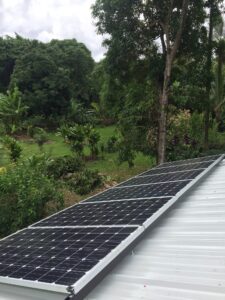
Solar panel installation in Hilo is not a standard process applied the same way to every roof. The physical act of mounting panels on a Hilo home requires genuine competency across the diverse roofing types found throughout Hawaii County’s residential neighborhoods—corrugated metal, standing seam, concrete tile, clay tile, flat membrane roofing, and composition shingle all require different mounting hardware, different installation sequences, and different waterproofing approaches.
Beyond roofing type, installation quality in Hilo’s climate requires specific attention to hardware specification and sealing that mainland installation training doesn’t fully address. Fasteners, sealants, conduit fittings, and racking hardware all need to be specified and applied with Hilo’s persistent humidity, heavy rainfall, occasional vog exposure, and trade wind loading in mind.
The best residential solar installation companies in Hilo have crews with hands-on experience across multiple roofing types in this specific climate—not just one or two types, not just experience from a drier environment applied to Hilo’s conditions. Their installation work reflects years of learning what holds up in this environment and what doesn’t.
Battery Storage Solutions: An Increasingly Central Service
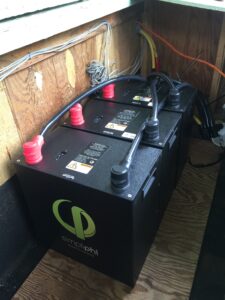
Battery storage has become an integral component of residential solar solutions in Hilo rather than an optional add-on. Grid reliability concerns, HECO’s time-of-use rate structures, and the financial value of improved self-consumption under CSS have all contributed to growing battery adoption on the Big Island.
The best residential solar companies offer battery storage as a genuinely integrated design component—not as an afterthought or upsell. That means conducting a load analysis to determine what critical loads you want to back up and for how long, sizing battery capacity based on that analysis and your consumption patterns rather than defaulting to a single standard battery configuration, and designing the electrical integration between solar system and battery system for optimal performance across all operating modes.
Battery storage solutions require additional design and installation expertise beyond basic solar panel installation. The electrical work for battery integration—critical loads sub-panel design, battery management system configuration, utility disconnect coordination, and rapid shutdown compliance—involves complexity that separates experienced battery installers from those simply adding a box to an existing system.
Monitoring and System Performance Management
A residential solar solution isn’t complete when the panels go on the roof and HECO grants Permission to Operate. An ongoing monitoring relationship—access to production data, support for interpreting what that data means, and responsiveness when monitoring reveals performance anomalies—is part of what distinguishes a complete residential solar solution from a transaction that ends at installation.
The best residential solar companies configure monitoring systems completely at commissioning, walk customers through how to use their monitoring platform, and maintain monitoring awareness for their installed customer base—either through automated alerts or periodic performance reviews—so that production issues are caught and addressed rather than discovered months later when cumulative underperformance becomes undeniable.
Maintenance and Long-Term Service
Solar panels require minimal but not zero maintenance. Panel cleaning, periodic system inspection, inverter monitoring, and eventual component replacement are all part of the long-term ownership experience. The best residential solar companies either offer formal maintenance programs or maintain the service capability to respond quickly when something needs attention—rather than being effectively unreachable once the installation project closes.
In Hilo specifically, maintenance considerations include vegetation management around the system—fast-growing tropical plants can create shading that wasn’t present at installation, and a responsive contractor helps homeowners understand when this is becoming a production factor—and hardware inspection that catches corrosion or loosening before it becomes a structural or waterproofing concern.
What Separates the Best Residential Solar Companies in Hilo
With the full scope of residential solar solutions established, here’s what genuinely distinguishes the companies that deliver them well from those that deliver them adequately or poorly.
Genuine Local Roots vs. Market Presence
There’s a meaningful difference between a solar company with genuine roots in the Hilo community and one that maintains a market presence here. Both may have a local phone number and a local address. The difference shows up in where their operational expertise lives.
A company with genuine local roots has been processing Hawaii County permit applications regularly for years—knowing that specific building department’s requirements, format expectations, and plan reviewer preferences in ways that translate into first-submission approvals rather than applications returned for correction. They’ve been filing HECO Big Island interconnection applications through multiple tariff program transitions—knowing the current state of hosting capacity on circuits serving Hilo’s established neighborhoods, understanding what advanced inverter requirements HECO’s technical review team is currently requiring for constrained circuits, and maintaining the working relationship with HECO’s Big Island operations that comes from repeated professional interaction.
They’ve installed solar on hundreds of Hilo homes across the full diversity of roofing types in the local housing stock—not just on the roof types that happen to match what they primarily encountered elsewhere. And their service infrastructure is genuinely here—local crews who can respond to warranty issues without inter-island coordination, local supplier relationships that support efficient equipment procurement for Big Island projects, and a community presence that creates the accountability that comes from doing business among your neighbors.
A company with Big Island market presence may offer some of these things but not all of them. The gaps show up in permitting delays, interconnection complications, and service unavailability that homeowners discover after installation rather than before signing.
System Design That Starts From Your Actual Situation
The best residential solar companies in Hilo design systems from your actual situation—your specific bills, your specific roof, your specific tariff program, your specific consumption patterns—rather than from a template that looks individualized but is really a customized cover page on a standard proposal.
The practical difference: a company doing genuine site-specific design for a Hilo home will propose different system sizes for two homes in the same neighborhood if those homes have different consumption patterns—even if their roofs are nearly identical. The company applying a template may propose the same system for both because the roof characteristics are similar.
System design genuinely grounded in your situation produces proposals whose production estimates you can verify against independent tools, whose system sizing rationale connects specifically to your consumption history and your HECO tariff program, and whose financial projections hold up in practice rather than systematically overestimating what you’ll actually save.
Equipment Knowledge Beyond Manufacturer Marketing
The best residential solar companies in Hilo know why they specify the equipment they specify—not just that it’s “premium” or “high-efficiency,” but specifically why it’s appropriate for Hilo’s operating environment.
That means knowing that specific panel models have strong PVEL scorecard performance in damp heat testing—relevant because Hilo’s persistent humidity is a primary driver of panel longevity differences between manufacturers. It means knowing the temperature coefficient of the panels they’re proposing and why it matters for output in Hilo’s warm climate. It means knowing what racking hardware grades are appropriate for Hilo’s corrosive environment and why standard galvanized hardware falls short.
This knowledge goes beyond what manufacturer sales representatives provide. It comes from years of specifying and observing equipment performance in this specific environment—seeing what holds up and what doesn’t, and applying those observations to every system design decision.
Transparent Financial Guidance With Complete Disclosure
The best residential solar companies give homeowners complete financial information—including the parts that complicate the solar pitch.
That means explaining CSS tariff export compensation honestly—how the rate at which excess generation is credited affects the financial return on system capacity beyond what you’ll self-consume. It means disclosing any dealer fees in financing products explicitly and giving you the effective all-in financed cost rather than highlighting an attractive monthly payment while obscuring total financing expense. It means presenting tax credit information with honest discussion of the tax liability requirements for using those credits—not assuming every homeowner will immediately capture full credit value regardless of their actual tax situation.
Companies that provide this complete picture may close fewer sales from customers who discover solar isn’t right for their specific situation. They build more durable relationships with the customers who do proceed—because those customers made genuinely informed decisions and know what to expect.
Post-Installation Accountability That’s More Than a Promise
Workmanship warranties, monitoring services, and service commitments mean different things coming from different companies. The best residential solar companies in Hilo have the local infrastructure to honor these commitments—local crews available for warranty service, established service protocols, and a business model that treats post-installation relationships as central rather than as cost centers to minimize.
The test of post-installation accountability isn’t how it’s described in a proposal—it’s what actually happens when something needs attention. References from customers whose systems have been running for two or more years, who have experienced at least one situation requiring post-installation contact with their contractor, give you the most reliable evidence of what a company’s service accountability actually looks like in practice.
The Full Range of Residential Solar Solutions Available in Hilo
For Hilo homeowners evaluating their options, here’s a comprehensive overview of what residential solar solutions look like across different home types, needs, and situations.
Grid-Tied Solar Without Battery Storage
The most common residential solar solution in Hilo is a grid-tied system without battery storage—panels mounted on the roof, an inverter converting DC to AC, and a connection to HECO’s grid through the Customer Self-Supply interconnection. This configuration generates electricity during daylight hours, offsets your HECO consumption directly, and exports any excess at CSS rates.
This is the right starting point for most Hilo homeowners and the most straightforward financial case. System costs are lower than battery-integrated configurations, the installation process is more predictable, and the financial return—driven primarily by self-consumption offset at Hilo’s high retail electricity rates—is compelling for well-designed systems at appropriate scale.
The best residential solar companies in Hilo design grid-tied systems specifically for CSS economics—sizing to cover the majority of your annual consumption without significant excess export, using inverters with advanced function capabilities that satisfy HECO’s Big Island interconnection requirements, and specifying equipment that performs well in Hilo’s climate conditions across the full system lifespan.
Solar Plus Battery Storage Solutions
Battery storage integrated with residential solar addresses Hilo’s grid reliability concerns, captures the financial benefit of self-consumption optimization under CSS, and for customers on time-of-use rates, enables peak-hour dispatch of solar generation that maximizes bill savings.
A complete solar-plus-storage residential solution involves system design that accounts for both solar generation and battery dispatch together—not just adding a battery to a solar system as a separate afterthought. The solar array is sized and oriented with storage integration in mind. The battery system is sized based on a load analysis that identifies critical loads for backup and estimates daily cycling needs for self-consumption optimization. And the electrical integration connects solar, battery, home loads, and grid in a configuration that operates safely and efficiently across all conditions.
The best residential solar companies in Hilo are fluent in both the technical design and the HECO interconnection implications of battery-integrated systems. They understand which battery products perform well in Hilo’s climate and are currently available through established Hawaii distribution channels. And they can articulate specifically how battery storage improves your financial situation under CSS—converting production that would otherwise export at low CSS rates into peak-hour self-consumption at full retail value.
Solar for Older Hilo Homes
A significant portion of Hilo’s residential housing stock consists of older homes—plantation-era construction, mid-century builds, and various vintages of Hawaii’s architectural history that present specific solar installation challenges. Corrugated metal roofing in various states of condition, older electrical infrastructure, lower-pitch roof planes, and mature vegetation creating shading complexity are all common characteristics of older Hilo homes.
The best residential solar companies treat older homes as design challenges to be solved—not as complications to be avoided or disclosed only on installation day. A thorough site assessment for an older Hilo home includes honest evaluation of roof condition and remaining life, electrical panel assessment for upgrade requirements, careful shading analysis given mature surrounding vegetation, and structural evaluation where roof age or condition raises questions about the capacity to safely support a panel array.
For older homes, the system design may involve tradeoffs not present in newer construction—smaller system size driven by roof area constraints, microinverters or optimizers to manage complex shading from surrounding trees, electrical panel upgrades that add to project cost but are required for safe solar interconnection, or a recommendation to address roofing conditions before installation proceeds.
Companies that handle these conversations honestly—even when honesty means a more complex project or an upfront recommendation to delay installation pending roof work—are the ones Hilo homeowners with older homes should seek out.
Solar for Rental Properties and Investment Properties
Hilo has a meaningful inventory of residential rental properties—single-family rentals, multi-family properties, and vacation rental units across the spectrum of Hawaii County’s rental market. Solar on rental properties serves a different financial logic than owner-occupied residential solar, with several specific considerations.
Utility billing structure matters for rental solar ROI. In rentals where tenants pay their own HECO bills, the energy savings from solar accrue to tenants rather than the property owner—limiting the direct financial return from the owner’s perspective. In rentals where utility costs are included in rent, solar reduces the owner’s operating costs and potentially supports higher rent pricing. Understanding this distinction shapes the financial case for rental property solar.
The investment tax credit applies to residential rental properties—but the tax treatment differs from owner-occupied primary residences, with depreciation and passive activity rules affecting how credits and deductions interact with property owner tax situations. Commercial tax incentives—including MACRS depreciation—may apply to rental property solar installations in ways that enhance the financial return beyond what the residential owner ITC calculation suggests. This is an area where consulting a tax professional familiar with Hawaii rental property tax treatment is important before finalizing the financial case.
The best residential solar companies serving Hilo’s rental market understand these distinctions and can model financial returns appropriately for rental property clients rather than applying owner-occupied residential financial calculations to a different type of investment.
Solar Solutions for HOA Properties and Shared Facilities
Some Hilo residential properties exist within homeowner associations with CC&Rs that govern exterior modifications including solar installations. While Hawaii law provides certain protections for homeowners’ rights to install solar despite HOA restrictions, navigating the HOA approval process—providing required documentation, meeting aesthetic requirements, coordinating with HOA management—adds a layer to the residential solar process that not all contractors are experienced with.
The best residential solar companies in Hilo can help homeowners understand their rights under Hawaii’s solar access laws, prepare the documentation typically required for HOA approval processes, and design systems that meet applicable aesthetic requirements while still serving the homeowner’s energy goals.
How the Best Hilo Solar Companies Handle the HECO Relationship
Among all the qualities that distinguish residential solar companies in Hilo, expertise in the HECO relationship may be the most important—and the hardest to assess from the outside without asking the right questions.
Why HECO Expertise Is Non-Negotiable
HECO’s role in your residential solar experience doesn’t end when the panels are on the roof. The utility relationship governs:
Which tariff program your system is placed on—determining how your solar generation is valued and how your bill is calculated.
How your interconnection application is processed and on what timeline—affecting when your system can legally begin operating.
Whether your system requires advanced inverter functions—affecting what equipment is appropriate and how it needs to be configured.
How your system interacts with the grid during normal operation and during outages—affecting both daily performance and backup capabilities.
And how any future tariff changes or program modifications affect your system’s ongoing financial performance.
A residential solar company without deep HECO Big Island expertise doesn’t just face administrative inconveniences—they make decisions about system design, equipment selection, and interconnection strategy that may be systematically wrong for Hilo’s specific utility environment.
What Deep HECO Expertise Looks Like
The best residential solar companies in Hilo demonstrate HECO expertise in specific, verifiable ways:
They can tell you immediately which HECO tariff program new residential applications are being placed on in Hawaii County in 2026, and how that program’s compensation structure differs from programs that no longer accept new applicants.
They check HECO’s Distributed Energy Resources hosting capacity maps as part of their pre-proposal process, identify whether the circuit serving your property has constraints that affect interconnection timeline or system design requirements, and communicate this information proactively rather than discovering it mid-application.
They specify inverters with the advanced function capabilities that HECO’s Big Island technical review team currently requires for systems connecting to circuits with high solar penetration—and they configure those functions correctly at commissioning.
They manage the interconnection application process actively—submitting complete, accurate documentation, following up with HECO’s Hawaii Island operations team proactively, and communicating status updates to you throughout the review period.
And they stay current as HECO’s programs, requirements, and policies evolve—because what was true about HECO’s Big Island interconnection process two years ago isn’t necessarily true today, and a residential solar company serving this market needs current, specific knowledge rather than historical understanding applied to a changed environment.
Comparing Residential Solar Solutions: What to Look for When Evaluating Companies
When you’re comparing residential solar companies in Hilo, evaluating their solutions requires looking beyond proposal prices and company descriptions. Here’s the practical comparison framework that reveals which companies are genuinely best positioned to serve you.
Evaluate the Proposal’s Depth and Specificity
A complete, site-specific residential solar proposal for a Hilo home contains several elements that distinguish thorough design from surface-level proposals:
The system layout should show your actual roof—not a generic roofline with panels placed generically. The production estimate should state specific assumptions: peak sun hours per day used for your location, system loss factor applied, shading adjustment percentage and its basis. The equipment list should include specific make and model numbers for panels, inverters, and racking hardware—not brand names with vague model descriptions or references to “equivalent” products.
The financial analysis should clearly distinguish between self-consumed generation—valued at retail rate—and exported generation—compensated at CSS export rates—rather than treating all generation as if it earns retail-rate credit. The tax credit section should acknowledge the tax liability requirement for using credits and either confirm your qualification based on a conversation about your situation or note the qualification dependency explicitly.
And the proposal should include the contractor’s Hawaii contractor’s license number, their insurance certificate information, their workmanship warranty terms, and realistic timeline expectations for Hawaii County permitting and HECO interconnection in current market conditions.
Proposals missing several of these elements are not complete proposals—they’re sales documents that provide the information that makes solar look attractive while omitting information that would complicate the picture.
Ask the Questions That Reveal Local Knowledge
Beyond proposal evaluation, specific questions reveal whether a company has the local knowledge their Big Island residential solar work requires:
“What mounting hardware do you use for corrugated metal roofs, and why is that approach appropriate rather than standard L-foot mounts?” A company with genuine corrugated metal roofing experience answers this immediately and specifically.
“Have you checked the hosting capacity situation on the HECO circuit serving my property?” A company with genuine HECO Big Island interconnection experience either has this information or commits to checking before finalizing the proposal.
“What HECO tariff will my system be placed on, and how did that affect your system size recommendation?” A company with current HECO knowledge answers this clearly and connects it specifically to the sizing rationale in their proposal.
“What sealant products do you use at roof penetrations, and why are they appropriate for Hilo’s rainfall environment?” A company with climate-specific installation knowledge answers this specifically—naming the product type and explaining its performance characteristics for Hilo conditions.
“Can you provide references from customers in Hilo specifically whose systems have been running for at least two years?” A company with genuine local track record produces these references readily.
The quality of answers to these questions tells you more about a company’s actual capabilities than any marketing material they produce.
Compare Warranties Carefully
Residential solar solutions from different Hilo companies carry different warranty structures that deserve careful comparison:
Equipment warranties from panel, inverter, and racking manufacturers are what they are—specified in manufacturer documentation and not subject to contractor modification. Compare panel warranty terms (both product and performance warranties), inverter warranty length (25-year microinverter warranties versus 10-12-year string inverter warranties involve different long-term cost implications), and racking hardware warranties that specifically address corrosion resistance.
Workmanship warranties—the contractor’s own guarantee of their installation quality—vary significantly across companies. Look for written warranty terms of at least 10 years covering installation workmanship specifically. Shorter warranties, verbal warranty commitments without written documentation, or warranty language that creates excessive qualification hurdles for claims are all concerns.
Service and response commitments—how the company handles monitoring alerts, warranty claims, and post-installation questions—are documented in some proposals and absent from others. Ask explicitly about the service process: who do you call when something needs attention, what’s the expected response time, and are warranty service visits at no charge or do they involve service call fees?
Check Contractor Stability and Track Record
The residential solar solutions a company promises today are only as valuable as that company’s ability to honor them over the next 25 years. Contractor stability and long-term operational continuity are meaningful factors in your evaluation—not because you can predict the future with certainty, but because certain indicators correlate with long-term viability.
Years of continuous Big Island operation—not just years since founding in another market, but specifically years of continuous operation in Hawaii County—is the primary indicator of local staying power. A company that has operated continuously on the Big Island through the market cycle changes, tariff program transitions, and competitive pressures of the past decade has demonstrated the operational resilience that suggests continued viability.
A verifiable track record of completed, permitted, inspected installations in Hawaii County—accessible through DCCA contractor records and customer references—substantiates operational capability in this specific market rather than in markets where conditions differ.
And a business model that’s sustainable without depending on aggressive sales volume—indicated by reasonable pricing, transparent financial disclosure, and a service-oriented approach to customer relationships—suggests a company building for long-term presence rather than optimizing for near-term transaction volume.
Residential Solar Solutions Across Hilo’s Neighborhoods: Local Considerations
Different parts of Hilo and the surrounding area present specific solar considerations that the best residential solar companies know and account for in their work.
Lower Hilo and Coastal Neighborhoods
Neighborhoods at lower elevation closer to Hilo Bay—including areas near downtown, Keaukaha, and the coastal zone—experience a specific climate profile: consistent trade wind flow, more salt air influence than inland neighborhoods, and morning sun patterns that shift to afternoon cloudiness as maritime influences dominate.
Salt air influence on hardware is a specific concern in these neighborhoods. Racking hardware, fasteners, and electrical components at coastal properties experience more aggressive corrosive conditions than properties even a few miles inland and at higher elevation. Marine-grade stainless steel and properly coated aluminum are minimum specifications for coastal Hilo installations—standard-grade alternatives corrode faster in this environment.
HECO circuit conditions in some lower Hilo neighborhoods reflect years of strong solar adoption, with some circuits serving established residential areas carrying significant existing distributed solar penetration. The hosting capacity implications of this—potential requirements for advanced inverter functions, additional HECO technical review, and potentially longer interconnection timelines—are considerations a locally experienced contractor knows to check proactively for properties in these neighborhoods.
Upper Hilo and Kaumana
Neighborhoods at higher elevations—Kaumana, upper Puna, and the slopes approaching the saddle between Mauna Kea and Mauna Loa—present a different climate profile than lower Hilo. Higher elevation means cooler temperatures, which actually benefits solar panel performance since panels generate more efficiently at lower operating temperatures. But higher elevation also means more frequent cloud cover and mist from orographic lift as trade winds rise over the terrain.
Production modeling for upper Hilo properties should reflect the actual solar resource at that elevation—not the same assumptions applied to lower-elevation installations. A contractor with genuine local calibration will adjust production estimates for elevation-specific conditions rather than applying a single Hilo-wide solar resource assumption across properties with meaningfully different micro-climates.
Puna District Properties
Properties in the Puna district—extending from the Hilo area south through Pahoa and toward the coast—experience conditions that include some of the island’s highest vog exposure levels due to prevailing wind patterns that can carry volcanic emissions from Kilauea across this area. Homes in lower Puna that experienced the 2018 lava flow events also reflect a specific context in terms of local utility infrastructure and community resilience concerns that make battery storage a particularly compelling consideration.
For Puna properties, vog exposure is a meaningful factor in production modeling—and a contractor who doesn’t adjust production estimates to reflect Puna’s specific vog patterns is using assumptions calibrated for a different environment. Battery storage for grid resilience is also particularly relevant in Puna given the community’s experience with extended infrastructure disruptions.
Hamakua Coast Properties
Properties along the Hamakua Coast north of Hilo present specific installation considerations—dramatic terrain, diverse roofing types on older rural properties, potential for wind exposure from both trade winds and kona weather patterns, and agricultural contexts that may involve ground-mounted systems or larger system scales appropriate for farm operations.
Hamakua Coast properties often require more thorough structural assessment than urban Hilo homes—older rural construction may have roof structures less well-documented than more recent residential development, and the site assessment process for these properties benefits from contractor experience with rural and agricultural property conditions.
What Homeowners Experience With the Best vs. Average Residential Solar Companies
The difference between the best and average residential solar companies in Hilo isn’t always apparent in the proposal stage—it becomes clear across the full arc of the project and the ongoing service relationship. Here’s what the experience looks like from both sides.
The Best Company Experience
The project begins with a thorough site assessment that takes the time it takes—not rushed to deliver a proposal quickly. The contractor reviews your actual bills, assesses your roof comprehensively, and comes back with a proposal that reflects specific design decisions connected to your specific situation.
The proposal contains complete information—specific equipment, realistic production estimates with stated assumptions, honest CSS tariff discussion, complete cost breakdown, written warranty terms, and a realistic timeline. The contractor answers your questions directly and specifically, including the hard questions about tax credit qualification, dealer fees in financing products, and what happens if HECO’s interconnection review reveals circuit capacity constraints.
The permit application goes in complete and comes back approved rather than returned for revision. The installation crew arrives on the scheduled date, knows your roof type before they get there, uses the right hardware for your specific roofing material, and leaves the property clean when they’re done. The system passes county inspection on the first visit. HECO interconnection moves through on a timeline consistent with what was communicated upfront.
When the first HECO bill arrives looking different from what you expected, you call your contractor and they explain it clearly—walking you through fixed charges, CSS export credits, and what your ongoing bill structure looks like compared to pre-solar. When your monitoring app shows an anomaly two years later, you call and someone responds within a business day and sends a crew member to investigate within a week.
That’s the best residential solar company experience in Hilo. It’s not perfect—problems occur in any construction project—but problems are handled rather than avoided, and the relationship has genuine substance throughout the system’s life.
The Average Company Experience
The average company experience starts similarly—a reasonable site assessment, a proposal that looks complete. But the cracks appear in the details. The production estimate is optimistic—based on sun hours that don’t fully reflect your specific location’s cloud patterns. The CSS tariff discussion is vague—the financial model shows monthly savings without clearly explaining that CSS export credit rates are much lower than the retail rate you pay for consumption. The financing disclosure is incomplete—the dealer fee in the loan product isn’t mentioned until you ask directly.
Installation goes reasonably well—the crew knows what they’re doing for your roof type, and the work passes inspection. But HECO interconnection takes longer than the contractor implied it might, because the circuit serving your neighborhood has hosting capacity constraints the contractor didn’t check before filing the application.
When the first HECO bill arrives higher than expected, you call—and get a voicemail. The callback comes three days later and the explanation is rushed. Your monitoring app shows a microinverter underperforming in year two; you email and get a response after a week, and scheduling someone to look at it takes three more weeks.
None of these things are catastrophic. The system works reasonably well. But the experience is consistently a step below what it should be—and that step below is spread over 25 years of a relationship that started as a significant financial commitment.
Solar Saint: Complete Residential Solar Solutions for Hilo Homeowners
Solar Saint provides the full range of residential solar solutions Hilo homeowners need—from initial consultation and system design through installation, battery storage integration, monitoring, maintenance, and long-term service. Everything we do is built on genuine Big Island expertise and a service commitment that we design to last as long as your system does.
Our System Design Process
We start every residential engagement with your actual HECO bills—12 months minimum—and a thorough site assessment of your specific home. We evaluate your roof’s condition and remaining life honestly, including having the conversation about roofing concerns when they’re present rather than after panels are mounted. We conduct a genuine shading analysis, not a satellite-imagery estimate. We check HECO’s hosting capacity information for the circuit serving your property before we finalize our proposal.
The system we design is sized for your actual consumption under the CSS tariff that will govern your interconnection—not for the largest array your roof can hold, not for financial projections that assume NEM economics. The production estimate in our proposal uses assumptions you can verify against PVWatts and other independent tools. The financial model distinguishes between self-consumed generation and exported generation and applies CSS export compensation rates honestly.
Our Installation Quality
Our installation crews have hands-on experience with every major roofing type in Hilo’s residential housing stock. We use rib-mounted hardware on corrugated metal roofs. We use non-penetrating seam clamps on standing seam roofs. We use tile hooks and proper flashing sequences on tile roofs. We use sealants formulated for Hilo’s tropical coastal environment. And we use racking hardware with stainless steel fasteners and appropriate material grades for Hilo’s corrosive conditions.
We handle Hawaii County permitting with the efficiency that comes from submitting applications to that building department routinely—applications that are complete on first submission and approved without revision requests. We manage HECO Big Island interconnection with current knowledge of circuit conditions, tariff programs, and advanced inverter requirements. And our installations pass county inspections on the first visit because we install to code rather than to minimum effort.
Our Battery Storage Solutions
For Hilo homeowners who want battery storage—for backup capability, for self-consumption optimization, for demand charge management, or for the peace of mind of reduced grid dependence—we design and install integrated solar-plus-storage systems that treat the battery as a core design component rather than an add-on.
We conduct load analyses that identify what you actually need to back up and for how long, size battery systems based on that analysis rather than defaulting to a single standard configuration, and design the electrical integration that makes the combined system operate correctly across all modes. We specify battery products that are available through established Hawaii distribution channels and that have demonstrated performance in the Big Island’s climate conditions.
Our Monitoring and Service Commitment
Every system we install includes monitoring configuration that gives you visibility into your system’s performance from the first day of operation. We walk every customer through their monitoring platform at commissioning—explaining what normal looks like, what should prompt a call to us, and how to read the data that tells you whether your system is performing as expected.
When something needs attention, we’re here to address it. Our service infrastructure is on the Big Island—local crews, established parts procurement relationships, and a service culture that treats post-installation relationships as central to our business rather than as overhead to minimize. Our workmanship warranty is written into every contract—at least 10 years of coverage for the quality of our installation—and we honor it with the same commitment we bring to new installations.
Our Community Commitment
We’re in this community for the long term. The systems we install today are ones we expect to be servicing for the next two decades. The homeowners we work with are our neighbors. And the reputation we build through the quality of our work—installation by installation, service call by service call, honest conversation by honest conversation—is the only marketing that ultimately matters in a market as relationship-based as the Big Island’s solar community.
We don’t try to be the company that closes the most sales. We try to be the company that delivers the best long-term residential solar experience in Hilo—and lets that track record speak for itself through the references we can confidently provide and the customers who recommend us to their neighbors.
Choosing the Best Residential Solar Company for Your Hilo Home
The evaluation process for choosing a residential solar company in Hilo is covered in depth across this article series—from verifying licensing through DCCA, to checking references from real Hilo customers, to assessing HECO tariff knowledge through direct questioning, to evaluating proposals for completeness and honest financial disclosure.
The short version: the best residential solar company for your Hilo home is the one that can demonstrate genuine local roots in the Big Island market, show you a system design specifically calibrated to your consumption and HECO tariff situation, specify equipment they can explain is appropriate for Hilo’s climate conditions, provide written warranty terms that reflect genuine confidence in their installation quality, and connect you with references from real Hilo customers whose systems have been running long enough to reveal whether the company’s post-installation service is as good as their pre-sale attention.
Apply those criteria to every company you evaluate. Apply them to us.
We’re confident in how that comparison comes out—and we’re ready to earn your business through the quality of the conversation rather than through marketing language designed to close a sale before you’ve done your homework.
Ready to Explore Your Residential Solar Options?
If you’re a Hilo homeowner ready to explore what a complete residential solar solution looks like for your specific home—your roof type, your HECO bills, your tariff situation, your goals—we’d like to start that conversation.
There’s no pressure timeline, no artificial urgency, and no version of this conversation where we’re trying to close before you’re ready. We want you to make a genuinely informed decision—because homeowners who understand what they’re buying make better long-term partners than those who were sold something and are now trying to reconcile expectations with reality.
Bring your last 12 months of HECO bills. Bring your questions about your roof type and what installation looks like for your specific home. Bring your questions about financing options and what you’ll actually pay after incentives and financing costs. And bring the questions from this article series that we haven’t fully answered yet—we’ll work through every one of them.
Contact Solar Saint to schedule your free site assessment and consultation. We’re here on the Big Island, we know this market, and we’re ready to show you what genuinely excellent residential solar solutions look like for a Hilo home.