Quick Takeaways:
- A home solar system is made up of several key components—panels, inverters, mounting hardware, wiring, and optionally batteries—and each one plays a specific role in how your system performs.
- The equipment choices your solar contractor makes for your Hilo home matter more than most homeowners realize, particularly given Hawaii’s tropical climate, salt air, and UV intensity.
- Inverter type—string, microinverter, or power optimizer—significantly affects how your system handles Hilo’s frequent partial shading from clouds and vegetation.
- Battery storage is becoming an increasingly practical addition for Hilo homeowners, given Hawaii’s high electricity rates and the value of energy independence on the Big Island.
- Understanding what each component does helps you ask better questions, compare proposals more confidently, and make smarter decisions about your solar investment.
- Not all solar equipment is built to the same standard, and in Hilo’s environment, the gap between quality components and budget options shows up over time.
Why Understanding Your Solar System Actually Matters
Most people who go solar focus on the end result—lower electricity bills, energy independence, doing right by the environment—without spending much time on what’s actually on their roof and in their electrical panel, making all of that happen. That’s completely understandable. You don’t need to be a solar engineer to own a solar system.
But here in Hilo, there’s a real case for knowing the basics of what your system is made of. Our climate puts specific demands on solar equipment that you won’t find in most mainland markets. The salt air rolling in off Hilo Bay, the near-daily rainfall, the high humidity, the intense tropical UV, the lush vegetation that grows up fast and casts shade in places it didn’t two years ago—all of it has implications for which components hold up well and which ones can cause headaches down the road.
When you understand what each part of your system does and why it was chosen, you’re in a much better position to evaluate proposals from a solar energy company in Hilo, ask questions that actually matter, and feel confident in the decisions you’re making about a system that will be on your home for 25 or more years.
This guide walks through every major component of a residential solar system—what it does, how it works in plain language, and what matters specifically for homes in Hilo and across the Big Island.
Solar Panels: The Foundation of Your System
Solar panels are the most visible part of any solar installation and the component most people picture when they think about solar. But there’s more to them than meets the eye, and the differences between panel types and quality tiers are worth understanding.
How Solar Panels Work
Solar panels are made up of photovoltaic (PV) cells—typically silicon-based—that generate direct current (DC) electricity when exposed to light. The cells are wired together into modules, laminated between protective layers, and framed in aluminum. When sunlight hits the cells, electrons in the silicon are knocked loose and begin to flow, creating an electrical current.
A common question from Hilo homeowners is whether their panels will produce much electricity on overcast days. The answer is yes—solar panels respond to light, not just direct sunlight. On a heavily overcast day, output drops significantly compared to full sun, but the system is still producing. On partly cloudy days, which describe a good portion of Hilo’s afternoons, production varies throughout the day but still adds up meaningfully over time.
Panel Types: Monocrystalline vs. Polycrystalline
Monocrystalline panels, made from single-crystal silicon, are the dominant technology in residential solar today. They offer higher efficiency (more electricity per square foot of panel), better performance in low-light conditions, and generally longer useful lives than older polycrystalline designs. For homes in Hilo where roof space may be limited by shading, dormers, vents, or complex roof shapes, the higher efficiency of quality monocrystalline panels is often worth the investment.
Polycrystalline panels are less commonly used in new installations today. You may encounter them on older systems around the island, identifiable by their bluish, speckled appearance compared to the more uniform dark look of monocrystalline panels.
Panel Efficiency Ratings
Panel efficiency refers to what percentage of the sunlight hitting the panel gets converted into electricity. Standard residential panels today range from about 19% to 23% efficiency. Higher-efficiency panels produce more electricity from the same amount of roof space—relevant in Hilo where usable roof area is often limited.
Efficiency matters, but it’s not the only thing that matters. A high-efficiency panel with a poor degradation rate or weak UV resistance isn’t necessarily the better choice for a Hilo home. Looking at the combination of efficiency, degradation rate, and build quality together gives a more complete picture.
What to Look for in Solar Panels for Hilo
A few panel specifications deserve attention when choosing equipment for Hawaii’s climate. The temperature coefficient tells you how much panel output drops as temperature rises—lower is better, and this matters in Hawaii’s heat. UV resistance and encapsulant quality affect how well the panel holds up over years of intense tropical UV exposure. Junction box ingress protection (IP) rating tells you how well the panel is sealed against water—IP68 is the highest rating and is appropriate for Hilo’s wet conditions.
Degradation rate is arguably the most important long-term performance figure. Premium panels from established manufacturers typically carry a degradation rate of 0.3% to 0.5% per year, meaning they’ll still be producing 87% or more of their original output after 25 years. Budget panels with higher degradation rates quietly cost homeowners money every year through lower production.
Solar Inverters: The Brain of Your System
If solar panels are the foundation of your system, the inverter is its brain. It’s the component that makes the electricity your panels generate actually usable in your home, and it does a great deal more than simple conversion.
What an Inverter Does
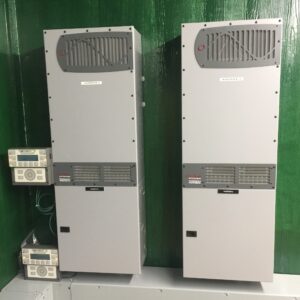
Solar panels produce direct current (DC) electricity. Your home runs on alternating current (AC) electricity—the same type that comes from the grid. The inverter converts the DC output of your panels into AC power that your appliances, lights, and devices can use. It also manages the flow of electricity between your solar system, your home’s loads, the grid, and—if you have one—your battery storage system.
Modern inverters also monitor your system in real time, tracking production from each panel or string of panels, flagging performance issues, and sending data to the monitoring apps that let you see how your system is doing from your phone.
String Inverters
A string inverter is a single central inverter that handles the output of all the panels in your system, which are wired together in series (called a “string”). String inverters are the most established inverter technology, generally the least expensive option, and work well for simple roof configurations with good, consistent sun exposure.
The limitation of string inverters is that the entire string performs at the level of its weakest panel. If one panel in a string is shaded by a cloud, a tree branch, a passing shadow—the output of every panel in that string is affected. In Hilo, where partial shading from vegetation and cloud cover is a regular reality, this characteristic is worth thinking carefully about.
String inverters also typically carry warranties of 5 to 10 years, meaning they’re likely to need replacement at least once during the 25-plus year life of your solar system. That replacement cost is worth factoring into the long-term financial picture.
Microinverters
Microinverters are small inverters installed on each individual panel rather than as a single central unit. Because each panel has its own inverter, they operate completely independently—a shaded or underperforming panel doesn’t drag down the rest of the system.
For Hilo homes with complex roof shapes, multiple roof orientations, or any meaningful shading from trees or structures, microinverters are often the better-suited technology. Each panel produces at its maximum regardless of what the other panels are doing, which adds up to meaningfully better overall system performance in real-world conditions.
Microinverters from reputable manufacturers typically carry 25-year warranties, matching the expected lifespan of the panels themselves. The upfront cost is higher than a string inverter, but the combination of better shading tolerance and longer warranty life often makes them the more economical choice over the full life of the system.
Power Optimizers
Power optimizers are a middle-ground option. Like microinverters, they’re installed at the panel level and allow each panel to operate independently, maximizing its individual output regardless of what neighboring panels are doing. Unlike microinverters, they don’t perform the DC-to-AC conversion themselves—they optimize the DC output of each panel and send it to a central string inverter that handles the conversion.
Power optimizers offer the panel-level performance benefits of microinverters at a somewhat lower cost, while the central inverter they pair with still needs eventual replacement. They’re a solid choice for many Hilo homes, particularly those where budget is a consideration but panel-level performance optimization is still desired.
How to Choose the Right Inverter for Your Hilo Home
The right inverter for your home depends on your roof configuration, the amount of shading you deal with, your budget, and how long you want to go between potential service needs. A qualified solar energy company in Hilo should walk you through the trade-offs clearly and make a recommendation based on your specific situation—not just based on which product has the highest margin.
Solar Mounting Systems: What Keeps Your Panels in Place
Mounting hardware may be the least glamorous part of a solar installation, but it’s doing critical work every day—holding your panels securely against wind, rain, and the occasional tropical storm event that makes its way across the Pacific.
Roof Mounting Hardware
Standard residential solar installations use a racking system that attaches to your roof’s structural members (rafters or purlins) and provides rails on which the panels are mounted. The attachment points where the racking connects to the roof are weatherproofed with flashing and sealant to prevent water intrusion—a detail that matters enormously in Hilo’s rainfall environment.
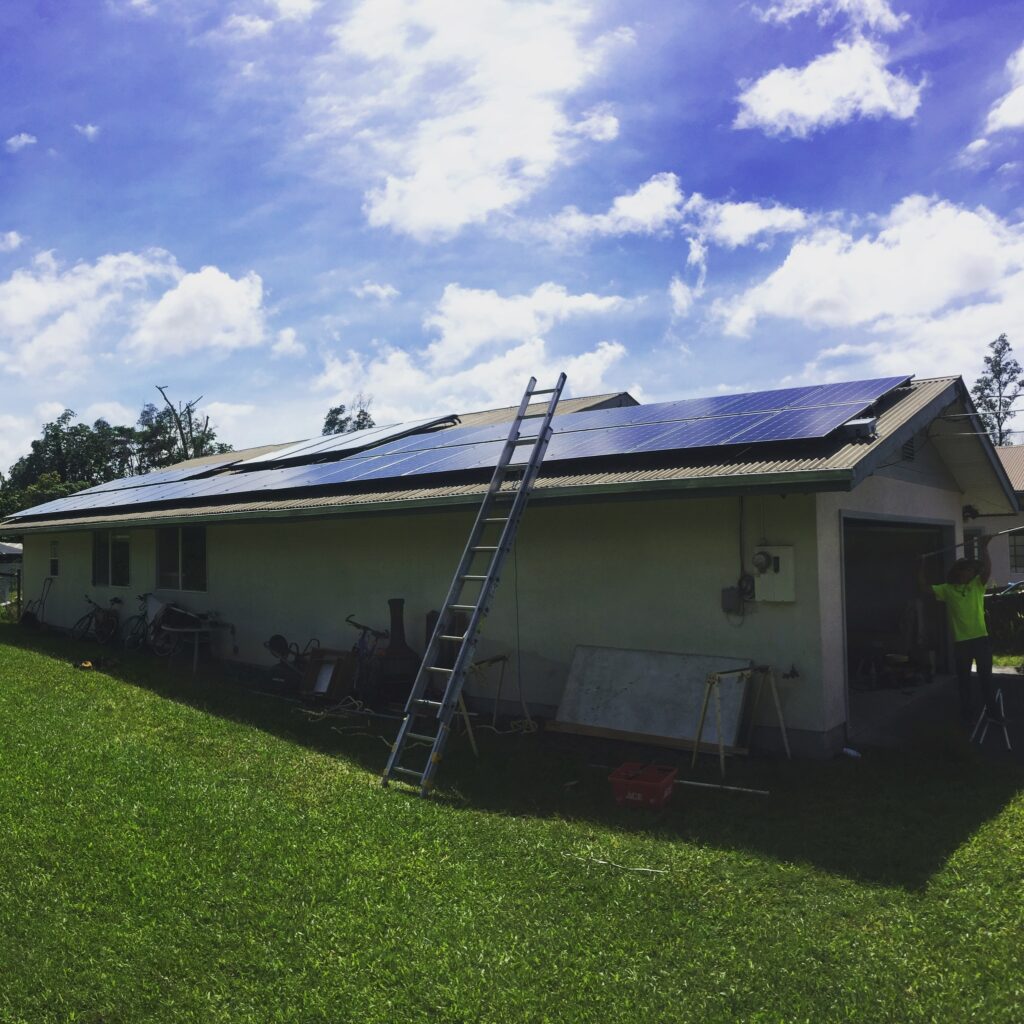
For corrugated metal roofs, which are common across older homes and plantation-style properties in Hilo, specialized mounting hardware designed specifically for metal roofing is needed. The attachment method differs from asphalt shingle or flat tile installations, and using hardware designed for the specific roof type is not optional—it’s the difference between a watertight installation and one that creates roof leaks over time.
Material Standards for Hawaii’s Climate
Salt air corrosion is a real factor for any metal component on the exterior of a Hilo home, and solar mounting hardware is no exception. Quality racking systems use anodized aluminum rails and stainless steel fasteners rather than standard steel hardware that will corrode over years of exposure to coastal conditions.
When reviewing a solar proposal, it’s entirely reasonable to ask specifically what the racking system is made of and whether the hardware meets the corrosion-resistance standards appropriate for your property’s proximity to the coast. This detail separates installations built to last from those that cut corners on components that aren’t visible to the homeowner on installation day.
Wind Load Engineering
Hawaii’s wind load requirements for solar installations are more stringent than most mainland states, reflecting the reality of trade winds, tropical storms, and occasional severe weather events. A properly permitted solar installation in Hilo will have been engineered to meet Hawaii County’s wind load specifications—meaning the mounting system has been calculated to hold the panels securely under the wind conditions the installation is expected to face.
Pulling permits and having the installation inspected by Hawaii County isn’t just a bureaucratic hurdle—it’s the process that confirms your system was installed to meet these engineering standards.
Solar Wiring and Electrical Components
The wiring, conduit, disconnect switches, and electrical panels that connect everything together don’t generate much conversation in solar sales pitches, but they’re fundamental to how safely and reliably your system operates over its lifetime.
DC Wiring and Combiner Boxes
The wiring that runs between your panels and your inverter carries DC current and is exposed to the elements on the roof and in conduit runs along your home’s exterior. Solar wiring is rated for outdoor, UV-exposed use—but the quality of that rating and how well the conduit is sealed affects how the wiring holds up over 25 years of Hilo’s humidity, UV, and rainfall.
Combiner boxes, used in larger systems to consolidate output from multiple strings of panels before it reaches the inverter, should be rated for wet locations and properly sealed. These are not places to economize in a climate like Hilo’s.
AC Wiring and the Main Electrical Panel
After the inverter converts DC power to AC, that power needs to be connected to your home’s electrical panel and, through the panel, to the grid. This work involves your home’s existing electrical infrastructure and must be done by a licensed electrician following the National Electrical Code and Hawaii’s state amendments.
If your home has an older electrical panel, your solar installation may require a panel upgrade as part of the project. This adds cost but is a legitimate requirement when existing panels don’t have sufficient capacity to safely accommodate the solar system’s output. An honest contractor will identify this upfront rather than after you’ve already signed a contract.
Disconnect Switches and Safety Equipment
Solar installations require specific safety disconnects that allow utility workers or emergency responders to quickly shut down the system if needed. These are required by code and should be clearly labeled and accessible. HELCO has specific requirements for how solar systems must be configured for safe interconnection with the grid—a licensed contractor familiar with Hawaii’s requirements will handle this correctly.
Solar Battery Storage: Energy on Your Terms
Battery storage has moved from a niche add-on to a mainstream consideration for new solar installations in Hawaii, and for good reasons that are specific to life on the Big Island.
How Solar Batteries Work
A solar battery stores excess electricity your panels produce during the day so you can use it when your panels aren’t producing, primarily at night or during extended cloudy periods. When your panels are generating more electricity than your home is currently consuming, the excess charges the battery rather than going to the grid. When your panels aren’t producing enough to meet your home’s demand, the battery discharges to cover the gap.
Battery systems include the battery cells themselves, a battery management system (BMS) that monitors and protects the battery, and in some configurations, a separate battery inverter or hybrid inverter that manages the flow between panels, battery, home loads, and grid.
Lithium-Ion vs. Other Battery Technologies
Lithium-ion batteries are the dominant technology in residential solar storage today, and for good reason. They offer high energy density (more storage capacity in less space), efficient charge and discharge cycles, long cycle life, and relatively low maintenance. The lithium iron phosphate (LFP) chemistry used in many current residential batteries has a strong safety track record and performs well in the temperature ranges common in Hawaii.
Older lead-acid battery technology is still sometimes used in off-grid systems, but is rarely the right choice for a grid-tied residential solar installation today. The cycle life, efficiency, and maintenance requirements of lead-acid batteries compare unfavorably to those of lithium-ion for most residential applications.
Battery Sizing for Hilo Homes
Getting battery sizing right involves understanding how much of your electricity usage you want the battery to cover and for how long. A battery sized to cover only critical loads during a short outage looks very different from a battery designed to provide whole-home backup through an extended grid disruption.
In Hilo, where power outages from severe weather or grid issues can last beyond a few hours, thinking through what you actually need the battery to do before sizing it is worthwhile. Your solar contractor should walk through this analysis with you and help you match battery capacity to your real needs rather than defaulting to a one-size recommendation.
Battery Lifespan and Warranty
Most residential lithium-ion batteries are warranted for 10 years or a specified number of charge cycles—whichever comes first. After that period, the battery’s usable capacity will have declined, though the battery doesn’t simply stop working on the warranty expiration date. Battery costs have declined significantly over the past several years, and the trend toward lower replacement costs is expected to continue.
Performance Monitoring Systems
Every quality modern solar installation includes some form of performance monitoring—software that tracks how much electricity your system is producing in real time, by day, month, and year. Monitoring serves a practical purpose: it lets you confirm the system is performing as expected and catch problems early when they’re typically much less expensive to fix.
What Good Monitoring Shows You
A monitoring dashboard should show you current production, daily and monthly totals, historical comparisons, and ideally panel-level or string-level data so you can see if one part of the system is underperforming relative to the rest. Some systems also include consumption monitoring, which tracks your home’s electricity usage alongside production so you can see your net grid usage in real time.
For Hilo homeowners, monitoring production over time helps you build a realistic picture of what your system produces across different seasons and weather patterns. Hilo’s production varies more month to month than many homeowners expect before they have data in hand—not because the system isn’t working, but because our cloud patterns and rainfall genuinely vary across the year.
Responding to Monitoring Alerts
Modern inverters and monitoring platforms can flag issues automatically—a panel that drops off, an inverter that’s showing error codes, production that falls below expected thresholds. Responding to these alerts promptly and contacting your solar contractor for a professional assessment when something looks off is one of the most practical habits you can develop as a solar system owner.
Frequently Asked Questions About Solar Components in Hawaii
Do solar panels work on rainy days in Hilo?
Yes. Solar panels generate electricity from light, not heat or direct sunlight. On rainy, overcast days, production drops significantly compared to sunny days, but the system is still producing. Hilo’s annual solar resource, even accounting for its famous rainfall, is sufficient to make solar financially worthwhile for most homeowners, which is why so many homes across the island already have solar.
How do I know if my inverter is working correctly?
Your monitoring system is the first line of feedback. If your inverter is functioning normally, production data will show up as expected. If the inverter has stopped communicating or is showing error codes, the monitoring platform will typically alert you. Physical indicators on the inverter itself—status lights or a display screen—also provide basic operational feedback. If anything seems off, contacting your solar contractor for a checkup is the right move.
What’s the difference between a hybrid inverter and a standard solar inverter?
A hybrid inverter combines the functions of a solar inverter and a battery inverter in a single unit, managing the flow of power between your solar panels, battery, home, and grid simultaneously. It’s often the cleanest solution for solar-plus-storage systems installed together. A standard solar inverter handles only the conversion of panel output and would require a separate battery inverter if storage is added later.
Is battery storage worth it for a Hilo home?
For most Hilo homeowners, the case for battery storage is stronger than in most mainland markets. Hawaii’s high electricity rates mean stored solar energy has significant value. HELCO’s current programs for new solar customers affect how excess energy is compensated, making self-consumption more important than it was under older net metering structures. And the Big Island’s history of grid disruptions makes backup capability a practical consideration. Whether it pencils out for your specific situation depends on your usage, system size, and what interconnection program you’ll be enrolling in—a conversation worth having with your solar contractor.
How long does solar wiring last?
Quality solar wiring installed correctly should last the full life of your system—25 to 30 years. The key factors are using properly rated wire for outdoor, UV-exposed use and ensuring conduit runs are well-sealed against moisture intrusion. In Hilo’s humidity, inspecting conduit seals and wiring connections as part of periodic system maintenance is a sensible practice.
Putting It All Together
Understanding the components of your solar system isn’t about becoming a technical expert—it’s about being an informed buyer and owner. When you know what a microinverter does and why it might be the right choice for your Hilo home with its mature mango trees, you can have a real conversation with your solar contractor rather than just accepting whatever’s in the proposal. When you understand that your inverter has a shorter expected lifespan than your panels, you can budget for that replacement rather than being surprised by it.
The solar systems that perform best over the long run in Hilo aren’t necessarily the ones with the lowest upfront price. They’re the ones where every component was chosen thoughtfully for Hawaii’s specific conditions, installed correctly by a contractor who knows what they’re doing, and maintained with reasonable care over the years. That combination is what delivers on the promise of 25-plus years of clean, cost-effective electricity from your roof.
Work With a Solar Energy Company in Hilo That Knows the Details
At Solar Saint, we take component selection seriously—because we’ve seen firsthand what the difference between quality equipment and budget alternatives looks like after a few years of Hilo’s climate. We work with homeowners across Hilo and the Big Island to design systems that are built to last, using equipment that stands up to everything our environment asks of it.
If you have questions about what’s in a solar proposal you’ve received, want to understand your options before making a decision, or are ready to move forward with a system designed for your specific home, reach out to us. As your local Solar contractor in Hilo, homeowners have trusted us, we’re happy to walk through the details with you, no pressure and no shortcuts.