
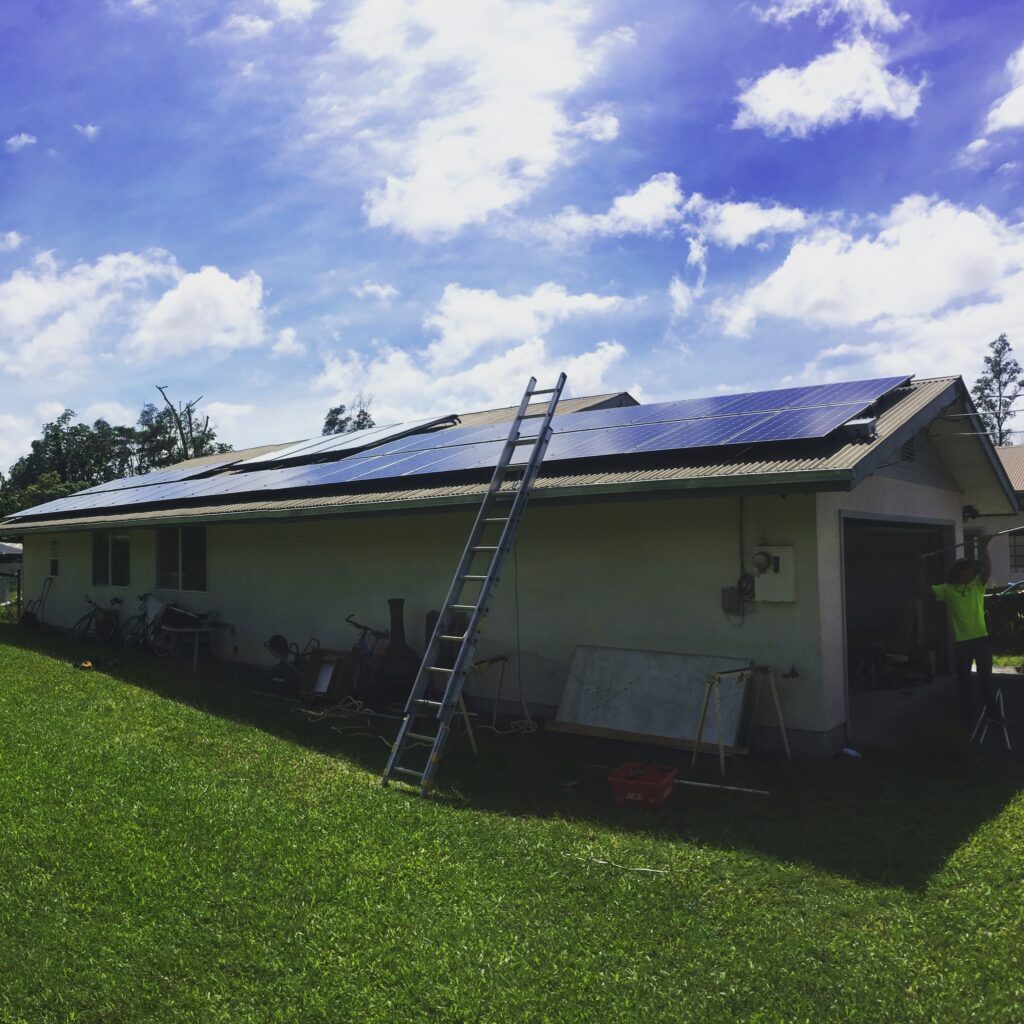
Solar technology moves fast. What was considered premium equipment three years ago is now mid-range, and what’s available today would have seemed like overkill to most homeowners just a few years back. For Hilo residents thinking about going solar—or those who already have a system and are wondering what’s new—2026 brings some genuinely useful advances worth knowing about.
This isn’t a rundown of lab prototypes or technology that won’t reach Hawaii for another decade. Everything covered here is either already available through reputable solar contractors in Hilo or becoming widely accessible through established equipment channels right now. The focus is on what’s practical, what’s relevant to east side conditions, and what’s actually worth paying attention to when you’re making decisions about your home’s energy system.
Why Technology Choices Matter More in Hilo Than Most Places
Before getting into specific equipment, it helps to understand why technology selection is particularly important for Hilo homeowners compared to, say, someone going solar in San Diego or Dallas.
Hilo’s climate is genuinely unique. The combination of high humidity, frequent rain, occasional vog from Kilauea, salt air for homes near the coast, and the mixed sun-and-cloud pattern that defines east side weather means your solar equipment lives in a demanding environment. Equipment that performs fine in a dry, stable climate may degrade faster or perform inconsistently here if it wasn’t designed with these conditions in mind.
At the same time, HECO’s interconnection programs—particularly the Customer Self-Supply (CSS) model that most new Hilo installations operate under—put a premium on self-consumption. The better your system is at capturing every available photon, storing energy efficiently, and managing when and how power flows through your home, the more value you extract from your investment.
Technology choices, in other words, have real financial consequences in Hilo. The right equipment for this specific environment produces more, lasts longer, and pays back faster.
Solar Panel Technology: What’s Available and What Works Best in Hilo
The Shift to Higher-Efficiency Panels
Panel efficiency—the percentage of sunlight a panel converts to usable electricity—has improved steadily, and 2026 is seeing more mainstream availability of panels that were previously in the premium-only category.
A few years ago, 20% efficiency was considered high performance. Today, panels in the 22% to 23% efficiency range are available from established manufacturers at prices that are no longer out of reach for most residential budgets. The significance of this for Hilo is straightforward: higher efficiency means more power from the same roof space. On homes with limited south-facing roof area—which is common in many Hilo neighborhoods given lot orientation—squeezing more watts per square foot matters.
Monocrystalline PERC and TOPCon Panels
The two panel technologies dominating quality residential installations in 2026 are PERC (Passivated Emitter and Rear Cell) and TOPCon (Tunnel Oxide Passivated Contact).
PERC panels have been the residential standard for several years now. They perform reliably, degrade slowly, and are available from multiple reputable manufacturers at accessible price points. For most Hilo installations, a quality PERC panel from a tier-one manufacturer remains a solid, proven choice.
TOPCon panels represent a step forward in cell architecture. They achieve higher efficiencies than standard PERC—some commercial TOPCon panels are pushing past 23%—and they show better performance in low-light and diffused-light conditions. That last point is worth paying attention to for Hilo. On overcast mornings or during the cloud buildup that happens most afternoons on the east side, a TOPCon panel will generate meaningfully more power than an equivalent PERC panel operating in the same conditions.
TOPCon panels are now available from manufacturers including Jinko Solar, LONGi, and REC Group, and pricing has come down enough that they’re appearing in standard residential project quotes rather than just premium-tier builds.
Heterojunction (HJT) Panels
Heterojunction technology panels combine crystalline silicon with thin-film amorphous silicon layers, producing some of the highest efficiency ratings available in residential solar and excellent temperature coefficients. That second point—temperature coefficient—matters for Hawaii.
Temperature coefficient describes how much a panel’s output drops as it heats up. All panels lose some efficiency in heat, but panels with better (lower) temperature coefficients lose less. In Hilo’s climate, where summer afternoons can get hot and humid, a panel with a strong temperature coefficient will maintain better output through the warmest parts of the day.
REC Alpha and Panasonic EverVolt HK Black series panels use HJT technology and carry some of the best temperature coefficient ratings on the market. They’re premium-priced, but for homeowners with constrained roof space who need maximum production, they’re worth the conversation.
What About Thin-Film and Emerging Technologies?
Thin-film panels like those made by First Solar see wide deployment in utility-scale projects but aren’t typically used in Hilo residential installations. Their lower efficiency per square foot makes them a poor fit for rooftop residential use where space is at a premium.
Perovskite solar cells have been generating excitement in research circles for years, with theoretical efficiencies that leave silicon in the dust. But as of 2026, perovskite technology hasn’t made the jump to reliable, warrantied residential products. Durability in real-world conditions—humidity, heat cycling, UV exposure—remains an active area of work. Worth watching over the next five to ten years, but not something to factor into a buying decision today.
Aesthetics: All-Black Panels
This might seem like a minor point, but it comes up regularly with Hilo homeowners. All-black monocrystalline panels—where both the cells and the frame are black rather than the traditional silver-framed look—have become widely available at reasonable price premiums. For homes in neighborhoods where curb appeal matters or where HOA guidelines (yes, some Hilo-area communities have them) are a factor, all-black panels offer a cleaner look without sacrificing meaningful performance.
Inverter Technology: The Brain of Your Solar System
Panels generate DC power. Your home runs on AC. The inverter is what bridges that gap, and inverter technology has seen some of the most meaningful advances in residential solar over the past several years.
String Inverters vs. Microinverters vs. Power Optimizers
This is the most common technology question Hilo homeowners ask about, and the answer genuinely depends on your roof layout and shading conditions.
String inverters connect all your panels in series—like links in a chain. They’re cost-effective and have been the industry workhorse for decades. The downside: if one panel in the string underperforms (due to shade, debris, or a fault), it drags down the output of every panel in the string. For a clean, unshaded, single-plane south-facing roof, a quality string inverter from SolarEdge or Fronius remains a reliable and cost-effective choice.
Microinverters, made most prominently by Enphase, attach to each individual panel and convert DC to AC right at the panel level. Each panel operates independently—shading or issues on one panel don’t affect the rest. This architecture is particularly well-suited to Hilo homes where:
- Roofs have multiple planes facing different directions
- Partial shading from trees or neighboring structures is present
- Morning vs. afternoon sun patterns mean different roof sections peak at different times
Enphase’s current IQ8 microinverter series also has a capability that’s become increasingly relevant for Hilo: grid-forming functionality during outages. IQ8 microinverters can generate a limited amount of power directly from the panels during a grid outage, even without a battery—enough to run some basic loads during daylight hours. Add a battery, and you get full backup capability. That kind of resilience matters on the east side where outages after heavy weather aren’t uncommon.
Power optimizers from companies like SolarEdge offer a middle path—DC optimizers attach to each panel to maximize individual panel output, while a central inverter still handles the DC-to-AC conversion. This gives you panel-level monitoring and partial shade mitigation with a slightly lower equipment cost than a full microinverter system.
Enphase IQ8 Series: What’s New in 2026
Enphase continues to refine the IQ8 series, with the IQ8P and IQ8X variants offering higher power ratings that better match the output of today’s higher-wattage panels (now commonly 400W to 430W per panel for quality monocrystalline products). The IQ8X handles up to 640W of DC input, making it compatible with the largest residential panels currently available.
Enphase’s IQ System Controller 2 has also improved in functionality—managing the interaction between solar, battery, and grid with better automation and more granular control over when the system charges batteries vs. exports vs. draws from the grid.
SolarEdge’s Evolving Platform
SolarEdge remains a strong option for Hilo installations, particularly on larger homes with simpler roof geometries. Their Energy Hub inverter integrates battery storage management directly into the inverter rather than requiring a separate device, simplifying the overall system architecture. SolarEdge’s monitoring platform has also matured, offering solid consumption tracking and panel-level performance visibility.
Battery Storage: The Technology That’s Changing the Most
If there’s one area of solar technology where 2026 looks meaningfully different from even two or three years ago, it’s battery storage. Prices have fallen, energy density has improved, and the product options available to Hilo homeowners have expanded considerably.
Why Battery Storage Matters More in Hilo
On the mainland, battery storage is often positioned primarily as a backup power solution—something you pull out when the grid goes down. In Hilo, the economics of battery storage are driven by something more fundamental: HECO’s self-supply program structure.
Under CSS, you don’t get meaningful credit for power you export to the grid. Power your panels generate that you don’t immediately use either gets wasted (exported for little to no credit) or stored in a battery for use later. A battery system lets you capture evening and nighttime electricity consumption—the hours when your panels aren’t generating—from solar you produced during the day. Given that HECO rates are $0.40+ per kWh, every kWh your battery displaces from the grid is worth a lot.
Battery storage in Hilo isn’t a luxury add-on. For households trying to maximize self-consumption and minimize their HECO bill, it’s the piece that makes the whole system perform at its potential.
Tesla Powerwall 3
The Tesla Powerwall 3 represents a meaningful step forward from its predecessors. Key specs worth knowing:
- 13.5 kWh usable capacity (same as Powerwall 2)
- 11.5 kW continuous power output—significantly higher than earlier versions, meaning it can handle larger loads during an outage
- Integrated solar inverter—Powerwall 3 includes its own inverter, eliminating the need for a separate string inverter when paired with solar panels
- Improved efficiency in the battery management system
For Hilo homeowners, the higher continuous power output is meaningful. Running central AC, a refrigerator, and basic household loads during a grid outage requires real power capacity. Earlier Powerwall versions occasionally struggled to maintain larger loads; Powerwall 3’s 11.5 kW output handles a typical Hilo family home’s essential load comfortably.
The integrated inverter design also simplifies installation and can reduce overall system cost slightly by eliminating one component. The tradeoff is less flexibility—you’re tied to Tesla’s inverter technology rather than being able to pair with Enphase or SolarEdge.
Enphase IQ Battery 5P
Enphase’s IQ Battery 5P is the current flagship in their residential storage lineup:
- 5 kWh usable capacity per unit (systems are typically built with 2–4 units for meaningful whole-home backup)
- 3.84 kW continuous output per unit
- Modular design—you can start with one or two units and add more later as budget allows or storage needs grow
- LFP (Lithium Iron Phosphate) chemistry—more on this below
The modular nature of Enphase’s battery system is worth highlighting for Hilo homeowners who want to stage their investment. Starting with a smaller battery capacity and adding units over time gives you flexibility that a single-unit system like Powerwall doesn’t offer.
Franklin Electric apower and Other New Entrants
Franklin Electric’s apower battery system has entered the market with strong specs and competitive pricing, offering 13.6 kWh per unit with high power output. It’s gained traction in Hawaii installations over the past year and is worth asking your installer about as a Powerwall alternative.
Other players—including Panasonic’s EverVolt battery and the SolarEdge Home Battery lineup—have also improved their offerings, giving installers and homeowners more quality options than existed even two years ago.
LFP vs. NMC Battery Chemistry: Why It Matters for Hilo
Battery chemistry affects safety, longevity, and performance in ways that are particularly relevant for Hawaii’s climate.
NMC (Nickel Manganese Cobalt) chemistry was used in earlier Powerwall versions and some competitor products. It offers high energy density but is more sensitive to temperature extremes and has a somewhat shorter cycle life.
LFP (Lithium Iron Phosphate) chemistry—used in Enphase IQ batteries, Franklin apower, and now in Tesla’s newer products—offers several advantages:
- Greater thermal stability (less heat sensitivity in Hawaii’s warm, humid climate)
- Longer cycle life—LFP batteries typically maintain capacity through more charge/discharge cycles than NMC equivalents
- No cobalt in the chemistry, which is a supply chain and sustainability consideration some homeowners care about
For Hilo specifically, LFP’s better thermal stability is a practical advantage. Batteries installed in non-air-conditioned garage or utility spaces—which is common in Hawaii—experience real heat exposure, and LFP chemistry handles that environment more gracefully.
Battery Sizing for Hilo Homes
How much battery capacity do you actually need? A few guidelines:
For basic overnight needs (powering essential loads from stored solar through the evening until panels start producing again the next morning): 10–14 kWh of usable capacity is typically sufficient for an average Hilo household.
For meaningful backup power (maintaining whole-home or near-whole-home function through an extended outage): 20–27 kWh gives you comfortable buffer, especially if you’re managing AC loads.
For grid independence goals (minimizing HECO dependency as much as possible day to day): sizing depends heavily on your specific consumption patterns. This is where detailed energy modeling from your installer pays off.
Smart Energy Management and Monitoring Technology
The third pillar of 2026’s solar technology landscape is what happens after the panels and batteries are installed—how your system is monitored, managed, and integrated with the rest of your home’s energy use.
Why Monitoring Matters in Hilo
Hilo’s weather variability means solar production can fluctuate significantly from day to day. A monitoring system that gives you clear, real-time visibility into what your panels are producing, what your batteries are holding, and what your home is consuming lets you make informed decisions—and catch problems early.
A system producing 15% less than expected might mean a panel covered in vog residue, a shading issue from a tree that’s grown since installation, or an inverter fault. Without monitoring data, you might not notice for months. With a good monitoring platform, you see the anomaly immediately.
Enphase Enlighten App
Enphase’s Enlighten monitoring platform remains one of the most detailed and user-friendly options for residential solar monitoring. Because microinverters report at the individual panel level, Enlighten shows you production data for each panel—not just the system as a whole.
In Hilo, this panel-level granularity is genuinely useful. You can see exactly which panels are affected by morning shade from a neighbor’s tree, identify a single underperforming panel before it costs you months of lost production, and track how your system responds to different weather patterns over time.
The Enlighten app also integrates battery state-of-charge, home consumption data (when paired with an IQ System Controller), and historical trends in a clean interface that most homeowners find intuitive after a few days of use.
SolarEdge Monitoring Portal
SolarEdge’s monitoring platform offers similarly detailed data and has improved significantly in interface usability over recent versions. It integrates with their Home Battery system and provides panel-level visibility when paired with power optimizers.
SolarEdge has also developed features around time-of-use optimization—automatically managing when the battery charges, when it discharges, and when the system draws from the grid based on rate schedules. This feature is somewhat less relevant under HECO’s current flat-rate structure but becomes more valuable if HECO introduces time-of-use rates for residential customers, which has been discussed.
Tesla Powerwall App and Energy Dashboard
For Powerwall-based systems, Tesla’s app provides clean, visually intuitive monitoring of solar production, battery state, grid interaction, and home consumption. The interface is arguably the most accessible for homeowners who don’t want to spend time interpreting technical dashboards.
Tesla’s Storm Watch feature—which automatically charges the battery to full capacity when severe weather is detected in your area—is a practical benefit for Hilo where tropical weather events are a real consideration. It’s a small thing, but having a full battery before a storm rolls in without having to remember to do it manually is genuinely useful.
Third-Party Energy Management Systems
Beyond manufacturer-specific apps, a growing category of home energy management systems (HEMS) integrates solar, battery, EV charging, smart appliances, and grid interaction into a unified control layer.
Span Smart Panel is one of the more interesting products in this space—a smart electrical panel that replaces your traditional breaker box and adds circuit-level monitoring and control. When paired with solar and battery storage, Span lets you prioritize which circuits get power during an outage (keeping refrigerator, medical equipment, and lights on while shedding less critical loads) and track energy consumption at the circuit level.
For larger Hilo homes or households with complex energy loads—EV charging, pool pumps, multiple AC units—this level of granular control can meaningfully improve self-consumption rates and battery efficiency.
Emporia Energy and Sense are more accessible whole-home energy monitoring options that don’t require replacing your panel. They clip onto your main electrical feeds and use machine learning to identify individual appliances and their consumption patterns—showing you that your old refrigerator is actually costing $45 a month in electricity, or that your water heater is running at odd hours.
EV Integration: Solar-Powered Transportation in Hilo
Electric vehicles and home solar are increasingly being planned together, and for good reason—a home solar system that’s sized to include EV charging essentially locks in a fixed, very low cost of transportation for the life of the vehicle.
Smart EV Charging
Basic EV chargers (Level 2, 240V) simply charge whenever they’re plugged in. Smart EV chargers—from companies like Enel X JuiceBox, Emporia, ChargePoint, and Tesla Wall Connector—add scheduling and integration capabilities that matter for solar households.
A smart charger can be programmed to charge only during daylight hours when your panels are generating, effectively running your EV on solar power rather than grid power. In Hilo, where the grid electricity you’re avoiding costs $0.40+ per kWh, charging a mid-size EV entirely from solar instead of the grid saves roughly $1,200 to $1,800 per year compared to equivalent gasoline costs—and that savings stacks on top of your household electricity savings.
Vehicle-to-Home (V2H) Technology
Vehicle-to-Home (V2H) technology—where your EV battery can power your home during an outage or during periods of low solar production—is moving from concept to reality. Ford’s F-150 Lightning and Powerboost, Hyundai’s Ioniq 5 and 6 with V2L capability, and a growing list of vehicles now offer some form of bidirectional power capability.
Full V2H integration with a home solar system requires compatible equipment on both the vehicle and the home side, and the ecosystem is still maturing. But for Hilo homeowners buying a new EV in 2026, it’s worth checking whether the vehicle you’re considering has V2H or V2G capability—because pairing it with a home solar system could eventually give you a very large mobile battery backup that doesn’t require purchasing a dedicated home battery system at all.
Weatherproofing and Durability: Technology Built for Hilo’s Environment
Equipment durability in Hilo’s environment deserves its own discussion. Here’s what to pay attention to when evaluating equipment for a Hilo installation:
Corrosion Resistance
Salt air affects coastal installations and, to a lesser extent, anywhere in Hilo’s humid environment. Panel frames, racking hardware, and electrical connections should all be rated for high-corrosion environments.
Look for:
- Anodized aluminum racking from established racking manufacturers like IronRidge or Unirac, which design their systems for coastal and high-humidity conditions
- Sealed electrical connections at every junction—open wire connections in humid environments corrode faster than in dry climates
- Panel manufacturers who specify C5 marine environment ratings or equivalent corrosion resistance for installations near salt air
Wind Load Ratings
The Big Island sits in the Pacific hurricane belt, and Hawaii County building codes reflect that reality. Racking systems used in Hilo installations need to meet local wind load requirements, which are more stringent than mainland standards.
Any reputable local solar contractor will design racking to meet Hawaii County’s structural requirements—but it’s worth confirming explicitly that the racking system and attachment method being specified for your home has been engineered to local code, not just national minimums.
Panel Warranties and Degradation Rates
Modern quality solar panels carry two warranties: a product warranty (typically 12 to 25 years covering manufacturing defects) and a performance warranty (guaranteeing the panel will still produce a specified percentage of its original output—usually 80–90%—after 25 years).
Degradation rates have improved alongside efficiency. Many premium panels now warranty less than 0.3% annual degradation, meaning after 25 years your panels will still produce at least 92–93% of their original output. In Hilo’s UV-intense environment, lower degradation rates aren’t just a marketing point—they’re real money over the life of the system.
Questions to Ask Your Solar Contractor in Hilo About Technology
When you’re evaluating solar companies and getting quotes, the technology conversation matters. Here are practical questions worth raising:
On panels: “What efficiency rating do these panels carry, and how does that compare to alternatives at a similar price point? What’s the degradation warranty?”
On inverters: “Given my roof layout and shading conditions, do you recommend microinverters or string inverters with optimizers—and why?” A contractor who gives you a real answer based on your specific roof rather than a generic preference is one paying attention to your situation.
On batteries: “What battery chemistry does this system use, and how does it perform in high-heat, high-humidity environments?” LFP vs. NMC is a reasonable question that a knowledgeable installer should be able to answer clearly.
On monitoring: “What monitoring platform comes with this system, and will I have panel-level or system-level visibility?” Panel-level monitoring is worth asking for explicitly.
On racking and weatherproofing: “Is the racking system rated for Hawaii County wind loads, and what corrosion protection does the hardware have?”
On warranties: “Who backs the workmanship warranty—your company directly—and for how long?” Equipment warranties are only as useful as the company honoring them. Local presence matters.
Putting It All Together: What a Modern 2026 Solar System Looks Like for a Hilo Home
A well-designed residential solar installation in Hilo in 2026 might look something like this:
Panels: 10–14 high-efficiency TOPCon or HJT monocrystalline panels (400–430W each), totaling 6–8 kW of capacity. All-black aesthetic if roof visibility matters.
Inverter/Microinverters: Enphase IQ8P or IQ8X microinverters on each panel for panel-level independence and monitoring, particularly on roofs with multiple orientations or any partial shading.
Battery: One or two Enphase IQ Battery 5P units (10 kWh total) or a Tesla Powerwall 3 (13.5 kWh), depending on backup power goals and budget. LFP chemistry preferred for longevity in Hawaii’s climate.
Monitoring: Enphase Enlighten app (or Tesla app for Powerwall systems) giving real-time and historical production, consumption, and battery data accessible from a smartphone.
Racking: IronRidge or equivalent system engineered to Hawaii County wind load requirements with anodized aluminum hardware rated for corrosive environments.
Smart EV charging (if applicable): Scheduled to charge during peak solar production hours, running the vehicle on sunshine rather than grid power.
Estimated annual production: 8,000–11,000 kWh for a system in this range, depending on roof orientation and Hilo’s local weather patterns.
Estimated annual savings: $3,200–$4,400 at current HECO rates, rising as electricity costs increase over time.
That’s a genuinely capable system—reliable, smart, warrantied to last a quarter century, and purpose-built for what Hilo’s environment actually throws at it.
Stay Ahead of the Curve With the Right Solar Partner in Hilo
Technology alone doesn’t make a solar installation successful—the company that designs, installs, and stands behind the system matters just as much as the equipment on your roof. In a market like Hilo, where local knowledge of permitting, HECO programs, and east side weather conditions directly affects how well your system performs, working with a solar company that’s genuinely embedded in this community makes a real difference.
Solar Saint LLC stays current with the latest solar panel, battery, and monitoring technology and applies that knowledge to systems designed specifically for Hilo homes. We’ll help you understand which equipment choices make sense for your roof, your energy goals, and your budget—without overcomplicating the decision or pushing equipment that doesn’t fit your situation.
Contact Solar Saint LLC today for a free consultation and find out how the right technology, designed for Hilo’s conditions, can maximize your system’s performance and long-term return.