
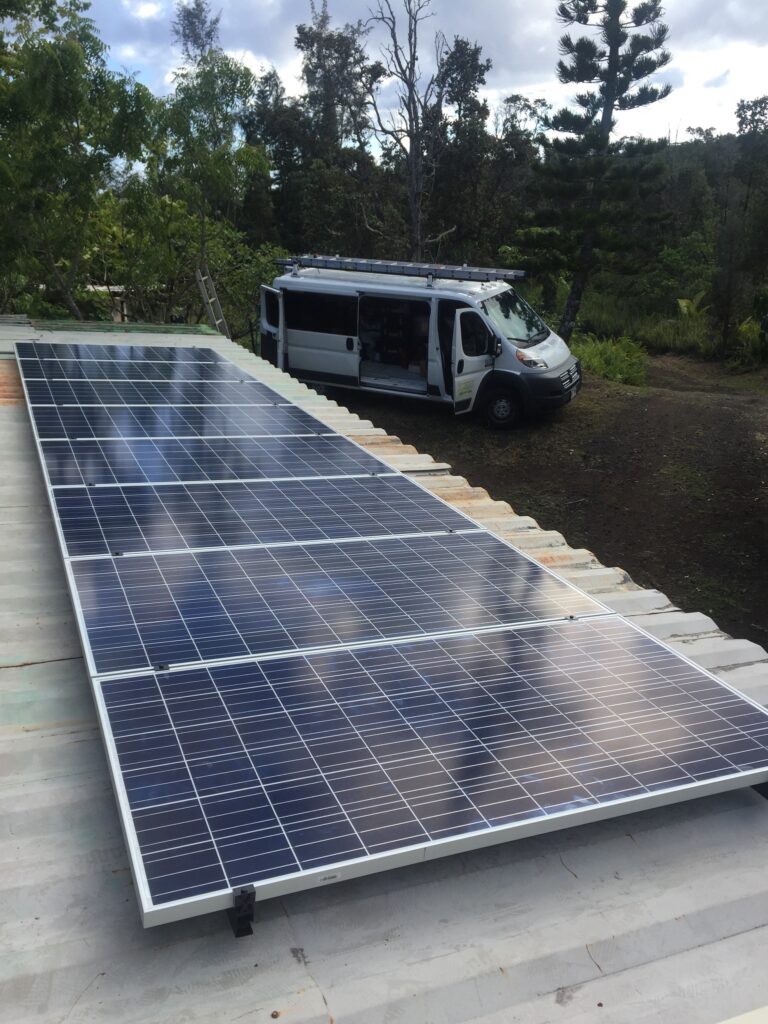
If you’ve been thinking about going solar in Hilo, you’ve probably got a running list of questions. How much does it actually cost? How long before you break even? Does all that rain we get hurt your system’s performance? And which solar company in Hilo should you even trust with something this big?
This guide answers all of that—honestly, with real numbers, and with the kind of local context that only comes from knowing Hilo well. Whether you’re in a neighborhood like Wainaku, Keaukaha, or up in the hills past Kaumana, solar works differently here than it does on the mainland—and that’s mostly a good thing.
Why Hilo Is Actually a Great Place for Solar (Yes, Even With the Rain)
Hilo has a reputation. People hear “wettest city in the U.S.” and immediately wonder if solar panels are even worth it here. Fair question. But here’s what that reputation misses: solar panels run on sunlight, not heat or cloudless skies—and Hilo gets plenty of sun, especially in the mornings before the trade winds bring afternoon showers in from the east.
The east side of the Big Island averages around 120 to 140 sunny days per year, and even on overcast days, photovoltaic panels still generate power from diffused light. Studies and real-world data from Hawaii solar installations consistently show that systems on the Hilo side still produce enough energy to offset a significant chunk—often the majority—of a household’s electricity costs.
Add to that the fact that Hawaii has the highest electricity rates in the nation—regularly hovering between $0.40 and $0.45 per kilowatt-hour depending on your utility and rate schedule—and the economics of going solar in Hilo start looking very different than anywhere on the mainland. You’re not just saving a few dollars a month. A well-sized system can cut your HECO bill dramatically, sometimes down to the minimum monthly customer charge.
What Does Solar Cost in Hilo in 2026?
Prices have come down substantially over the past decade, but Hawaii installations still run higher than the national average due to shipping costs for equipment, permitting requirements, and the skilled labor market here on the island.
Here’s a realistic breakdown for a residential solar installation in Hilo:
Average system size for a Hilo home: 6 to 10 kilowatts (kW), depending on energy usage and roof space.
Gross cost before incentives: $18,000 to $35,000 for a fully installed system with battery storage. A grid-tied system without batteries typically runs $15,000 to $24,000.
Federal Investment Tax Credit (ITC): 30% of the total system cost comes back to you as a federal tax credit. On a $22,000 system, that’s $6,600 off your federal taxes.
Hawaii State Tax Credit: Hawaii offers an additional state income tax credit of 35% on the cost of a solar system, capped at $5,000 for a single-family residence. This stacks on top of the federal credit.
Net out-of-pocket after incentives: Many Hilo homeowners end up paying between $9,000 and $16,000 for a solid residential system after both credits are applied—assuming they have enough tax liability to absorb them.
Important note on the Hawaii state credit: The state credit can be carried forward up to five years if you can’t use it all in one tax year. Talk to a tax professional familiar with Hawaii solar credits before assuming you’ll capture the full amount in year one.
How Long Until Your Solar System Pays for Itself?
Payback periods in Hilo tend to be shorter than most people expect, largely because of those high electricity rates.
If your household currently spends $250 to $350 a month on electricity—which is pretty normal for a Hilo home running central AC, a water heater, and typical appliances—you’re looking at $3,000 to $4,200 a year going to HECO. A properly sized solar system that offsets 80–90% of that usage could save you $2,400 to $3,800 annually.
At that savings rate, a net system cost of $12,000 (post-incentives) would pay itself back in roughly 3.5 to 5 years. After that, you’re generating essentially free electricity from a system warrantied to last 25+ years.
Battery storage adds cost and shifts that payback period out slightly, but many Hilo homeowners find it worth it—especially for backup power during severe weather events or when HECO grid outages hit, which aren’t uncommon on the east side after heavy rain or high wind events.
Understanding HECO’s Net Energy Metering Policies
This is where things get a little technical, but it matters a lot for how you size your system and what you can expect financially.
Hawaii’s net energy metering landscape has changed over the years. The state moved away from traditional NEM to what HECO now calls the Customer Grid-Supply (CGS) program and the Customer Self-Supply (CSS) program.
Under CSS, your solar system is designed to offset your own usage without exporting excess power to the grid. You size it to match your consumption, and you keep what you generate. No credit for excess—but also no export limitations. This is common for homes that want to go as close to self-sufficient as possible, especially with battery storage.
Under CGS (and the newer CGS+ programs), you can export excess energy to the grid, but at a rate lower than what you pay to buy power. The economics here are more nuanced, and the right choice depends on your household’s energy usage patterns.
A knowledgeable solar contractor in Hilo will help you model both options based on your actual HECO bills and determine which program makes the most financial sense for your home. Don’t skip this step—it directly affects how your system is designed and what your long-term savings look like.
The Hilo Solar Installation Process: What to Expect
Going solar isn’t a one-day event. Here’s a realistic picture of the process from first conversation to flipping the switch:
Site Assessment and System Design
A reputable solar company will start by reviewing your HECO bills (typically 12 months), doing a physical roof inspection, and evaluating your property’s shading, orientation, and structural condition. Hilo homes vary a lot—older plantation-style homes in areas like Puainako or near downtown may have roofs that need reinforcement, while newer builds in Kaumana or Pana’ewa tend to be more straightforward.
Roof direction matters here. South-facing roofs are ideal for maximum production. East-facing roofs, while common given how many Hilo lots are oriented, still produce well—especially in the mornings when skies tend to be clearest. West-facing panels catch afternoon sun. A good installer will help you understand what your specific roof configuration will realistically produce.
Permits and Utility Interconnection
Hawaii County and HECO both have permitting requirements, and this is often where timelines get stretched. Hawaii County Building Division requires a building permit for solar installations, and HECO has its own interconnection application process.
Realistic timeline: From signing a contract to permission to operate (PTO) from HECO, most Hilo installations take 3 to 6 months. Delays are common during periods when HECO’s interconnection queue is backed up, or when permits require engineering letters for older homes. A solar contractor in Hilo who knows the local permitting office and HECO’s processes can often keep things moving faster than one who’s less familiar with Big Island-specific requirements.
Installation Day
The actual physical installation—racking, panels, inverter, electrical work—typically takes 1 to 3 days depending on system size and complexity. Adding battery storage (like a Tesla Powerwall or Enphase IQ Battery) may add another day.
Inspections and Grid Connection
After installation, Hawaii County does a final inspection, and then HECO gives its own approval before you’re permitted to turn the system on. This final stage can take a few weeks.
Solar System Maintenance in Hilo
One of the best things about modern solar systems is how little maintenance they require. Panels are solid-state—no moving parts—and are built to handle decades of weather exposure.
That said, Hilo’s environment does present a few things worth knowing:
Panel cleaning: Hilo’s humidity, frequent rain, and the presence of volcanic haze (vog) drifting over from Kilauea can leave a film on panels over time. The rain does help self-clean panels regularly, but if you’re in an area with heavy tree cover or a lot of bird traffic, periodic cleaning—maybe once or twice a year—keeps production optimal.
Inverter lifespan: String inverters typically last 10 to 15 years and will likely need replacement once during the life of your panel system. Microinverters (attached to each panel individually) tend to last longer and are increasingly common in new installations.
Battery maintenance: If you have a battery storage system, most modern units require very little hands-on maintenance. Firmware updates and occasional monitoring through the manufacturer’s app are about the extent of it.
Annual system check: Most good solar companies offer some form of monitoring—either through the inverter manufacturer’s app or their own dashboard—so you can see in real time how much your system is producing. If production drops unexpectedly, that’s usually a sign of shading, a faulty panel, or an inverter issue that a quick service call can resolve.
Common Questions About Going Solar in Hilo
Does solar work on older homes in Hilo?
Yes, with some caveats. Many of Hilo’s older homes have wood-framed roofs that can handle solar panels just fine, but some may need reinforcement or re-roofing before installation. A structural assessment is part of the site evaluation process. If a re-roof is needed, it’s often worth coordinating the timing so you’re not re-roofing again after solar is already installed.
What happens during a power outage?
Standard grid-tied solar systems without battery storage shut off during a grid outage—by law, for safety reasons, so your panels don’t back-feed power into lines that utility workers may be repairing. If backup power is a priority for you, battery storage is the way to go. Given Hilo’s weather patterns and occasional outages, a lot of homeowners here do choose to pair their solar system with a battery.
Can I add battery storage later?
Yes, but it’s usually more cost-effective to install battery storage at the same time as your solar panels. Adding it later means a second set of electrical work and potentially higher overall costs. If battery storage is something you think you’ll want eventually, bring it up during the planning stage.
Is my roof too shaded for solar?
Shading is worth evaluating, but don’t assume the answer is no before a professional takes a look. Tools like shade analysis software can show exactly how much production shading will cost you annually. Some homes with partial shading can still produce enough to make solar financially worthwhile, especially with microinverters or DC optimizers that allow each panel to operate independently.
Will solar increase my home’s value?
Research consistently shows that solar installations increase home resale value. Hawaii’s high electricity costs make solar-equipped homes particularly attractive to buyers on the island. A paid-off solar system is a genuine selling point that’s likely to return a meaningful portion of your investment when you sell.
Choosing the Right Solar Company in Hilo
This is where local knowledge really pays off. Not every solar company that operates in Hawaii has experience with Big Island-specific permitting, Hawaii County inspectors, HECO’s interconnection programs, or the particular quirks of east-side weather and roof conditions.
Here’s what to look for when evaluating solar contractors in Hilo:
Licensing: Any solar installation company operating in Hawaii must hold a valid Hawaii contractor’s license. Verify it with the Hawaii Department of Commerce and Consumer Affairs (DCCA) before signing anything.
Local presence: A company with an actual local presence in Hilo—not just a mainland operation with occasional Hawaii crews—is better positioned to handle permitting efficiently, show up for warranty service calls, and understand the specifics of your neighborhood.
References: Ask for references from actual Hilo or Big Island customers, not just general Hawaii testimonials. Conditions on the Hilo side of the island differ from Kona or Maui.
Clear contracts: Your contract should spell out system specs, production estimates, equipment warranties, workmanship warranties, and what happens if there are permitting delays or changes to the design.
No high-pressure tactics: The right solar company will take time to explain your options, model the financials honestly, and let you make a decision without artificial urgency. If someone is pushing you to sign immediately, that’s a red flag.
Equipment quality: Ask which panels, inverters, and batteries they use and why. Reputable installers typically work with established brands—Panasonic, REC, SunPower, Enphase, SolarEdge, Tesla, LG Energy Solution—and can explain the tradeoffs.
Solar Incentives Available to Hilo Homeowners in 2026
Here’s a quick summary of the financial incentives currently available:
Federal Investment Tax Credit (ITC): 30% of total system cost, applied to your federal income tax liability. Available through at least 2032 under current law.
Hawaii State Income Tax Credit: 35% of system cost, capped at $5,000 for single-family residential. Applies to systems installed on your primary or secondary residence in Hawaii.
Property Tax Exemption: Hawaii exempts the added value of a solar energy system from property tax assessment, so your property taxes won’t go up just because you added solar.
No Sales Tax on Solar Equipment: Hawaii doesn’t apply the GET (General Excise Tax) to solar energy systems in the same way as regular consumer goods—though the treatment can be nuanced. Ask your installer how this applies to your specific purchase.
USDA REAP Grants (for eligible rural businesses): If you’re a small business or agricultural operation in a rural area, the USDA’s Rural Energy for America Program offers grants and loan guarantees for renewable energy systems. Parts of Hawaii County may qualify.
What Size Solar System Do Hilo Homes Typically Need?
System sizing depends almost entirely on your electricity usage. Here are some general benchmarks for Hilo households:
A 1–2 person household with modest energy use (no central AC, efficient appliances) might need a 4–6 kW system.
A family of 4 with an electric water heater, some AC use, and standard appliances typically needs a 7–10 kW system.
Homes with electric vehicles or dedicated home offices often need 10–14 kW to maintain meaningful offset.
Keep in mind that under the CSS program (self-supply), you generally size your system to match your usage rather than to overproduce. Your installer should model this based on your actual 12-month HECO bill—not just an average.
Going Solar: The Honest Bottom Line for Hilo Residents
Solar energy makes strong financial sense for most Hilo homeowners who own their property, plan to stay for at least five years, and have adequate roof space and sun exposure. The combination of high Hawaii electricity rates, strong federal and state tax incentives, and increasingly affordable solar technology means the economics here are genuinely favorable—even on the rainy east side.
It’s not a perfect fit for everyone. If your roof needs major work, if you’re planning to sell in the next couple of years, or if your tax situation means you can’t absorb the credits, the math may look different. A trustworthy solar contractor won’t tell you solar is right for you if it isn’t—and if they do, find someone else.
But for the majority of Hilo homeowners running significant monthly electricity bills, a well-designed solar system—sized correctly, installed by a licensed local contractor, and connected under the right HECO program—is one of the better long-term investments you can make on this island.
Ready to Get a Straight Answer About Solar for Your Hilo Home?
Solar Saint LLC serves homeowners across Hilo and the surrounding areas of Hawaii County. We’re here to give you honest answers, real numbers, and a system designed specifically for your home—not a one-size-fits-all package.
Whether you’re just starting to research solar or you’re ready to move forward, we’d love to talk through your options with no pressure and no sales games.Contact Solar Saint LLC today to schedule a free consultation and find out exactly what solar could do for your home and your HECO bill.