Article Summary:
- Most Hilo drivers can charge at home with either a standard outlet (Level 1) or a 240-volt Level 2 charger, and the right choice depends on how many miles you drive each day
- A typical Level 2 installation in Hawaii has been reported at around $2,100 in 2026, but panel upgrades, long wire runs, and trenching through Big Island rock can raise the price
- Federal credits for EV chargers and EVs have ended, and Hawaii’s charger rebate program is aimed mainly at businesses and multi-user sites
- At Hawai’i Island electricity rates, charging from the grid costs roughly what gasoline does for an efficient car, but charging from your own solar can cost far less
- Charging at midday from rooftop solar is the best use of your panels, because exported daytime solar earns only about 10.6 cents per kWh
- A licensed electrician should size the circuit, pull the Hawaii County permit, and choose equipment rated for Hilo’s humidity and rain
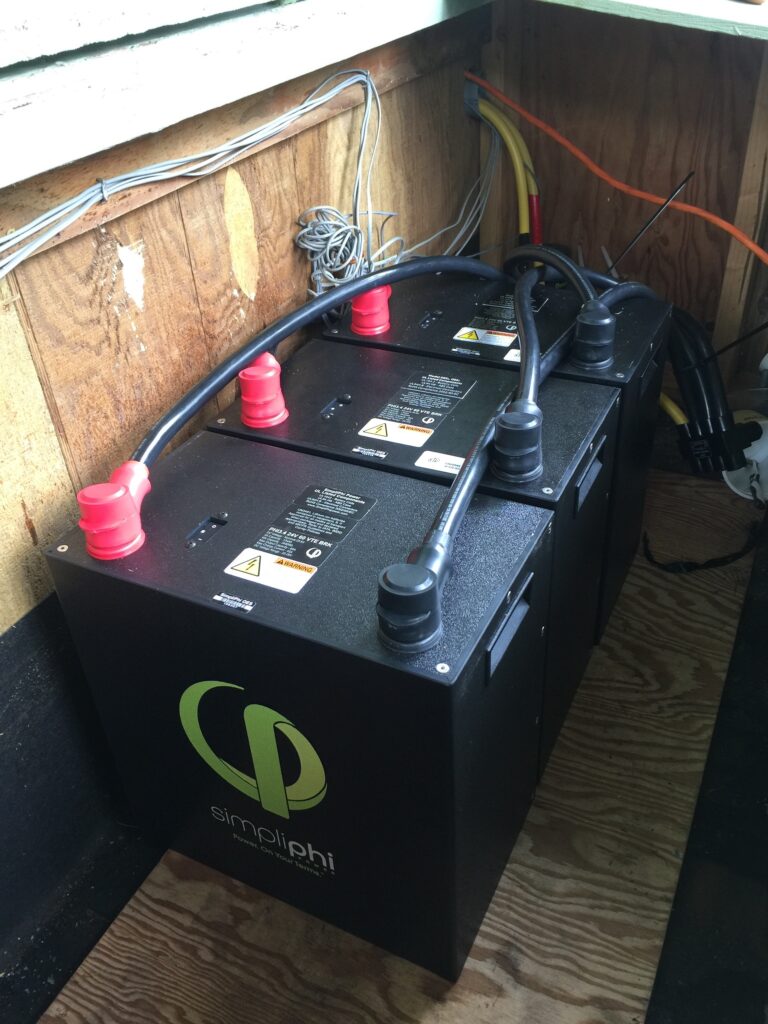
- Because storing energy is far more valuable than exporting it to the grid at current utility rates, exploring different battery storage options for solar power in Hilo is essential for cutting your electricity bills.
More Big Island households are buying electric vehicles, and the first practical question after the purchase is where to plug in. Public charging exists across Hawai’i, but nearly everyone who owns an EV wants to charge at home, where the car sits for hours anyway.
Home charging in Hilo has its own wrinkles. Electricity costs far more than on the mainland, the weather is wet and humid, many houses are older and have small electrical panels, and the ground can be hard lava rock. Solar changes the picture too, because charging the car from your own panels is one of the most valuable ways to use them.
This guide explains your charging options, what installation costs, what incentives exist now, how to estimate your charging costs, and how to plan an install that suits a Hilo home.
Understanding the Basics: How Home EV Charging Works
An electric vehicle stores energy in a battery measured in kilowatt-hours (kWh). A home charger doesn’t “charge” the battery directly. It supplies power to the car, which has its own onboard charger that converts alternating current from your wall to the direct current the battery needs. How fast the car charges depends on both the power available from your circuit and the maximum the car can accept.
Level 1 charging
Level 1 uses a standard 120-volt household outlet and the cord that comes with most vehicles. It delivers roughly 1.4 kilowatts, which adds on the order of 3 to 5 miles of range per hour of charging.
- Cost to set up: often little or nothing if you already have a suitable outlet, though a dedicated circuit is better practice for a long daily load
- Best for: low daily mileage, plug-in hybrids, and drivers who park overnight for 10 to 12 hours
Level 2 charging
Level 2 uses a 240-volt circuit, the same kind of power a dryer or electric range uses. Home units commonly deliver about 7 to 11.5 kilowatts, which adds roughly 25 to 40 miles of range per hour, depending on the car’s efficiency.
- Cost to set up: an electrician installs a dedicated circuit, and you buy a charging unit or use an outlet-based setup
- Best for: higher daily mileage, larger batteries, two-EV households, and anyone who wants flexibility
DC fast charging
DC fast chargers deliver far more power and are built for public stations. They aren’t a home product. If you’re a farm or business owner thinking about commercial charging, that’s a separate project.
Quick comparison
| Type | Power | Approx. range added per hour | Typical use |
| Level 1 (120 V) | About 1.4 kW | 3 to 5 miles | Light driving, overnight top-ups |
| Level 2 (240 V) | About 7 to 11.5 kW | 25 to 40 miles | Daily home charging |
| DC fast | 50 kW and up | Hundreds of miles per hour | Public stations only |
Range per hour varies with the car, the temperature, and how much power the car accepts.
Do You Need Level 2 in Hilo?
Not always. Hilo is a compact town, and many drivers cover fewer miles each day than mainland commuters.
A simple way to decide
- Estimate your daily miles. Add up a typical day, including errands and school runs.
- Divide by your car’s efficiency. Many EVs travel about 3 to 4 miles per kWh. At 3.5 miles per kWh, 35 miles a day needs about 10 kWh.
- Compare with Level 1. A 1.4 kW outlet running 10 hours adds about 14 kWh, which covers that day.
For a household driving 30 to 40 miles a day, Level 1 can work. If you drive more, own two EVs, take frequent trips to Kona or around the island, or want to charge during short windows, Level 2 is more convenient. Level 2 also helps if you want to charge from solar in the middle of the day, when the car may be home for only a few hours.
Other reasons households choose Level 2
- Faster recovery after a long day or trip
- Better use of cheap or solar-supplied windows
- Smart scheduling and app features
- Resale appeal for a home with an installed charger
Home Charging Station Options
Once you’ve settled on a level, you’ll choose among several kinds of equipment.
Plug-in vs. hardwired
- Plug-in units connect to a 240-volt outlet, often a NEMA 14-50. They’re easy to replace or move, but the outlet and the plug are an extra connection point, and the rating limits the amperage.
- Hardwired units connect directly to the circuit. They can support higher amperage, and many electricians prefer them for permanent installs, especially outdoors.
Amperage and charging speed
Home Level 2 chargers commonly come in several ratings, such as 32, 40, and 48 amps. Electrical code treats EV charging as a continuous load, so the circuit is typically sized at 125% of the charger’s rating. A 40-amp charger usually needs a 50-amp circuit. Higher power charges faster but needs more from your panel. Your car also sets a limit, so a 48-amp charger doesn’t help a car that can only accept 32 amps.
Connector type
North American EVs use two main connectors, the J1772 and the NACS (the Tesla-style plug), and many cars and chargers now work with adapters. Check which connector your car uses and whether the charger you’re buying matches, or whether you’ll need an adapter.
Smart and networked chargers
Smart chargers connect to Wi-Fi and offer an app for scheduling, usage tracking, and remote control. Some can respond to your solar production or to time-of-use rates. If you have solar, a charger that can start and stop around your production is worth a look.
Cord length and location
Measure the distance from the parking spot to the charger and to the charge port on the car. A longer cord adds flexibility but can also create a tripping hazard and wear faster. Mounting the unit where the cable reaches without stretching is better than relying on a long cord.
Weather rating
Hilo gets heavy rain, and wind drives it sideways. Outdoor chargers should carry a rating for outdoor use, and manufacturers publish enclosure ratings. Ask the installer which rating the unit has and whether it suits the spot you’ve chosen.
Bidirectional charging
Some newer vehicles and chargers can send power from the car back to the home, a feature often called vehicle-to-home. It’s still an emerging option. If it interests you, ask the installer, your utility, and the car maker what’s supported on the Big Island today, since compatibility, interconnection rules, and warranties are still developing.
What a Home Charger Installation Costs in Hilo
Prices vary by home, so treat these as ranges and get written quotes.
One data point
A national installer network that publishes project data reported an average Level 2 installation cost of about $2,112 in Hawaii in 2026, with an average electrical permit of about $344. That’s a statewide figure from one company, so it may not match a Hilo job.
Typical cost components
| Item | Typical range (estimates) |
| Level 2 charger hardware | Several hundred dollars up to $1,000 or more for premium models |
| Installation labor and materials, short run near the panel | Often several hundred to $1,500 or more |
| County electrical permit | Several hundred dollars, per the Hawaii average above |
| Electrical panel upgrade, if needed | Often $1,500 to $4,000 or more |
| Trenching or long conduit runs | Varies widely, from a few hundred to several thousand dollars |
| Level 1 dedicated outlet | Usually a few hundred dollars |
What pushes the price up
- Distance from the panel. Each extra foot of wire and conduit adds material and labor, and thick wire for high-amp circuits is not cheap.
- A full or outdated panel. Older Hilo homes may have little capacity or no free breaker slots, and some panels need replacement before adding a large load.
- Detached garages or carports. Reaching a separate structure may need trenching or overhead runs.
- Hard ground. Parts of the Big Island have rock close to the surface, and trenching through it takes time and equipment.
- Concrete block construction. Running conduit through or along block walls can take more work than through wood framing.
- Finishing. Hiding conduit, matching paint, or building a protective enclosure adds to the bill.
- Higher amperage. A 48-amp circuit costs more than a 32-amp one.
What can keep it down
- Mount the charger on the wall closest to the panel
- Choose a lower amperage if your car and driving habits allow it
- Use a load management device in place of a panel upgrade, where code and the electrician allow it
- Combine the work with a solar or battery project so wiring and permits happen together
Incentives and Rebates in 2026
Incentives have mostly ended, so check before you count on any.
Federal credits
- Home charger credit (Section 30C): this credit covered 30% of a home charger and installation, up to $1,000, in eligible census tracts. It ended for equipment placed in service after June 30, 2026. A charger put into service on or before that date may still be claimable, so keep your invoices and talk to a tax professional if you installed earlier this year.
- EV purchase credits (30D and 25E): these ended for vehicles acquired after September 30, 2025.
For a charger installed today, no federal credit applies.
Hawaii Energy’s charger rebate
Hawaii Energy administers a state EV charging station rebate program. Published amounts for Level 2 stations include up to $2,000 for a new single-port installation and up to $4,500 for a multi-port one, with larger amounts for DC fast chargers. The program has requirements such as networked equipment, and its materials are aimed at businesses, workplaces, and multi-user sites. A private single-family home charger generally isn’t what it was built for, so confirm eligibility with Hawaii Energy before you assume a rebate applies.
State credits and vehicle incentives
Hawaii doesn’t offer a state EV purchase rebate. The state has offered perks such as HOV-lane access and free parking for EVs, and rules have changed over the years, so check current details with the state or county.
Utility programs
Hawaiian Electric and Hawaii Electric Light have offered EV-related rate options, but their materials show several older EV and interim time-of-use residential rates closed to new customers on Hawai’i Island. Ask Hawaii Electric Light which residential rate options you can enroll in today and whether any rewards charging at certain times.
Where this leaves you
Without incentives, the economics rest on equipment cost and what you save by charging at home instead of at a public station or the pump. Solar makes that case much stronger.
What Charging Costs: The Per-Mile Math
Grid power on Hawai’i Island
Hawaii Electric Light’s residential rates are among the highest in the country. A third-party summary of its Schedule R put the first-block energy charge near 46.8 cents per kWh as of October 2026. Your actual rate depends on your usage tiers and your bill, so check your statement.
An illustration
Assume the following, and replace the numbers with your own:
- The car uses about 3.5 miles per kWh
- You pay about 45 cents per kWh
- You drive about 1,000 miles a month
At 3.5 miles per kWh, 1,000 miles needs about 286 kWh a month. At 45 cents, that’s roughly $129 a month, or about 13 cents per mile.
For comparison, a gasoline car that gets 28 miles per gallon, with gas at $5.00 a gallon, costs about 18 cents per mile. Use today’s pump price and your car’s real mileage to compare.
The takeaway is that on grid power at Hilo’s rates, an efficient EV is cheaper to run than a gas car but not dramatically so. Your actual comparison depends on the vehicles and prices.
Charging from your own solar
If your rooftop panels produce the electricity, the cost per mile drops a lot. Under Hawaiian Electric’s current export program, daytime exports on Hawai’i Island are credited at about 10.6 cents per kWh. A kilowatt-hour you put in the car instead of sending to the grid forgoes only that credit, so the marginal cost is closer to 3 cents per mile at 3.5 miles per kWh. That’s before counting the cost of the solar system itself.
A customer who had solar installed in Hilo wrote that their bill stayed low even with air conditioning and car charging. That’s one household’s report, and results vary, but it shows why solar and EVs pair well here.
Pairing Your Charger With Solar
If you have solar or are planning it, think about the charger and the panels together.
Add the EV to the system size
A car driven 1,000 miles a month uses roughly 3,400 kWh a year at 3.5 miles per kWh. In Hilo, panels typically produce on the order of 1,200 to 1,500 kWh per installed kilowatt per year, depending on the roof, shade, and weather. That means the car adds roughly 2.3 to 2.8 kW of panels to the system you’d otherwise need. Ask your installer to model it with your real roof.
If you’re buying an EV within the next year or so, tell your installer now, since sizing the system for it is easier than adding panels later.
Charge when the sun is out
Under current export rules, solar sent to the grid in the middle of the day earns the least, while power from the grid in the evening costs the most. A car plugged in at midday uses solar that would otherwise export cheaply. That’s the most valuable charging window.
If the car is away during the day, you have a few choices:
- Charge on weekends or on days you work from home
- Add a battery to store midday solar for evening or overnight charging
- Use scheduling so the car charges during the window that costs you the least
Be careful about EVs on backup power
A battery backup system has a limited output. A Level 2 charger can draw 7 kW or more, which can drain a backup battery fast. Most designs leave the EV charger off the backup circuit, so it won’t run during outages. If you want the car charged during an outage, discuss it with your installer before buying, since it affects battery size and cost.
Smart charging
Some chargers adjust to solar production, start when your panels have surplus, and stop when the sun goes behind clouds. Others schedule around rates. Ask the installer what your charger can do with your system.
Electrical Capacity and Your Panel
Before anything else, the electrician needs to confirm the house can handle the load.
The load calculation
A licensed electrician evaluates your main panel’s rating, current usage, and available capacity, and checks whether a continuous charging load fits. A 40-amp charger on a 50-amp circuit is a large addition for a home with a 100-amp service and electric appliances.
Options if capacity is tight
- Lower the charger’s amperage. A 32-amp or lower setting can fit many homes.
- Use load management. Devices that monitor your panel and reduce charging when the house is drawing heavily can sometimes avoid an upgrade, where code and the inspector allow.
- Upgrade the panel or service. This costs more, involves the utility, and takes longer, but it future-proofs the house.
- Reorganize loads. An electrician may find ways to free capacity.
Solar and panels
If you’re adding solar, a panel upgrade for solar may also give room for the charger. Doing both at once can save permit and labor costs.
Hilo-Specific Installation Factors
Humidity, rain, and salt air
Constant moisture corrodes metal and degrades poor connections. Look for outdoor-rated equipment, corrosion-resistant fittings and conduit, sealed entries, and a mounting spot sheltered from direct rain where possible. Near the coast, salt air makes these choices matter more.
Placement
- A carport or garage wall protects the unit from driving rain.
- Keep the charger and cable off the ground to avoid water and pests.
- Make sure the cable reaches the car’s charge port without crossing walkways.
- If your lot is in a flood or tsunami zone, ask about mounting height.
Pests
Geckos, ants, and rodents find their way into equipment. Seal conduit entries and ask the installer how they protect the enclosure.
Older homes
Plantation-era houses may have older wiring, small panels, or ungrounded circuits. The electrician should inspect the service and tell you whether it needs updating before a charger goes in.
Hard ground and block walls
If the charger sits far from the panel, trenching through lava rock or running conduit along block walls can raise cost. Mention the layout when you request quotes.
Permits, Licensing, and Inspections
A 240-volt circuit is a permanent electrical installation, so it needs a permit.
- Licensed electrician. Verify the contractor on the Hawaii Department of Commerce and Consumer Affairs license lookup, and ask for proof of insurance.
- Hawaii County permit. The electrician pulls an electrical permit, and an inspector checks the finished work against the code edition the county has adopted.
- Required safety features. Chargers and circuits typically need ground-fault protection and the right wire and breaker sizes.
- Utility coordination. A panel or service upgrade may involve Hawaii Electric Light. If you plan to change rates, ask the utility about meters and enrollment.
- Keep your paperwork. Save the permit, inspection sign-off, and charger documentation for insurance and resale.
Unpermitted work can cause problems with insurance, safety, and selling the house, so skip the shortcut.
Condos, Townhomes, and Renters
If you don’t own a standalone house, charging takes more planning.
- Condos and associations. Hawaii has laws addressing EV charging in condominiums and planned communities, and your association’s rules also matter. Check with your board, and ask a professional about your rights and the approval process.
- Shared parking. Installing a charger at an assigned space may need meter arrangements so the cost is billed to you.
- Renters. Ask your landlord before any wiring. A portable Level 1 setup may be the simplest path.
- Workplace and public charging. If home charging isn’t practical, look at charging near work or errands, and keep an eye on public Level 2 and fast chargers.
Safety and Maintenance
- Don’t use extension cords or household adapters for EV charging.
- Inspect the cable and plug for wear, heat marks, or damage, and replace anything that’s frayed.
- Keep the unit dry and clean. Wipe off mud or salt, and keep vegetation trimmed back.
- Don’t coil the cable while charging if the manufacturer advises against it.
- Update firmware on smart chargers when the app prompts.
- Test ground-fault protection according to the manufacturer’s instructions.
- Stop using the charger and call an electrician if you notice a burning smell, heat, tripped breakers, or damage.
Common Mistakes to Avoid
Buying the biggest charger by default. Match it to your car’s limit and your panel’s capacity.
Skipping the load calculation. An overloaded panel is a safety problem.
Choosing a spot far from the panel without pricing the run.
Ignoring weather. An unprotected outdoor unit in Hilo’s rain can fail early.
Forgetting solar. Add the car’s energy to your solar design and charge during daylight when you can.
Assuming incentives exist. Federal credits for chargers and EVs have ended.
Putting the charger on backup power by accident. It can drain a battery quickly.
Hiring unlicensed help or skipping the permit.
Questions to Ask an Installer
About the charger
- Which model do you recommend, and what connector and amperage does it use?
- Is it rated for outdoor use, and what’s the enclosure rating?
- Does it have smart features that work with my solar system or rates?
About the electrical work
- Did you do a load calculation on my panel?
- What circuit size and wire will you use?
- Will I need a panel upgrade, and what are the alternatives?
About the site
- Where do you recommend mounting it, and how long is the wire run?
- Will you need to trench or run conduit through block?
- How will you protect it from rain, salt, and pests?
About cost and paperwork
- Can I have an itemized quote including the permit?
- Which incentives apply today, and what are the conditions?
- Do you handle permits and inspection?
About service
- What does the warranty cover, and who services it locally?
Frequently Asked Questions
Can I charge an EV from a regular outlet in Hilo?
Yes. A standard 120-volt outlet (Level 1) works for light daily driving, but it’s slow. Use a properly rated outlet on a dedicated circuit if possible.
How much does it cost to install a Level 2 charger in Hawaii?
One installer network reported an average of about $2,100 in 2026, plus an average permit of about $340. Your cost depends on distance from the panel, panel capacity, and site conditions.
Is there a tax credit for a home EV charger in 2026?
Not for new installs. The federal 30C credit ended for equipment placed in service after June 30, 2026.
Are there rebates for home chargers in Hawaii?
Hawaii Energy has a charger rebate program, but it’s designed mainly for businesses and multi-user sites. Check with them for eligibility.
Will charging my car raise my electric bill a lot?
It depends on miles and rates. At roughly 45 cents per kWh, about 1,000 miles a month might add on the order of $130 to your bill. Charging from your own solar reduces that.
Do I need to upgrade my electrical panel?
Sometimes. An electrician’s load calculation will tell you, and lower-amp or load-managed options may avoid an upgrade.
Can I charge my EV with solar panels?
Yes. Charging at midday from rooftop solar is often the best use of your panels, and your installer can add the car’s usage to the system design.
Will my EV charge during a power outage?
Not unless the charger is on a backup circuit with enough battery capacity. Most home battery designs leave it off.
Do I need a permit?
Yes. A 240-volt circuit needs a Hawaii County electrical permit and inspection.
Can I install a charger in a condo?
Possibly, with your association’s approval and the right metering. Hawaii law and your association’s rules both apply.
EV Charging Installation With Solar Saint in Hilo
Solar Saint is a locally owned solar company based in Hilo with more than 300 completed projects. We install EV charging along with grid-tied and off-grid solar, battery storage, and 24/7 emergency repair, and we handle permits, paperwork, installation, and monitoring.
If you’re adding an EV, the best time to plan charging is before you size or install solar, because the car’s energy use affects how many panels make sense. We’ll look at your panel, your driving, and your HECO bills, and give you options with itemized costs and an honest read on what incentives are left.
Visit Solar Saint or call or text 808-746-7707 to schedule your free consultation. Bring your last 12 months of HECO bills and the make and model of your EV.