Article Summary:
- A battery does three jobs in Hilo: backup power during outages, shifting midday solar into the evening, and earning payments through Hawaiian Electric’s battery program
- Daytime solar exports on Hawai’i Island are credited at about 10.6 cents per kWh, while grid power costs far more, so stored energy is worth much more than exported energy
- The federal homeowner credit for batteries ended for installs after 2025, so payback is longer than it was last year, and backup value now carries more of the case
- Sizing starts with a load analysis of what you want to run during an outage, not with a battery model
- Placement matters in Hilo’s humid, wet climate, including water exposure, ventilation, heat, and flood risk
- Warranty terms, usable capacity, continuous output, and compatibility with your solar system matter more than brand names
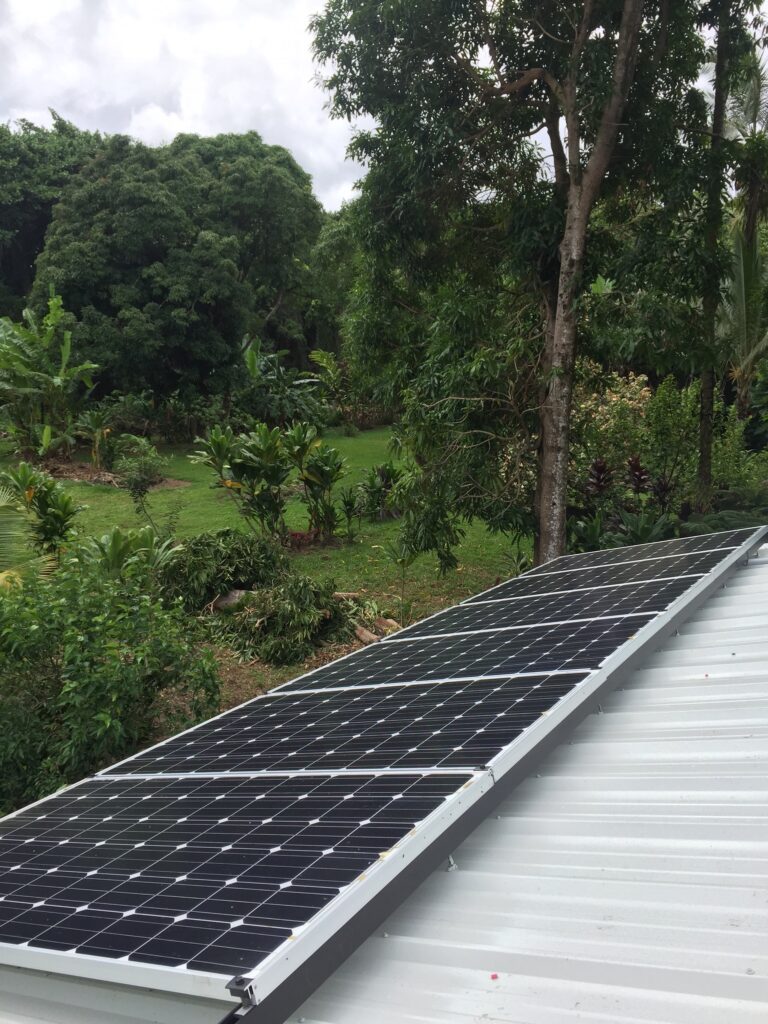
- Because placement and configuration are critical in humid island climates, reviewing established best practices for solar installation in Hawaii homes helps you protect your hardware from moisture, heat, and weather exposure.
Ten years ago, a solar battery in Hilo was a specialty item for off-grid homes. Today it’s one of the first questions homeowners ask. Two things changed. The rules for how Hawaiian Electric pays for exported solar now reward stored energy, and Hawai’i Island’s isolated grid has given households plenty of reasons to want backup power.
A battery is also a bigger decision than it looks. It adds equipment, wiring, cost, and a set of choices about what to power and when. This guide explains your options, how the numbers work on the Big Island in 2026, and the questions to ask before you buy.
What a Solar Battery Does for a Hilo Home
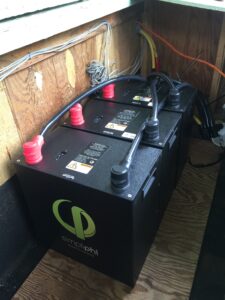
A battery doesn’t make electricity. It stores electricity from your solar panels, and sometimes from the grid, so you can use it later. In Hilo that serves three purposes.
1. Backup power during outages
A grid-tied solar system without a battery shuts off when the grid goes down, even in full sun. This is a safety requirement, so utility crews aren’t exposed to power flowing back into lines they’re repairing.
A battery configured for backup lets your home keep running selected circuits during an outage, and your panels can recharge the battery the next day. For households with medical equipment, refrigerated medications, a home business, or a remote location, this can be the main reason to buy.
2. Shifting solar into the evening
Solar produces most of its power during the day, when many households use less. At night, when you use more, the panels are idle. A battery stores midday surplus and releases it in the evening.
Under Hawaiian Electric’s current export rules, that shift is worth real money, as the next section shows.
3. Qualifying for battery programs
Hawaiian Electric runs a battery incentive program that pays customers who commit their batteries to help the grid. Details are below.
Why Batteries Pay Differently in Hawaii
The financial case rests on a gap between two numbers: what Hawaiian Electric pays you for exported solar, and what you pay for power from the grid.
What exports earn on Hawai’i Island
Hawaiian Electric’s Smart Renewable Energy Export program, for new rooftop solar customers, pays fixed credits that vary by island and time of day. For Hawai’i Island, the 2024 to 2026 rates are:
| Time window | Export credit (Hawai’i Island) |
| Daytime, 9 a.m. to 5 p.m. | 10.6 cents per kWh |
| Evening peak, 5 p.m. to 9 p.m. | 23.1 cents per kWh |
| Overnight, 9 p.m. to 9 a.m. | 14.8 cents per kWh |
Most rooftop solar is produced during the daytime window, which pays the least.
What grid power costs
Hawai’i Island residential rates are among the highest in the country. A third-party summary of the Hawaii Electric Light rate schedule put the first-block energy charge at around 46 cents per kWh as of October 2026. Your actual rate depends on your usage tiers, rate schedule, and fixed charges, so check your own bill.
The gap is the opportunity
Suppose your panels produce a kilowatt-hour at noon that you don’t need. Exported, it earns about 10.6 cents. Stored in a battery and used at 7 p.m., it replaces a kilowatt-hour you would have bought for roughly 40 to 47 cents. The difference is about 30 to 36 cents per kilowatt-hour.
That’s why a battery often makes sense in Hawai’i even when it wouldn’t on the mainland.
The non-export option
Some customers choose a non-export (self-supply) option, which sizes the system to serve only their own use and doesn’t send power to the grid. A battery fits well here, because it stores surplus that would otherwise be wasted or curtailed.
Program names, rates, and capacity limits have changed several times, and older programs have closed or filled. Ask your installer which program applies at your address and what it pays today.
Incentives for Batteries in 2026
The federal credit has ended
The federal Residential Clean Energy Credit covered both solar and batteries for homeowners, at 30% of cost. It ended for expenditures after December 31, 2025. If you see a quote or website that applies a 30% federal credit to a 2026 battery install, ask for the rule in writing.
Third-party-owned systems, such as leases and power purchase agreements, may still be able to use a separate business credit through 2027. Those contracts run for years and carry their own terms, so read them closely.
Hawaii’s state credit
Hawaii’s Renewable Energy Technologies Income Tax Credit has been 35% of cost up to $5,000 for a single-family solar system, and the legislature changed it in 2026. Reports and the bill text point to income limits, a statewide annual cap, and a scheduled end in 2030, and an executive order preserved the credit for 2026 projects.
Whether a battery installed with or after solar counts toward the state credit depends on how the system is classified, so confirm with a Hawaii tax professional or the Hawai’i State Energy Office before you assume it does.
BYOD Plus: Hawaiian Electric’s battery program
Hawaiian Electric’s Bring Your Own Device Plus program, available on Hawai’i Island, pays customers who commit their batteries to help the grid.
- Upfront incentive: the utility’s materials describe a payment proportional to the kilowatts you commit. A manufacturer’s summary lists it at $400 per kilowatt with no cap, so committing 5 kW would be roughly $2,000. Confirm the current amount with Hawaiian Electric.
- Ongoing credits: customers receive monthly credits for energy discharged from the battery during defined periods.
- Term: the program is approved for five years, and a customer who leaves early repays a prorated share of the upfront incentive.
- Eligibility: new batteries paired with renewable generation qualify, and a battery leased from a company may make the leasing company the eligible party.
- Related program: an older program, Battery Bonus, is closed to new participants.
Ask whether the incentive counts as taxable income, how often the utility may call on your battery, and whether committing the battery reduces how much backup you keep during an outage.
Financing help
Hawaii’s Green Energy Money $aver (GEMS) program has offered financing to qualifying households. Check current terms and eligibility before you rely on it.
Battery Technologies You’ll Meet
Lithium iron phosphate (LFP)
Most current home batteries use lithium iron phosphate chemistry. It’s popular because it tolerates many cycles, has a good safety record among lithium chemistries, and doesn’t need much maintenance. Many brands now use it.
Other lithium chemistries
Some products use nickel-based lithium chemistries, which pack more energy into less space. They can work well, but ask the manufacturer about warranty terms, thermal safety features, and operating temperature range.
Lead-acid
Lead-acid batteries have long been used in off-grid systems. They cost less per kilowatt-hour of nameplate capacity, but they typically have a shorter life, need more care, and can’t be discharged as deeply without damage. Some off-grid owners still choose them for budget reasons, but most new installs use lithium.
What to ask
Whichever chemistry you choose, ask for the usable capacity, not just the nameplate capacity, the warranty terms, and the safety certifications.
Battery Options on the Market
Home batteries come from several manufacturers, and the lineup changes often. Here is how to compare them, rather than a ranking that would go stale.
| Product family | Typical approach |
| Tesla Powerwall | Integrated battery and inverter in one unit, sold with its own app |
| Enphase IQ Battery | Modular units that pair with Enphase microinverter systems |
| FranklinWH aPower | All-in-one system with a controller, often used for whole-home backup |
| SolarEdge Home Battery | Pairs with SolarEdge inverters |
| Fortress and similar rack or cabinet batteries | Larger-capacity batteries often used in off-grid or high-capacity systems |
Solar Saint builds systems with components from manufacturers including Enphase, Fortress, Simplify, and Blue Ion. The right fit depends on your solar equipment, how much you want to back up, and your budget. Ask your installer why they picked a specific model for your house.
The Specifications That Matter
Usable capacity (kWh)
This is how much energy you can actually draw. A battery with a larger nameplate may offer less usable capacity because it reserves part of the cells. Compare usable kilowatt-hours.
Continuous power (kW)
This is how much you can draw at once. A battery with plenty of capacity but low power output can’t start a large load or run several appliances at the same time.
Surge or peak power
Motors in air conditioners, well pumps, and refrigerators draw extra current when they start. Ask whether the system can handle that surge.
Round-trip efficiency
Some energy is lost when charging and discharging. Typical figures are in the high 80s to low 90s percent, and the number differs by product.
Warranty
Look at the length of the warranty, the capacity the manufacturer guarantees at the end, and any limits on total energy throughput or cycles. Ask who handles warranty service locally and how long it takes.
Operating environment
Check the rated temperature range, enclosure rating, and the manufacturer’s guidance on installing in humid or wet locations.
Compatibility
A battery has to work with your inverter or solar system. If you already have solar, ask which batteries are compatible, and whether the combination keeps its warranties. A mismatch can mean replacing the inverter.
Monitoring and controls
You should be able to see state of charge, set reserve levels, choose backup priorities, and switch modes. Ask for a demonstration of the app.
Sizing a Battery for Your Hilo Home
Sizing begins with what you want to run, not with a product.
Step 1: Decide the goal
- Short outages: keep essentials running for hours.
- Multi-day outages: run essentials for a day or more, assuming the panels recharge.
- Evening shifting: capture midday solar to cover the evening.
- A mix: many households want all three.
Step 2: List your critical loads
Typical candidates include:
- Refrigerator and freezer
- Lights
- Internet router and modem
- Phone and laptop charging
- Fans or one mini-split
- Water pump, if you have a well or catchment system
- Medical equipment
Step 3: Estimate energy use
Use your own equipment labels and smart meter data where you can. As rough orders of magnitude, a modern refrigerator may use on the order of 1 to 2 kWh a day, lights and electronics a few kWh, and a mini-split air conditioner running continuously can use several kWh a day. Large loads such as electric water heaters, dryers, and ranges draw heavily and can drain a battery fast, so many households leave them off the backup circuit.
Step 4: Add it up and test the power
Total the daily energy of the circuits you want, then check that the battery’s continuous power can run the ones that operate at the same time, including motor start-up surges.
An illustration
Suppose critical loads come to around 8 to 10 kWh a day. A single battery in the 10 to 15 kWh range could cover a day of that, and sunny days could recharge it. A household that also wants to run air conditioning overnight might need two units or a larger system. Your own numbers will differ.
Partial backup or whole-home backup
| Approach | Pros | Cons |
| Partial (critical loads panel) | Lower cost, longer runtime on less capacity | Some circuits are off during outages |
| Whole-home | Everything stays on | Needs much more capacity and power, and higher cost |
Many households do well with partial backup and a habit of managing heavy appliances during outages.
Solar-Plus-Battery Design Choices
New system or retrofit
If you’re building a new system, your installer can design the solar and battery together. If you already have solar, ask whether your inverter supports a battery, and whether adding storage affects your utility program status, warranties, or permits.
AC-coupled and DC-coupled systems
These are two ways of wiring batteries to solar. In a DC-coupled system, the battery connects to the solar input before the inverter. In an AC-coupled system, it connects on the AC side and works with an existing solar inverter. Each has tradeoffs for efficiency, retrofit flexibility, and cost. Ask your installer why they picked one for your house.
Hybrid and off-grid designs
Some Hilo and Puna properties have no practical utility connection. Off-grid systems need larger batteries and often a generator for long stretches of rain. Hybrid systems stay connected to the grid and use the battery for backup and shifting. If you’re weighing both, price each against the cost of utility service.
Generator integration
A backup generator can extend runtime for long outages. If you have one, ask whether it can integrate with the battery system.
Where and How the Battery Is Installed
Location affects safety, longevity, and permitting.
Climate considerations in Hilo
- Water and humidity: batteries and their enclosures should be rated for the conditions they’ll face. Keep them out of areas where water pools or runs, and follow the manufacturer’s guidance for wet climates.
- Heat: avoid direct sun and tight enclosed spaces with poor airflow.
- Salt air: near the coast, ask about enclosure materials and corrosion-resistant fittings.
- Flooding: if your lot is in a flood or tsunami zone, ask about mounting the battery above expected flood levels.
- Pests: ants, geckos, and rodents can find their way into equipment. Seal entry points and ask the installer how they protect conduit and enclosures.
Code and clearances
Fire and electrical codes set rules on where batteries can go, including clearance from doors and windows, and restrictions on bedrooms and living spaces. Hawaii County and the fire department enforce these, so ask which code editions apply and who handles the permit.
Wiring and panels
A backup design usually adds a dedicated panel for the circuits the battery will serve, and a way to disconnect from the grid during an outage. Ask for a diagram.
Permits and utility approval
Batteries need building and electrical permits, and the utility must approve how the system connects. Program enrollment takes its own paperwork. Allow time for all of it.
Test the backup
After installation, ask the installer to demonstrate a simulated outage and confirm that your chosen circuits stay on. This is the only way to know the backup works.
Costs and Payback Without the Federal Credit
Prices vary by product, capacity, backup scope, electrical work, and site conditions, so get itemized quotes. A single home battery installed in Hawaii has commonly run in the low-to-mid five figures, and larger or multi-battery systems cost more.
Here’s a simple illustration, not a quote.
- Installed cost for a single battery: $15,000
- Federal credit: none for 2026
- Possible BYOD Plus upfront incentive: for example, about $2,000 if you commit 5 kW at $400 per kW
- Possible state credit on the battery: uncertain, so don’t count on it until confirmed
Bill savings from shifting: suppose you move 10 kWh a day from midday export (about 10.6 cents) to evening use (about 40 to 47 cents). That’s a gain of roughly 30 to 36 cents per kWh, or about $3.00 to $3.60 a day, or about $1,100 to $1,300 a year.
That assumes the battery cycles fully almost every day and the stored energy would otherwise have been exported. If your household already uses most of its solar directly, or if you choose a non-export option and your panels were curtailed rather than exporting, the math changes.
On bill savings alone, the simple payback in this example is around 10 to 13 years, which is long. Program payments shorten it. Backup value adds a separate benefit that doesn’t show up on the bill.
What that tells you
A battery in Hilo is a stronger buy when:
- Your solar exports a lot during the day
- You use a lot of power in the evening
- Outages cost you real money or put health at risk
- You qualify for incentives
- You plan to stay in the house long enough to benefit
It’s a weaker buy when your usage is low or already matches your solar, or when you can’t afford the upfront cost without strain.
Storm and Outage Preparation
A battery helps only if it’s ready when the grid goes down.
- Charge it before a storm. Many systems let you override normal settings and charge to full. Ask your installer to show you how.
- Raise your reserve level before bad weather, so the battery doesn’t discharge to the grid or for shifting when you need backup.
- Know your critical loads. Turn off heavy appliances during an outage.
- Watch the weather’s effect on solar. Heavy cloud cover limits recharging, so ration use on gray days.
- After a storm, check the equipment for visible damage or water intrusion, and call your installer before restarting anything that looks compromised.
- Keep the manual and contact info where you can find them without internet.
If you’re enrolled in BYOD Plus, ask how the program interacts with your backup settings during an outage.
Maintenance, Lifespan, and Warranty
Home batteries need little maintenance, but they aren’t set-and-forget.
- Software updates: keep the system connected so it receives updates.
- Visual checks: look at enclosures, conduit, and ventilation for dust, moisture, pests, and corrosion each year.
- Performance: watch usable capacity over time, and ask your installer what normal degradation looks like.
- Lifespan: many manufacturers warrant batteries for around 10 years with a stated end-of-warranty capacity. Read the terms on throughput and cycles.
- Service: know who to call, how fast they respond, and whether service is local.
- Replacement planning: batteries may need replacement before panels do, so factor that into long-term budgeting.
Mistakes to Avoid
Buying capacity you won’t use. An oversized battery costs more and may never cycle fully.
Skipping the load analysis. Without it, you can’t know what the battery will run.
Forgetting start-up surges. A battery with enough capacity may still trip when a pump or air conditioner starts.
Ignoring compatibility with existing solar. Check before you buy.
Counting incentives you can’t confirm. The federal credit is gone, and the state and utility programs have rules.
Assuming the battery will cover everything. Heavy appliances can drain it quickly.
Placing it in a poor spot. Heat, water, and flood exposure shorten life and may violate code.
Leaving settings at default. Reserve levels and charging priorities change both savings and backup duration.
Skipping the outage test.
Questions to Ask Your Installer
About the system
- Which battery models do you recommend for my house, and why?
- What’s the usable capacity, continuous power, and surge rating?
- Is my existing solar compatible, and what changes are needed?
- Is the design AC-coupled or DC-coupled, and why?
About sizing
- Did you do a load analysis? Can I see it?
- How long will the battery run my critical loads?
- Which circuits are on the backup panel?
About money
- What’s the all-in installed price, itemized?
- Which incentives apply to me today, and what are the conditions?
- What does BYOD Plus pay on Hawai’i Island, and what are my obligations?
- How is the incentive taxed?
About installation
- Where will the battery go, and how does that meet code and my climate?
- Who handles permits and program enrollment?
- Will you test a simulated outage before you leave?
About service
- What’s the warranty, and who services it locally?
- What happens if the battery fails in year eight?
Is a Battery Right for You? A Quick Guide
A battery is likely worth serious attention if:
- Outages disrupt medical needs, work, or food storage
- Your solar exports a lot at midday and you use power in the evening
- You live in a remote area with unreliable service
- You want to join the BYOD Plus program
- You plan to stay for many years
A battery may wait if:
- Your bills are low
- Your usage already matches your solar output
- Your budget is tight and solar alone is the priority
- Your roof needs work first
You can also add a battery later if your solar installer designs the system to allow it.
Frequently Asked Questions
Do I need a battery with solar in Hilo?
No, but a battery adds backup power and can improve savings under Hawaiian Electric’s export rules.
Is the federal tax credit available for batteries in 2026?
Not for homeowner-owned systems. The federal credit ended for expenditures after December 31, 2025.
How much does a home battery cost in Hawaii?
It varies widely by model, capacity, and electrical work. Get itemized quotes, and compare usable capacity and warranty terms.
How long will a battery run my house?
It depends on usable capacity and what you run. A battery sized for critical loads may last a day or more, longer if the panels recharge it.
Can I add a battery to my existing solar system?
Often yes, but it depends on your inverter and utility program. Ask your installer to check compatibility first.
What is BYOD Plus?
It’s Hawaiian Electric’s battery program for customers who commit their batteries to support the grid, with an upfront incentive and ongoing credits. It’s available on Hawai’i Island, runs for a five-year term, and has early-exit repayment rules.
Will my solar work during a power outage?
Without a battery, no, because grid-tied systems shut down. With a battery configured for backup, yes.
Can a battery power my air conditioner?
Sometimes. It depends on the unit’s size and start-up surge, and on the battery’s power output and capacity.
How long do home batteries last?
Many carry warranties of around 10 years. Real-world life depends on use and conditions.
Is a battery safe in a humid climate like Hilo?
Products rated for the location and installed per the manufacturer’s instructions and local code generally are. Keep batteries out of pooling water and direct heat.
Battery Storage With Solar Saint in Hilo
Solar Saint is a locally owned solar company based in Hilo with more than 300 completed projects. We design grid-tied, off-grid, and hybrid systems, install battery storage and EV charging, offer 24/7 emergency solar repair, and handle permits, paperwork, installation, and monitoring.
A Hilo customer who wanted to go fully off-grid wrote that we designed an off-grid system with battery storage so power stays on even when it rains, and a Kona customer wrote about getting a better battery system and faster service than from other companies. Those are their words, and your results will depend on your home and your goals.
We start with a load analysis, explain the tradeoffs, show you what the incentives are worth under the current rules, and tell you if a battery isn’t a good fit yet.
Visit Solar Saint or call or text 808-746-7707 to schedule your free consultation. Bring your last 12 months of HECO bills and a list of what you’d want to keep running when the grid goes down.