Article Summary:
- A 2,000 sq ft home in Hilo typically needs a 7 to 10 kW solar system, depending on actual energy usage rather than square footage alone
- Gross system costs in Hilo in 2026 range roughly from $25,000 to $45,000 before incentives, with battery storage adding to that range
- Federal and Hawaii state tax credits can offset 50% or more of the net system cost for qualifying homeowners
- Hilo’s high HECO rates make solar payback timelines genuinely competitive despite higher installation costs than in mainland markets
- Square footage is a poor predictor of solar system size—actual HECO bill history is the only reliable starting point for system sizing
- Understanding what drives cost variation between proposals helps Hilo homeowners evaluate quotes more accurately
- Because managing local utility connection queues and navigating complex island building codes directly impacts your project’s launch date, consulting a step-by-step guide to solar installation in Hilo regarding permits, timeline, and what to expect ensures your home transitions smoothly to renewable energy without unexpected delays.
Cost is almost always the first real question people ask about solar. Not the most important question, but the first one—because before anything else makes sense, you want to know whether this investment is even in the ballpark for your situation.
If you own a roughly 2,000-square-foot home in Hilo and you’re trying to get a realistic sense of what a solar installation would cost in 2026, this article is built for you. We’re going to give you actual numbers, explain what drives them up or down, walk through the incentives that reduce what you actually pay out of pocket, and help you understand why two proposals for the same house might look very different on paper.
One thing to address right upfront: square footage is a starting point for this conversation, but it’s not actually how solar systems get sized. A 2,000 square foot home in Hilo where the family runs central AC, charges two electric vehicles, and works from home will have dramatically different energy needs than a 2,000 square foot home occupied by two retired adults with a couple of window units and modest appliance use. The electricity bills tell the real story—not the floor plan.
That said, 2,000 square feet is a reasonable proxy for a mid-sized Hilo household, and the numbers in this guide are grounded in what installations for homes in that general size and usage range actually look like in 2026.
What Determines the Cost of a Solar Installation in Hilo
Before getting into specific numbers, understanding what actually drives solar costs helps you make sense of the quotes you’ll receive.
System Size
System size—measured in kilowatts (kW) of DC capacity—is the single largest driver of installation cost. More panels mean more equipment cost, more labor, more structural hardware, and more time. Larger systems cost more in absolute terms, though the cost per watt generally decreases modestly as system size increases due to fixed costs being spread across more capacity.
For a 2,000 square foot home in Hilo, system sizes typically fall somewhere between 7 kW and 12 kW, depending on usage. The specific sizing depends almost entirely on your HECO bills, not your floor area.
Equipment Quality
The same system size can be built with equipment at very different quality and price points. A 9 kW system using premium panels from a manufacturer with a strong independent testing record, paired with microinverters carrying 25-year warranties and commercial-grade racking hardware rated for Hawaii’s wind zone, will cost more than the same-size system using entry-level panels, a budget string inverter, and generic mounting hardware.
The price difference is real, and so is the performance and longevity difference. Over a 25-year system life, the gap in production output and the avoided cost of early equipment replacement often justify the higher upfront investment in better equipment—but this is a genuine tradeoff that deserves honest analysis rather than a blanket recommendation to always buy the most expensive option.
Labor and Local Cost Factors
Solar installation labor costs in Hawaii are meaningfully higher than on the mainland. Hawaii’s prevailing wage environment, the cost of doing business in an island state, and the logistics of getting crews, equipment, and materials to the Big Island all contribute to a cost structure that differs significantly from what you might see quoted in a national solar cost article referencing average U.S. prices.
Shipping equipment from Honolulu to the Big Island adds freight costs that don’t exist in markets with direct mainland distribution. Contractors with established supplier relationships and efficient logistics manage these costs more effectively than newer market entrants, but the underlying cost structure affects everyone working in this market.
Roof Type and Complexity
Hilo’s diverse housing stock means that installation complexity varies significantly between homes. A straightforward south-facing roof with simple corrugated metal construction and no shading is a faster, more efficient installation than a multi-plane tile roof with significant shading from surrounding vegetation, multiple roof penetrations to work around, and a layout that requires panel strings to be split across different orientations.
More complex roofs require more labor hours, more specialized hardware, and sometimes engineering input that simpler installations don’t need. This complexity is reflected in project cost—something worth understanding when comparing quotes between contractors who may be approaching the complexity of your specific roof differently.
Electrical Panel and Infrastructure Upgrades
Some Hilo homes—particularly older construction from the plantation era or mid-century builds in neighborhoods like Wainaku or Keaukaha—have electrical panels that need upgrading before solar can be safely added. An outdated 100-amp panel that’s already near capacity, an older Federal Pacific or Zinsco panel with known reliability issues, or a panel with no available breaker space all represent infrastructure upgrades that add to project cost.
These upgrades are not optional when needed—they’re required for code compliance and safe system operation. A thorough site assessment will identify any panel upgrade requirements, and an honest proposal will include those costs rather than discovering them after the contract is signed.
Battery Storage
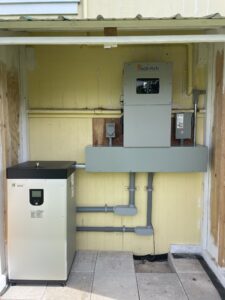
Battery storage is an increasingly popular addition to Hilo solar installations, driven by grid reliability concerns, time-of-use rate structures, and the desire for meaningful energy independence. Battery systems add high cost to a project—a single Tesla Powerwall or equivalent system adds roughly $10,000 to $15,000 to the installed project cost, and many Hilo homeowners choose two batteries for more robust backup capability.
The decision to include battery storage affects your project cost substantially, so proposals with and without storage are not directly comparable unless you’re evaluating storage as a deliberate choice.
Sizing a Solar System for a 2,000 Sq Ft Hilo Home
As noted above, square footage doesn’t size a solar system—energy consumption does. But it’s useful to understand the typical consumption range for a home in this size category and what system sizes that typically translates to in Hilo.
Typical Consumption Range
A 2,000 square foot home in Hilo might consume anywhere from 600 kWh to over 1,500 kWh per month depending on lifestyle, appliances, and HVAC use. The wide range reflects real variation in how people live in similar-sized homes.
Lower end of the range (600-800 kWh/month): A household with modest AC use, standard appliances, LED lighting, and no EV charging. This profile is common among homeowners who have already made some energy efficiency improvements or who live at elevations where natural ventilation reduces AC dependence.
Middle of the range (800-1,100 kWh/month): A typical Hilo household with some AC use, standard appliances, one or two televisions, a home office setup, and modest outdoor lighting. This is probably the most common profile for a 2,000 square foot family home in lower Hilo.
Upper end of the range (1,100-1,500+ kWh/month): Households with significant AC use across multiple rooms, an electric vehicle being charged at home, a pool pump, or a home-based business with meaningful electrical loads. HECO bills in this range are painful—often $600 to $800 per month or more at current Big Island rates—and solar ROI is particularly compelling.
System Size Estimates by Consumption Profile
Based on Hilo’s solar resource—approximately 5 to 5.5 peak sun hours per day on average for the east side of the Big Island—and typical system efficiency assumptions, here’s a rough guide to system sizing by consumption level:
600-800 kWh/month consumption: A system in the 7-8 kW range will typically offset 85-100% of annual consumption under the Customer Self-Supply tariff when sized appropriately.
800-1,100 kWh/month consumption: A system in the 8-10 kW range is a typical recommendation for this consumption level in Hilo.
1,100-1,500 kWh/month consumption: A system in the 10-13 kW range, potentially with battery storage to maximize self-consumption, is appropriate for higher-usage households.
These are directional estimates. Your actual system size recommendation should come from a contractor who has reviewed your specific 12-month HECO bill history and conducted a site assessment—not from a square footage estimate or a national solar calculator that doesn’t account for Hilo’s specific solar resource and HECO tariff dynamics.
Why HECO Tariff Affects System Sizing
Under Hawaiian Electric’s Customer Self-Supply (CSS) tariff—the program most new residential applicants in Hilo are placed on—the financial return on your solar investment is highest when you’re consuming the power your panels generate directly, rather than exporting it to the grid.
CSS credits exported energy at a rate well below the retail rate you pay for grid power. This creates a meaningful difference in financial return between a system sized to match your consumption versus one sized to produce significantly more than you use. An oversized system under CSS generates kilowatt-hours that return far less value than the kilowatt-hours you consume directly.
This is why a knowledgeable Hilo solar contractor designs your system around your actual consumption and your specific HECO tariff, not around maximizing system size or producing impressive-looking gross production numbers. It’s also why you should be cautious about any proposal that doesn’t explicitly discuss your tariff program and explain how it informed the system size recommendation.
2026 Solar Installation Cost Ranges for a 2,000 Sq Ft Hilo Home
With the context above established, here are realistic cost ranges for solar installation in Hilo in 2026 at different system sizes and configurations.
These numbers represent fully installed project costs including equipment, labor, Hawaii County permit fees, HECO interconnection application fees, system monitoring, and standard electrical work. They do not include electrical panel upgrades where needed, significant roof repair or preparation, or battery storage unless noted.
7-8 kW System (Suitable for Lower-Consumption Households)
Gross installed cost range: $25,000 – $32,000
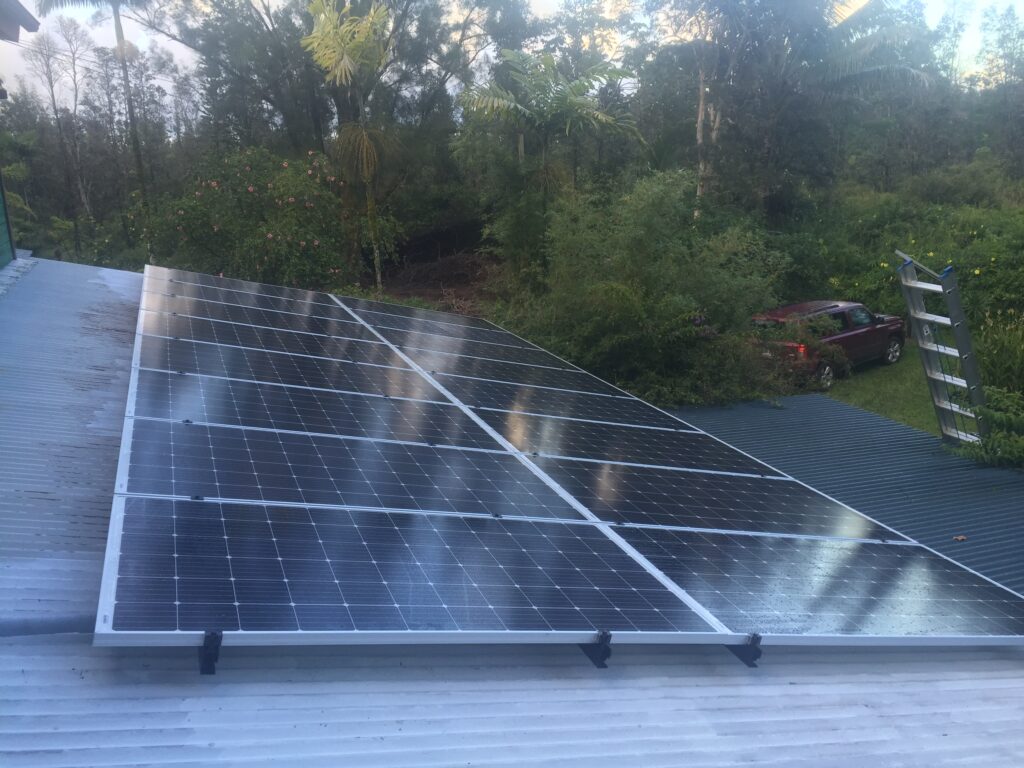
At this system size, you’re typically looking at 17-22 panels depending on individual panel wattage. This system covers a good portion or all of annual consumption for a lower-usage 2,000 square foot Hilo household.
Equipment at this tier typically includes mid-range to premium panels in the 370W-420W range, either microinverters or a string inverter with optimizers, and aluminum racking hardware appropriate for your roof type.
After applying the federal Investment Tax Credit (30%) and Hawaii state tax credit (35%, capped at $5,000):
Federal ITC (30%): $7,500 – $9,600 credit
Hawaii state credit: $5,000 (capped)
Net cost after incentives: approximately $12,500 – $17,400
These credit amounts assume full tax liability to use them. See the incentives section below for important qualification details.
8-10 kW System (Mid-Range, Most Common for This Home Size)
Gross installed cost range: $30,000 – $40,000
This is the most common system size range for a 2,000 square foot Hilo home with average to moderate energy usage. At 22-27 panels, this system handles the majority of annual consumption for a typical Hilo family household.
Equipment at this tier commonly includes premium panels from manufacturers with strong tropical climate performance records, microinverters or high-quality string inverters with panel-level optimizers, and racking hardware specified for Hawaii’s wind zone requirements.
After incentives:
Federal ITC (30%): $9,000 – $12,000 credit
Hawaii state credit: $5,000 (capped)
Net cost after incentives: approximately $16,000 – $23,000
10-13 kW System (Higher-Consumption Households or EV Charging)
Gross installed cost range: $37,000 – $50,000
At this system size, you’re typically working with 26-35 panels and designing for a household with meaningful AC loads, an electric vehicle, or other above-average electricity consumption. This is also the size range where roof space sometimes becomes a limiting factor, requiring attention to panel layout and orientation to fit the available area.
After incentives:
Federal ITC (30%): $11,100 – $15,000 credit
Hawaii state credit: $5,000 (capped)
Net cost after incentives: approximately $21,000 – $30,000
Adding Battery Storage
Battery storage costs vary by product and configuration. General 2026 cost ranges for the most commonly installed residential battery systems in Hilo:
Single battery system (e.g., Tesla Powerwall 3, Enphase IQ Battery 5P, or equivalent):
Adds approximately $12,000 – $16,000 to installed project cost
Two-battery system for more robust backup capability:
Adds approximately $22,000 – $30,000 to installed project cost
Battery storage qualifies for the federal Investment Tax Credit when installed alongside solar, which meaningfully reduces the net cost. A $14,000 battery addition generates a $4,200 federal tax credit, bringing the net battery cost to approximately $9,800 before any state credit considerations.
Hawaii Solar Incentives: What Actually Reduces Your Cost
The combination of federal and state incentives available to Hawaii homeowners makes the net cost of solar significantly lower than the gross installed cost. Understanding these incentives—and specifically who qualifies for them and how they work—is foundational to evaluating the real financial picture.
Federal Residential Clean Energy Credit (ITC)
The federal Investment Tax Credit allows homeowners who purchase a solar system—through cash or a loan—to claim 30% of the total system cost as a credit against their federal income tax liability. For the purpose of this credit, “system cost” includes panels, inverters, racking, labor, permit fees, and battery storage when installed as part of the solar project.
Key points about the federal ITC:
It is a tax credit, not a rebate or a check. It reduces the amount of federal income tax you owe, dollar for dollar. If your credit exceeds your tax liability in the year of installation, the unused portion carries forward to future tax years—it does not disappear.
To use the credit in the year of installation, you need federal tax liability in that amount. A homeowner with $8,000 in federal tax liability who installs a $30,000 system generates a $9,000 credit. They can use $8,000 of it in year one and carry the remaining $1,000 forward to apply against the following year’s tax liability.
The credit is claimed on IRS Form 5695 when you file your federal taxes for the year of installation. Your solar contractor should provide the documentation of system cost needed to complete that form.
Homeowners who lease a solar system or enter a power purchase agreement (PPA) do not qualify for the ITC—those arrangements mean someone else owns the system, and the credit belongs to the owner.
The current 30% credit rate is established through 2032 under the Inflation Reduction Act, giving Hilo homeowners who install in 2026 certainty about the credit amount.
Hawaii State Solar Energy Tax Credit
Hawaii offers a state income tax credit for solar energy systems installed on residential property. The credit is 35% of the installed system cost, capped at $5,000 for single-family residential systems.
Like the federal credit, this is a tax credit against your Hawaii state income tax liability—not a rebate or direct payment. It’s claimed on your Hawaii state income tax return for the year of installation.
The $5,000 cap means the state credit reaches its maximum for systems costing approximately $14,300 or more ($14,286 × 35% = $5,000). Since most Hilo solar installations for a 2,000 square foot home exceed this cost threshold significantly, virtually all qualifying homeowners receive the full $5,000 state credit.
Combined incentive example:
For a $35,000 solar installation in Hilo:
- Federal ITC (30%): $10,500 credit
- Hawaii state credit (35%, capped): $5,000 credit
- Total incentive value: $15,500
- Net system cost after incentives: $19,500
This represents roughly 44% of the gross system cost being offset through tax credits—a meaningful reduction that significantly improves payback timelines.
Important Qualification Considerations
Before building your financial model around these credits, discuss your specific tax situation with a qualified tax professional. Factors that can affect your ability to fully utilize these credits include:
Alternative Minimum Tax (AMT): The federal ITC is generally allowable against AMT liability, but your specific situation should be confirmed with a tax advisor.
Retirement income and lower tax liability: Homeowners on fixed retirement income may have lower annual federal and state tax liability, meaning it takes more years to fully absorb the credits. The carry-forward provision for the federal credit helps, but it’s worth understanding your timeline.
Business use of home: If you claim a home office deduction that allocates a portion of your home to business use, the residential tax credit may only apply to the residential portion of system cost. This is a nuanced area worth discussing with a tax professional.
Your solar contractor can provide the cost documentation you need for tax credit claims, but they should not be your source of tax advice. A CPA or tax advisor familiar with Hawaii’s tax code is the right resource for understanding how these credits apply to your specific financial situation.
Net Energy Metering and Tariff Compensation
Beyond tax credits, the ongoing financial benefit of solar comes from reducing your HECO bill. Under the CSS tariff, every kilowatt-hour your panels generate while your home is consuming power replaces a kilowatt-hour you would have purchased from HECO at retail rates—currently over 40 cents per kWh for many Big Island customers.
At that retail rate, a system that offsets 10,000 kWh of annual consumption saves approximately $4,000 per year in electricity costs at today’s rates. With HECO rates having increased consistently over time, conservative rate escalation assumptions suggest those annual savings grow over the system’s life.
This ongoing savings stream is what drives the financial case for solar in Hilo. Even with higher installed costs than mainland markets, the combination of generous tax incentives and Hawaii’s exceptionally high electricity rates creates payback timelines and lifetime financial returns that compare favorably to almost any market in the country.
Payback Period and Long-Term Financial Return
Payback period is the metric most homeowners focus on when evaluating solar financially—how many years until the system has paid for itself in energy savings. Here’s how to think about it honestly for a Hilo installation.
Simple Cash Payback
Simple payback calculation: net system cost after incentives ÷ annual electricity savings
For a mid-range example:
- Gross system cost: $35,000
- Federal ITC: $10,500
- Hawaii state credit: $5,000
- Net system cost: $19,500
- Annual electricity savings (offsetting 10,000 kWh at $0.42/kWh): $4,200
Simple payback: $19,500 ÷ $4,200 = approximately 4.6 years
That’s a straightforward cash purchase scenario. Financed scenarios are slightly different because loan payments replace the HECO bill reduction, but the underlying math—net system cost against annual savings—works similarly.
Payback periods for well-designed Hilo solar installations typically fall in the 4 to 8 year range for cash purchases after incentives, depending on system size, consumption offset, and current HECO rates. At the lower end of that range, you’re talking about 17-21 years of essentially free electricity after payback. At the upper end, still 17 years or more of savings within the system’s warranted life.
Why HECO Rates Make Hilo’s Payback So Compelling
Hawaii Island’s electricity rates are among the highest in the country—and they’ve been climbing for years. At over 40 cents per kWh, the financial value of every kilowatt-hour your solar system generates is roughly twice what it would be in a market paying 20 cents per kWh.
That rate differential is the fundamental reason why Hilo solar economics are compelling despite higher installed costs than mainland markets. A system that costs 20-30% more to install than its mainland equivalent can still pay back faster because each unit of solar generation is worth significantly more against your HECO bill.
Rate escalation makes this case even stronger over time. If HECO rates increase by an average of 3% annually over the next 25 years—a conservative assumption given historical rate trends—the value of your solar generation grows meaningfully with each passing year. A kilowatt-hour your system generates in year 20 is worth more than the kilowatt-hour it generated in year one, and your system cost is fixed.
25-Year Lifetime Savings Estimates
For a reasonably sized system installed in 2026 by a Hilo homeowner in the mid-consumption range, lifetime savings over 25 years—accounting for modest panel degradation and conservative HECO rate escalation—are often projected in the $100,000 to $150,000 range for a system in the 8-10 kW tier.
These projections involve assumptions about future utility rates that can’t be known with certainty. But the underlying logic is straightforward: your HECO rate is likely to go up over time, your solar generation cost is fixed at installation, and the gap between those two numbers grows each year in your favor.
Financing Options and How They Affect Cost
The way you pay for your solar system affects both the net cost and the financial return. Here’s an honest look at the main options available to Hilo homeowners.
Cash Purchase
Paying cash for your solar installation provides the highest long-term financial return because you pay no interest and capture the full value of energy savings from day one. Cash buyers capture 100% of the tax credits personally and have no ongoing debt service obligation.
The limitation is the upfront capital requirement. For a $35,000 installation, even after tax credits reduce the effective cost to around $19,500, that’s still a meaningful outlay. Homeowners who have the liquid capital and are comparing solar to other investment options often find solar’s risk-adjusted return—essentially guaranteed by HECO’s rate structure—attractive relative to alternatives.
Solar Loans
Solar-specific loans allow homeowners to finance a system purchase while retaining ownership and the associated tax credit benefits. Common loan structures in the Hawaii market include:
Unsecured personal loans through solar financing companies: These typically feature fixed interest rates ranging from roughly 4% to 10% in 2026, depending on creditworthiness and loan term. Terms generally range from 5 to 25 years. Shorter terms mean higher monthly payments but lower total interest paid. Longer terms reduce monthly payments but increase total cost.
Home equity loans or HELOCs: Homeowners with substantial equity in their Hilo property may access lower interest rates through home equity financing. Interest may also be tax-deductible depending on how the loan is structured and used—a detail worth discussing with a tax advisor.
PACE financing: Property Assessed Clean Energy financing, where the loan is attached to the property and repaid through property tax assessments. PACE is available in some Hawaii markets. It has the advantage of not requiring personal income qualification but the significant disadvantage of creating an encumbrance on your property that must be disclosed in any sale.
The dealer fee issue: As covered in our companion article on comparing quotes, many solar-specific loan products include dealer fees—additional charges built into the loan principal that effectively inflate the financed system cost. Always ask whether a proposed loan includes a dealer fee and what percentage it represents. A loan that looks attractively priced at 3.99% interest but includes a 25% dealer fee can be significantly more expensive in total cost than a 7% loan with no dealer fee.
Lease and Power Purchase Agreements
Solar leases and power purchase agreements (PPAs) allow homeowners to get panels installed with little or no upfront cost, paying instead a monthly lease payment or a per-kilowatt-hour rate for the power generated.
The appeal is obvious: no large upfront investment, immediate electricity bill reduction in many cases, and no responsibility for system maintenance. The drawbacks are significant and worth understanding clearly:
You do not own the system. The tax credits—federal ITC and Hawaii state credit—go to the leasing company, not to you.
Lease terms typically run 20-25 years with annual payment escalators. You are committing to a long-term financial obligation to a third party company whose longevity and service quality over that period you cannot fully assess today.
When you sell your home, the lease transfers to the buyer—or must be bought out. A solar lease can complicate a real estate transaction. Some buyers accept lease transfers without issue; others don’t want the obligation. In a hot market this may be manageable; in a soft market it can create real complications.
For most Hilo homeowners who qualify for traditional financing and have sufficient tax liability to use the credits, outright ownership through cash or loan financing produces better long-term financial outcomes than leasing. Leasing is worth considering primarily for homeowners who have minimal federal and state tax liability and who lack access to traditional financing.
What Makes Quotes Vary So Much: Understanding Price Differences
If you get three quotes for a solar installation on your 2,000 square foot Hilo home, you may receive numbers ranging from $22,000 to $45,000 for what appear to be similar systems. Here’s why that range exists and how to interpret it.
Equipment Tier Differences
The single largest driver of quote variation is often equipment quality. Panels from manufacturers with strong independent testing records, long warranty histories, and proven tropical climate performance cost more than entry-level alternatives. Microinverters with 25-year warranties cost more than budget string inverters with 10-year warranties. Commercial-grade stainless and aluminum racking hardware costs more than standard galvanized alternatives.
A $22,000 quote and a $38,000 quote for nominally the same system size are likely not quoting the same equipment. Getting specific make and model information from each contractor and researching the products independently tells you far more than comparing bottom-line prices.
Labor Quality and Overhead
Contractors who pay their installation crews well, maintain competitive benefits, invest in ongoing training, and operate with sufficient overhead for project management, permitting expertise, and post-installation service have higher cost structures than those cutting corners in these areas. That cost difference shows up in proposal pricing.
A contractor charging significantly less than the market may be doing so because they’re paying lower wages, using less experienced crews, skipping proper engineering review, or operating with minimal post-installation service infrastructure. The savings on installation day can be offset by higher long-term costs—warranty claims that don’t get honored, service calls that aren’t responded to promptly, and installations that don’t hold up as well in Hilo’s demanding climate.
Scope Differences
Make sure every quote covers the same scope. A proposal that doesn’t include permit fees, or that uses a battery-excluded price while another proposal includes storage, or that omits an electrical panel upgrade that the site assessment revealed as necessary—these scope differences make direct price comparison misleading.
Ask each contractor for a line-item breakdown and confirm that comparable items are included before drawing any conclusions from price differences.
Profit Margin and Business Model
Realistically, contractors also have different profit margin expectations based on their business model, overhead structure, and competitive positioning. This is a normal part of a competitive market. It means that among contractors quoting similar equipment and scope, some price variation reflects business model differences rather than quality differences.
This is why the full vetting process—checking licensing, verifying insurance, reviewing references, assessing HECO knowledge, and evaluating proposal quality—matters more than finding the lowest price. Two contractors quoting similar equipment at meaningfully different prices are presenting a real value question worth investigating, not an automatic case for choosing the lower quote.
Questions to Ask About Cost Before You Sign Anything
When you’re reviewing proposals and having conversations with solar contractors about cost, these questions help you get past the headline numbers to the information that actually matters:
Is this price based on my actual energy consumption and roof assessment, or is it a preliminary estimate? Preliminary estimates based on square footage or satellite imagery are starting points, not binding quotes. Confirm whether what you’re looking at is based on actual site assessment data.
What specific panels, inverters, and racking are included? Get make and model numbers. Vague descriptions of “premium equipment” or “high-efficiency panels” are marketing language, not specifications.
Are permit fees, interconnection fees, and HECO application costs included in this price? These are real project costs that should be included, not added later.
If I need an electrical panel upgrade, is that included? How would I know if I need one before installation begins? A contractor who has done a site assessment should already know whether your panel needs upgrading.
Does this quote include battery storage, or is that a separate option? Confirm what’s in the base quote before comparing prices across contractors.
If I’m financing, what is the dealer fee percentage on the proposed loan, and what does that do to the effective total system cost? This question separates contractors who are being transparent about financing costs from those hoping you won’t notice the dealer fee buried in the loan structure.
What is the workmanship warranty on the installation, and is it in writing in the contract? A verbal warranty commitment is worth nothing. Get it in the contract.
What is the realistic all-in timeline, and are there any factors specific to my home that might affect cost between now and completion? Legitimate projects sometimes encounter unexpected conditions—a roof issue discovered during installation, an electrical situation that wasn’t fully apparent during the site assessment. Understanding how cost changes are handled prevents surprises.
Common Mistakes Hilo Homeowners Make When Evaluating Solar Cost
Knowing the traps helps you avoid them.
Choosing based on price alone. The lowest quote for a solar installation in Hilo is almost never the best choice. Equipment quality, installation quality, contractor longevity, and post-installation service all have direct financial implications over a 25-year system life. A system that costs $4,000 more upfront but produces 8% more power annually, lasts longer without component failure, and is backed by a contractor who actually handles warranty claims pays for that price difference many times over.
Not accounting for tax credit qualification. The net cost numbers look very different before and after incentives—but the credits only materialize if you have sufficient tax liability to use them. Buying a solar system based on a net-after-incentives price calculation without confirming you can actually use those credits leads to a more expensive investment than anticipated.
Comparing gross system costs across different scopes. Two quotes at $28,000 and $35,000 are not directly comparable if one includes battery storage and the other doesn’t, if one includes a panel upgrade and the other doesn’t, or if the system sizes are actually different. Always normalize for scope before comparing price.
Ignoring the cost of doing nothing. The financial comparison for solar isn’t just the system cost versus zero—it’s the system cost versus what you’ll pay HECO over the next 25 years if you don’t go solar. At current Big Island rates that are likely to increase over time, a 2,000 square foot home averaging $400-$600 per month in electricity costs will spend $120,000 to $180,000 on electricity over 25 years. That context changes how a $30,000-$40,000 solar investment looks.
Treating the production estimate as guaranteed. Your contractor’s production estimate is a projection based on assumptions about your roof, local weather, and system performance. It is not a guarantee. Ask what assumptions were used, and consider whether a slightly more conservative estimate might be more realistic for your specific site. A conservative estimate that you beat is a pleasant surprise. An optimistic estimate you fall short of is a disappointment that shapes how you feel about the investment for years.
Is Solar Worth It for a 2,000 Sq Ft Home in Hilo in 2026?
For most Hilo homeowners in this home size category, the honest answer is yes—with important qualifications.
Solar makes the strongest financial case when:
- Your current HECO bills are $250 or more per month, giving the system substantial savings to offset
- You have sufficient federal and Hawaii state tax liability to fully utilize the available credits
- You plan to stay in your home for at least 7-10 years, allowing time to reach and pass the payback threshold
- Your roof is in good condition with reasonable remaining life, avoiding the near-term cost of panel removal for re-roofing
- You’re financing through ownership (cash or loan) rather than a lease, capturing the full benefit of tax credits
Solar makes a weaker case when:
- Your electricity usage and bills are very low, reducing the annual savings the system can generate
- You have minimal tax liability, limiting your ability to use the credits that dramatically reduce effective cost
- Your roof needs significant repair or replacement in the near term
- You’re planning to sell the home in the next few years, reducing the time available to recoup the investment through savings
None of the factors above are absolute dealbreakers—solar can still make financial sense even when one or two of them are working against you. But they affect the timeline and magnitude of financial return in ways worth understanding honestly before committing.
The best way to know whether solar makes sense for your specific home, bills, tax situation, and plans is to have a detailed conversation with a qualified local solar contractor who will model the real numbers for your situation rather than showing you a generic presentation built to make solar look as attractive as possible to anyone.
Get Real Numbers for Your Hilo Home
The numbers in this guide give you a grounded starting point for understanding what solar costs for a home your size in Hilo. But the only cost estimate that actually means something for your decision is one based on your specific roof, your actual HECO bills, and a site assessment that accounts for the real conditions of your property.
At Solar Saint, we build proposals around exactly that. Your bills, your roof, your tariff program, your financing options—and honest numbers throughout, including realistic production estimates, full cost breakdowns, and transparent disclosure of what your tax credits actually require to use.
We’re not going to show you the lowest possible net cost number without explaining what it takes to get there. We’re going to show you the real picture so you can make a decision you’re confident in—not one you regret when the credits don’t work out the way a salesperson implied they would.
Visit Solar Saint to schedule your free site assessment and get a proposal built on the actual details of your home. Bring your last 12 months of HECO bills if you have them—that’s where the real conversation starts.