Article Summary
- East Hawaii’s combination of high humidity, salt air, and volcanic emissions (vog) creates one of the most corrosive environments for solar racking anywhere in the United States.
- Standard mill-finish aluminum and uncoated steel hardware can corrode noticeably faster in Hilo than in drier or less volcanically active climates—sometimes within just a few years.
- Stainless steel (grade 316), anodized aluminum, and properly rated fasteners are the baseline materials that hold up to Hilo’s conditions over a 25+ year system life.
- Sulfur dioxide from Kilauea’s ongoing activity reacts with moisture to form sulfuric acid in the air—a factor that most racking manufacturers don’t design for, but that matters significantly in Hawaii County.
- Coastal Hilo neighborhoods face an additional layer of salt-air corrosion on top of vog exposure, requiring racking systems rated for marine environments.
- A solar contractor in Hilo, HI who specifies racking based on East Hawaii’s actual environmental conditions—not generic Hawaii assumptions—protects your investment for the long haul.
- Because structural endurance under intense elements is only half the battle, selecting the right technology between N-Type vs. Polycrystalline panels to produce power during Hilo’s 130 inches of rain is the key to maintaining energy efficiency when sunshine is limited.
When people think about what makes solar installations challenging in Hawaii, they usually think about wind, or maybe roof types. What doesn’t come up nearly often enough—and what genuinely should—is corrosion. And in East Hawaii specifically, corrosion isn’t a minor maintenance consideration. It’s one of the most important factors determining whether your solar system looks and performs the same in year 20 as it did in year one.
Hilo sits in a uniquely demanding environment for outdoor metal hardware. You’ve got humidity that rarely drops below uncomfortable, rainfall that keeps everything perpetually damp, salt air along the coastal areas, and—the factor that often gets overlooked entirely—volcanic emissions from Kilauea that introduce sulfur compounds into the atmosphere across the Big Island.
Put a standard mill-finish aluminum racking system with galvanized steel fasteners on a Hilo roof, and you may start seeing white oxidation streaks, fastener corrosion, and structural degradation years before you would in a drier, less volcanically active climate. This isn’t a hypothetical—it’s something that shows up on inspections of older systems across East Hawaii on a regular basis.
Understanding Hilo’s Triple Threat: Humidity, Salt, and Vog
To understand why racking material selection matters so much here, it helps to understand the three environmental factors working on your roof simultaneously—and how they interact with each other.
Humidity: The Constant Background Condition
Hilo’s relative humidity frequently sits in the 70–90% range, and it doesn’t really let up seasonally the way humidity does in many mainland climates. This persistent moisture means that any metal surface on your roof is essentially never fully dry for extended periods. Condensation forms overnight even when it isn’t actively raining, and the morning mist common across East Hawaii adds to the moisture load.
For metals, sustained moisture exposure is the precondition for corrosion. Most corrosion processes—whether it’s the oxidation of iron into rust, or the breakdown of aluminum’s protective oxide layer—require water as part of the chemical reaction. Hilo provides that water more consistently than almost anywhere else in the state.
Salt Air: A Coastal and Wind-Driven Factor
Salt air corrosion is most intense in immediate coastal areas—Keaukaha, the Bayfront area, neighborhoods close to Hilo Bay—but salt-laden air can travel further inland than people often expect, particularly during periods of onshore wind. Chloride ions from sea salt are highly effective at breaking down the protective oxide layers that normally protect metals like aluminum and stainless steel from corrosion.
Salt accelerates what’s called pitting corrosion—localized points of material breakdown that can be more structurally significant than uniform surface corrosion, because they concentrate stress at small points rather than spreading wear evenly.
Vog: The Factor Most Racking Specs Don’t Account For
This is the piece of the puzzle that’s genuinely specific to the Big Island, and it’s the one that catches a lot of people—including some solar installers—off guard.
Vog (volcanic smog) is created when sulfur dioxide (SO₂) and other gases emitted from Kilauea’s ongoing volcanic activity react with oxygen, moisture, and sunlight in the atmosphere. This reaction produces sulfate aerosols and, critically, can lead to the formation of sulfuric acid (H₂SO₄) in the presence of atmospheric moisture.
Vog levels vary depending on volcanic activity, wind direction (vog tends to affect leeward, Kona-side areas more during typical trade wind patterns, but East Hawaii experiences vog exposure during wind shifts and has historically experienced periods of significant vog impact), and atmospheric conditions. Even when vog isn’t visibly present as haze, sulfur compounds in the air can be at levels that affect metal surfaces over time.
Sulfuric acid is corrosive to many common metals and coatings. Standard galvanized steel—zinc-coated steel that’s the default for a lot of generic racking hardware—can see its protective zinc layer degrade faster when exposed to acidic atmospheric conditions than the manufacturer’s standard corrosion ratings (often based on testing in non-volcanic environments) would suggest.
The Compounding Effect
Here’s the part that makes East Hawaii’s environment particularly tough on equipment: these three factors don’t just add up—they compound. Humidity provides the moisture that allows both salt and sulfur compounds to form corrosive solutions on metal surfaces. Salt and sulfuric acid both work to break down protective oxide layers and coatings. Once a protective layer is compromised in one area, corrosion can spread and accelerate.
A racking system specified for “tropical” or “coastal” conditions based on testing in, say, Florida or California’s coast may not have been tested against the specific combination of conditions present in Hilo. This is why generic specifications—even ones that sound appropriately rugged—sometimes underperform in East Hawaii relative to expectations.
What Happens to Under-Specified Racking Over Time
It’s worth being concrete about what corrosion actually looks like on an under-specified system, because the consequences aren’t just cosmetic.
Years 1–3: Surface Oxidation Begins
Mill-finish aluminum components may begin showing white, powdery oxidation (aluminum oxide) on surfaces and especially at cut edges where the material wasn’t originally protected. Galvanized steel fasteners may start showing the first signs of zinc coating breakdown—small areas of discoloration or the beginning of rust spots, particularly at bolt heads and threads where the coating is thinnest.
Years 3–7: Visible Corrosion and Staining
Rust streaks from corroding fasteners can run down racking rails and even onto roofing material, creating visible staining. Aluminum components in contact with dissimilar metals (a factor discussed below) may show galvanic corrosion at contact points. Fasteners may become difficult to remove due to corrosion bonding.
Years 7–15: Structural Concerns Begin
This is where under-specified hardware starts to become a genuine problem rather than a cosmetic one. Significantly corroded fasteners can lose load-bearing capacity. Racking rail connections may weaken. In severe cases, components may need replacement well before the 25-year design life of the solar panels they’re supporting—meaning a homeowner faces the cost and disruption of re-racking a system that otherwise has another decade or more of useful panel life remaining.
The Mismatch Problem
Solar panels commonly carry 25–30-year performance warranties. If the racking holding those panels to your roof starts failing structurally at year 10 or 12, you have a mismatch between the lifespan of your most expensive components (panels, inverters) and the lifespan of the system that physically supports them. Specifying racking correctly from the start avoids this mismatch entirely.
The Materials That Hold Up: A Practical Breakdown
Let’s get into the specifics of what materials and specifications actually perform well in East Hawaii’s conditions.
Stainless Steel: Grade Matters Enormously
Stainless steel is a common material for solar racking fasteners and some structural components, but “stainless steel” is a category that includes a wide range of corrosion resistance levels depending on the specific alloy grade.
Grade 304 stainless steel is the most common and most affordable stainless steel grade. It offers good general corrosion resistance but has limited resistance to chloride exposure—meaning it’s vulnerable to pitting corrosion in salt-air environments.
Grade 316 stainless steel contains molybdenum, which significantly improves resistance to chloride-induced pitting corrosion. This is the grade specified for marine environments, and it’s the grade that should be specified for Hilo installations—particularly for fasteners, which are often the first point of failure in under-specified systems.
The cost difference between 304 and 316 stainless steel fasteners is relatively modest in the context of total system cost, but the corrosion resistance difference is substantial. For a system that’s supposed to last 25+ years on a Hilo roof, specifying 316 stainless steel for all fasteners is a small cost with a meaningful long-term payoff.
Anodized Aluminum: The Right Aluminum Treatment
Aluminum is lightweight, doesn’t rust in the way steel does, and is the standard material for solar racking rails. But raw, mill-finish aluminum still oxidizes, and in East Hawaii’s conditions, that oxidation can progress visibly and, over time, affect the structural integrity of thinner components.
Anodizing is an electrochemical process that thickens and strengthens aluminum’s natural oxide layer, creating a much more durable protective surface. Anodized aluminum racking—look for anodizing specifications in the range of Class I (0.7 mil or thicker)—provides significantly better long-term corrosion resistance than mill-finish aluminum.
Some premium racking manufacturers also offer additional protective coatings on top of anodizing for extra-corrosive environments. For coastal Hilo installations, asking specifically about anodizing thickness and any additional coating options is a reasonable and informed question to bring to your contractor.
Avoiding Galvanic Corrosion: The Dissimilar Metals Problem
Galvanic corrosion occurs when two different metals are in electrical contact with each other in the presence of an electrolyte (and humid, salty, or acidic moisture is an excellent electrolyte). One metal corrodes preferentially—often much faster than it would on its own—while the other is protected.
This matters for solar racking because systems often combine multiple metals: aluminum rails, steel or stainless steel fasteners, and sometimes copper grounding components. If these aren’t properly isolated or matched, galvanic corrosion can accelerate failure at connection points.
Proper specification addresses this through:
- Using fasteners made of compatible materials with the rail material (stainless steel fasteners are generally compatible with aluminum rails when properly selected)
- Using isolation washers or coatings where dissimilar metals must contact each other
- Following manufacturer guidelines for grounding hardware, which often specifies particular materials and connection methods precisely to manage galvanic corrosion risk
A contractor who understands galvanic corrosion will make sure the racking system as installed—not just as specified on paper—avoids problematic metal combinations at every connection point.
Hot-Dip Galvanized Steel: When and Where It’s Appropriate
Hot-dip galvanizing—dipping steel components in molten zinc to create a thick protective coating—provides better corrosion resistance than the thinner electro-galvanizing used on some lower-cost hardware. For structural components like roof attachment hardware (lag bolts, flashing, mounting feet), hot-dip galvanized steel can be appropriate, though stainless steel is increasingly common for these components in premium installations specifically because of environments like Hilo’s.
If hot-dip galvanized components are part of your racking system, the zinc coating thickness matters—thicker coatings (measured in mils or grams per square meter) last longer before the underlying steel becomes exposed to corrosive conditions.
Roof Attachment Points: Where Corrosion Resistance Meets Roof Integrity
The points where your racking system attaches to your roof deserve particular attention in Hilo. These attachment points are penetrations through your roofing material, and they need to manage two things simultaneously: structural load transfer to your roof framing, and a watertight seal that holds up over decades of Hilo rainfall.
Flashing at roof attachment points should be made of corrosion-resistant material—aluminum or stainless steel, properly sized and installed to shed water around the penetration rather than allowing it to pool or wick toward the penetration point. In Hilo’s rainfall, a poorly flashed roof penetration isn’t a someday problem—it’s a leak waiting to happen, often within the first significant rain event after a poor installation.
Sealants used around roof penetrations should be rated for prolonged UV and moisture exposure. Generic caulk that might be acceptable in a drier climate can degrade faster under Hilo’s combination of UV exposure (during clear periods) and constant moisture, leading to seal failure and leaks.
Roofing Material Considerations in Hilo
Racking material selection also interacts with what kind of roof you have—and Hilo’s housing stock includes a real mix of roofing types, each with its own considerations.
Asphalt Shingle Roofs
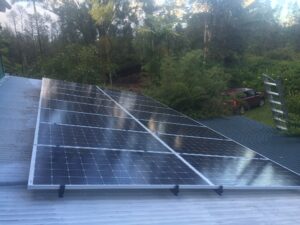
Common on many Hilo homes, particularly newer construction and renovated older homes. Asphalt shingles require penetration-based mounting (standard rail-and-hook or flashed lag bolt systems). The flashing and sealant quality at penetration points is the primary corrosion-related consideration here, since the racking itself sits above the roofing material and is exposed to the same atmospheric conditions regardless of roof type.
Metal Roofing
Metal roofs are common in Hilo, particularly on older plantation-era homes and many rural East Hawaii properties. Metal roofing introduces an additional corrosion consideration: galvanic compatibility between the racking system and the roofing material itself.
If your roof is galvanized steel (a common older roofing material) and your racking uses a different metal that’s not properly isolated, you can create galvanic corrosion between the racking attachment points and the roof itself—potentially compromising the roof, not just the racking.
Many metal roofs in Hilo today are standing seam profiles, which allow for clamp-based mounting systems that don’t penetrate the roofing material at all. Standing seam clamps, when properly specified for the specific roof profile and made of compatible materials, can actually reduce corrosion risk compared to penetration-based systems—because there’s no penetration point to manage, and the clamp connection can be engineered with appropriate metal compatibility from the start.
If your Hilo home has a standing seam metal roof, ask your contractor specifically about clamp-based mounting as an option—it’s often both more corrosion-resistant and less invasive to your roof than penetration-based alternatives.
Older Homes with Mixed or Aging Roofing
A meaningful number of Hilo’s older homes have roofing that’s been patched, replaced in sections, or is simply older than ideal for a 25-year solar installation. Part of a thorough site assessment should include evaluating whether your roof itself is in condition to support a solar installation for its full design life—because even the best racking system doesn’t help if the roof underneath it needs replacement in ten years, requiring the solar system to be removed and reinstalled.
A contractor who flags roof condition concerns during the initial assessment—rather than after installation—is doing you a favor, even if it means an additional conversation about roof repair or replacement before solar installation.
Inverter and Electrical Component Housing: Corrosion Beyond the Racking
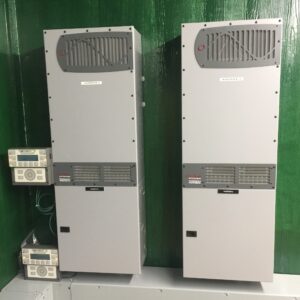
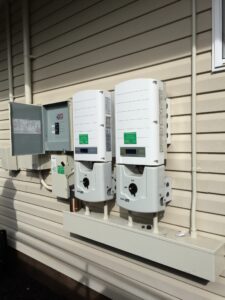
While racking gets a lot of attention, the enclosures and housings for inverters, combiner boxes, disconnects, and other electrical components also face East Hawaii’s corrosive conditions—and these components are arguably more critical to protect, since they contain sensitive electronics.
NEMA Ratings for Outdoor Electrical Enclosures
Outdoor electrical enclosures are rated using the NEMA (National Electrical Manufacturers Association) classification system. For Hilo installations, enclosures should be rated NEMA 3R at minimum for general outdoor protection from rain, with NEMA 4 or 4X providing better protection against moisture ingress and, in the case of 4X, corrosion resistance for the enclosure material itself.
NEMA 4X enclosures are typically made of materials like stainless steel, fiberglass, or specially coated materials designed to resist corrosion in addition to providing watertight protection. For Hilo’s combination of moisture and corrosive atmospheric conditions, specifying 4X-rated enclosures for outdoor electrical components—particularly in coastal areas—is a meaningful upgrade over the 3R minimum.
Inverter Placement Strategy
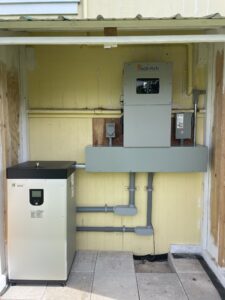
Beyond the enclosure rating itself, where your inverter is physically located matters. An inverter mounted on an exterior wall facing prevailing wind and rain direction experiences more direct moisture exposure than one mounted in a more sheltered location—a covered lanai wall, for instance, or an interior garage wall with appropriate ventilation.
Your contractor should be thinking about inverter placement as part of the overall system design, not just finding the most convenient spot near the electrical panel. In Hilo, “most convenient” and “most protected from weather” aren’t always the same location, and a good contractor balances both considerations.
Conduit and Wiring
Outdoor conduit runs should use materials rated for UV and moisture exposure—rigid PVC conduit or appropriately rated metal conduit (with corrosion-resistant coatings or stainless steel in particularly exposed locations). Wire connectors and junction points should be rated for wet locations and, where exposed to potential salt air, should use connectors specifically rated for corrosive environments.
What to Ask Your Solar Contractor About Racking and Hardware
Most homeowners don’t think to ask detailed questions about racking materials—understandably, since panels and inverters get all the attention in sales conversations. But for a Hilo installation, these questions matter as much as panel efficiency discussions.
“What grade of stainless steel are you using for fasteners?”
The answer should be 316, or the contractor should be able to explain why a different grade is appropriate for your specific situation. If the answer is uncertainty, or “standard stainless,” that’s worth pressing on.
“What’s the anodizing specification on the racking rails?”
A contractor who can answer this with a specific Class rating (Class I anodizing, for instance) has thought about this. A contractor who isn’t sure what anodizing is on the proposed product may be using a generic racking system without climate-specific consideration.
“How are you addressing galvanic compatibility between the racking, fasteners, and my roof material?”
This question separates contractors who understand corrosion engineering from those who are simply assembling components according to a standard installation manual without considering site-specific material interactions.
“What NEMA rating are the outdoor electrical enclosures?”
For Hilo, 3R should be the floor, with 4X as the better answer for components in more exposed locations.
“Can you show me examples of systems you’ve installed in East Hawaii that are 5+ years old?”
This is perhaps the most useful question of all. A contractor with a track record of installations in Hilo’s specific conditions can show you how their material choices have actually performed over time—not just describe specifications on paper. If a contractor primarily works in drier parts of Hawaii and is newer to East Hawaii, they may not have this kind of track record to point to, which is useful information in itself.
“What’s your workmanship warranty, and does it cover corrosion-related issues with racking and fasteners?”
A workmanship warranty that explicitly addresses racking and hardware integrity—not just panel and inverter performance—gives you recourse if corrosion issues do emerge earlier than they should.
The Cost Conversation: Why Better Materials Are a Modest Premium
It’s worth being direct about cost, because better racking materials do cost more—but the premium is smaller than people often assume relative to total system cost.
The difference between standard galvanized fasteners and 316 stainless steel fasteners across an entire residential racking system typically represents a small fraction of total system cost—often in the range of a few hundred dollars on a system costing tens of thousands of dollars. The difference between mill-finish and properly anodized racking rails is similarly modest in the context of overall project cost.
Compare this modest upfront premium to the cost of re-racking a system at year 10 or 12 because corroded hardware has failed—which involves not just new racking materials, but labor to remove and reinstall panels, potential roof repair if penetration points have deteriorated, and the disruption of having your solar system offline during the work.
For a 25-year investment, specifying corrosion-resistant materials from the start is one of the more cost-effective decisions in the entire project—precisely because it’s relatively inexpensive to do right the first time and comparatively expensive to fix later.
Maintenance: What Homeowners Can Do
Even with properly specified materials, some periodic attention helps keep your system in good condition over the years.
Annual Visual Inspection
A yearly look at visible racking components, fasteners, and flashing—either by the homeowner or as part of a maintenance visit from your contractor—can catch early signs of corrosion (discoloration, rust streaks, white oxidation) before they progress to structural concerns. Catching a corroding fastener early and replacing it is a minor task; dealing with a section of failed racking is not.
Keep Drainage Paths Clear
Debris—leaves, organic matter from nearby trees, which is abundant in many Hilo neighborhoods—can accumulate around racking components and roof penetrations, trapping moisture against surfaces and accelerating corrosion in those localized areas. Periodically clearing debris from around racking components and roof valleys near your solar array helps maintain proper drainage.
Address Coastal Exposure Proactively
If your home is in a coastal Hilo neighborhood with direct salt air exposure, periodic rinsing of racking components with fresh water—similar to maintenance recommendations for vehicles in coastal areas—can help reduce salt accumulation on metal surfaces between regular rainfall, particularly during drier periods when salt deposits aren’t being naturally rinsed away as frequently.
Professional Inspections
Beyond homeowner visual checks, having your solar contractor perform a more thorough inspection every few years—checking fastener torque, examining connection points more closely, and assessing flashing and sealant condition—is a reasonable practice for a system you’re expecting to perform for 25+ years in East Hawaii’s demanding conditions.
Common Questions About Solar Racking in East Hawaii
Does vog really affect solar equipment, or is this overstated?
Vog’s effects on metal corrosion are a function of sulfur compound concentration in the air, which varies with volcanic activity and wind patterns. While Hilo experiences less direct vog impact than leeward Kona-side areas during typical trade wind conditions, East Hawaii has experienced periods of significant vog exposure during wind pattern shifts, and ambient sulfur compound levels across the Big Island are generally higher than in non-volcanic regions. The cumulative effect over 25 years is the relevant timeframe—even periodic exposure adds up over decades. Specifying corrosion-resistant materials accounts for this without requiring you to predict future volcanic activity.
My home is inland, away from the coast—do I still need to worry about corrosion-resistant racking?
Yes, though the specific corrosion mechanisms differ slightly. Inland Hilo properties have less salt air exposure but still face Hilo’s high humidity and the broader atmospheric sulfur compound exposure associated with the Big Island’s volcanic activity. The recommendation for 316 stainless steel and anodized aluminum applies broadly across East Hawaii, not just to immediate coastal properties—though coastal properties do face an additional layer of salt-specific corrosion risk on top of the baseline.
How can I tell if my existing solar racking is corroding?
Visual signs include white, powdery deposits on aluminum surfaces (aluminum oxide), rust-colored streaks running down racking rails or onto roofing material (indicating fastener corrosion), discoloration or pitting on metal surfaces, and any fasteners that appear loose, difficult to turn, or visibly degraded. If you notice any of these signs, having a solar contractor inspect the system is a reasonable next step—catching issues early generally means simpler and less costly fixes.
Is it worth upgrading racking on an existing system if I add battery storage or additional panels?
If you’re already having a contractor on your roof for a system expansion—adding panels, adding battery storage that requires new mounting, or other modifications—it can be a practical opportunity to evaluate the condition of existing racking and address any corrosion concerns found during that work, potentially avoiding a separate service visit later.
Do all solar contractors in Hilo use corrosion-resistant racking by default?
Not necessarily. Racking specifications vary by contractor and by which manufacturer’s systems they typically install. Some racking manufacturers offer multiple material tiers, and a contractor working from a standard residential package designed for broader market conditions may not automatically default to the highest corrosion-resistance tier unless asked or unless they specifically design for East Hawaii’s conditions as standard practice. This is precisely why asking the specific questions outlined earlier in this article matters—don’t assume corrosion resistance is automatically built into every quote you receive.
Why This Matters for Your Long-Term Investment
A solar installation is sized, financed, and evaluated based on 25+ years of expected performance—that’s the timeframe used for production estimates, payback calculations, and the comparison against tax credits and incentive programs discussed elsewhere on this site. Every part of that financial picture assumes the system is physically intact and functioning for that full period.
Racking and hardware are the unglamorous parts of a solar installation—nobody asks about fastener grades during a sales pitch the way they ask about panel wattage or battery capacity. But in Hilo’s environment, these unglamorous components determine whether your system reaches its 25-year potential or requires unexpected, costly intervention well before then.
Choosing a contractor who treats racking specification with the same seriousness as panel and inverter selection—who can answer specific questions about stainless steel grades, anodizing, galvanic compatibility, and enclosure ratings—is choosing a contractor who understands what East Hawaii actually demands from a solar installation.
Solar Saint Builds for Hilo’s Conditions, Not Generic Hawaii Assumptions
Solar Saint specifies racking, fasteners, and electrical enclosures based on the real environmental conditions East Hawaii presents—humidity, salt air where applicable, and the broader atmospheric factors associated with the Big Island’s volcanic activity. That means 316 stainless steel fasteners, properly anodized racking, galvanically compatible component pairings, and appropriately rated outdoor electrical enclosures as standard practice for Hilo installations—not an upgrade you have to know to ask for.
If you’re evaluating solar quotes and want to understand how the proposed hardware and racking will hold up over the decades your system is expected to perform, Solar Saint is happy to walk through the specifics with you—including showing you real examples of installations in East Hawaii’s conditions.